Best Fitbod Alternative: Bazu for Focused Strength Training
Looking for a Fitbod alternative? Bazu gives iPhone and Android lifters a focused gym log with free charts, 1RM, permanent PRs, muscle drill-down, goals, smart rest, and lower Pro pricing.
Waleed S.·Jul 11, 2026·Updated Aug 26, 2026·15 min read
Fitbod is one of the strongest names in AI workout planning. Its official site describes a personalized strength training app that builds workouts around your goals, fitness level, equipment, recovery, and progress. Its App Store and Google Play listings also emphasize AI-generated workouts, 1000+ exercises, video demonstrations, Apple Watch, Apple Health, Strava, Fitbit, Android, and Wear OS support.
That is useful if you want the app to decide what to train next.
But not every lifter wants an AI workout generator. Some people already have a program. Some want a quieter gym log. Some want full-history progress data and personal records without paying for a heavier planning system. That is where Bazu fits.
If you are searching for a Fitbod alternative because you want less automated planning, lower Pro pricing, faster logging, or a more focused iPhone, Android, and Apple Watch strength tracker, this guide compares Bazu and Fitbod directly.
If you are scanning before trying another app, here is the practical difference.
Feature
Bazu
Fitbod
Core philosophy
Focused workout tracker and progress log
AI workout planner
Workout generation
Routine Library programs, your own routines, and Bazu Pro progression targets
AI-generated workouts
Free charts & 1RM
Yes
Subscription unlocks premium workouts and features after trial
Permanent PR history
Every exercise + workout history
Performance tracking
Muscle analytics
Free, with individual-muscle drill-down
Muscle recovery and target muscle planning
Goals with deadlines
Free (up to 3)
Fitness goals inform generated workouts
Warm-up sets
Tracked, excluded from PRs/volume/PO
Warm-up and recovery movements available
Supersets
Yes
Yes
Rest timer
Exercise-aware smart rest timer
Rest timer
Apple Watch
Phone-free workouts + Digital Crown + live BPM
Apple Watch support
Android
Yes
Yes
Wear OS
No
Yes
Exercise library
500+ exercises with guides and anatomy
1000+ exercises with hi-res videos
Integrations
Apple Watch; Apple Music auto-play
Apple Health, Strava, Fitbit, Apple Watch, Wear OS
Progressive overload
Bazu Pro explicit targets
Built into AI-generated planning
Monthly price
$4.99
$12.99-$15.99 listed in U.S. App Store
Annual price
$24.99
$79.99-$95.99 listed in U.S. App Store
Lifetime option
Not offered
Not listed in U.S. App Store
Bottom line: Fitbod is the better choice if you want the app to generate workouts, adapt training around muscle recovery, show exercise videos, and integrate broadly with Apple Health, Strava, Fitbit, and Wear OS. Bazu is the better Fitbod alternative if you want a simpler gym log on iPhone or Android with free charts, 1RM (one-rep max), permanent PRs (personal records), individual-muscle drill-down, goals with deadlines, smart rest, offline logging, and much lower Pro pricing.
Ready to Try Bazu?
Bazu is free to download on iPhone. The free tier includes unlimited workouts and history, charts, 1RM, permanent PRs, muscle breakdown, goals, warm-up sets, supersets, Apple Watch logging, live BPM during rest, offline mode, and a smart rest timer. Bazu Pro adds progressive overload recommendations, an intensity pace selector, Next Workout Targets, and unlimited routines, goals, and custom exercises.
Fitbod is not just a basic workout log. It is closer to an AI training planner. That can be exactly right if you want a generated workout every session and do not want to write your own plan.
The trade-off is control and cost. A planner has to make more choices for you. It asks you to trust the recommendation engine, adjust workouts when it misses your real-world constraints, and subscribe if you want the full experience after the trial.
Lifters usually look for a Fitbod alternative for a few clear reasons:
They already follow a program and do not need AI to build each session.
They want a faster, quieter logbook during workouts.
They want lower subscription pricing.
They want full-history charts, 1RM, and permanent PRs available free.
They want explicit next-set targets inside their own routines rather than a generated workout-of-the-day model.
Fitbod's planner is useful, but not universal
Fitbod's official positioning is clear: it creates personalized workouts based on your goals, recovery, history, equipment, and preferences. For beginners or lifters without a structured plan, that can remove a lot of setup work.
But that benefit is not universal. If you already know your split, follow a coach's program, or prefer repeating a routine block long enough to measure progress, a workout generator can feel like more system than you need. Bazu takes a different approach: build or save routines, start them quickly, and keep the progress feedback close to the set you are logging.
Price matters if you mostly want tracking
Fitbod's U.S. App Store listing includes monthly plan entries at $12.99 and $15.99 and annual Fitbod Elite entries at $79.99 and $95.99, plus legacy pricing entries. Bazu Pro is $4.99/month or $24.99/year.
Get one useful lifting idea at a time.
Short notes on progression, workout logging, and product improvements. No noisy fitness spam.
That difference is easier to justify if Fitbod's AI workout planning is the main thing you want. It is harder to justify if your main needs are logging, charts, 1RM, personal records, goals, and progressive overload targets.
More automation can mean more correction
An AI-generated workout is only helpful when it matches your equipment, ability, injuries, gym crowding, and preferences that day. Fitbod lets you edit and swap exercises, and its listings say the app learns from your edits. That flexibility is important.
Still, some lifters would rather start from their own routine and let the app help with tracking and progression. Bazu is built for that workflow. The routine is yours. The app's job is to keep your history accurate, make logging fast, and show what to aim for next when Bazu Pro progression guidance is available.
How Bazu Answers Each Reason
Here is what changes if you switch from Fitbod to Bazu.
A logbook-first workflow
Bazu does not try to be your full AI personal trainer. That is intentional.
Instead, Bazu is a focused strength training log for lifters who want to start fast, repeat a plan, and see whether they are actually progressing. You can build routines, save a completed workout as a routine, autofill weight and reps from your last session, and check off sets with less friction.
If Fitbod feels like too much planning surface for what you need, Bazu is the simpler alternative.
Free progress data before Pro
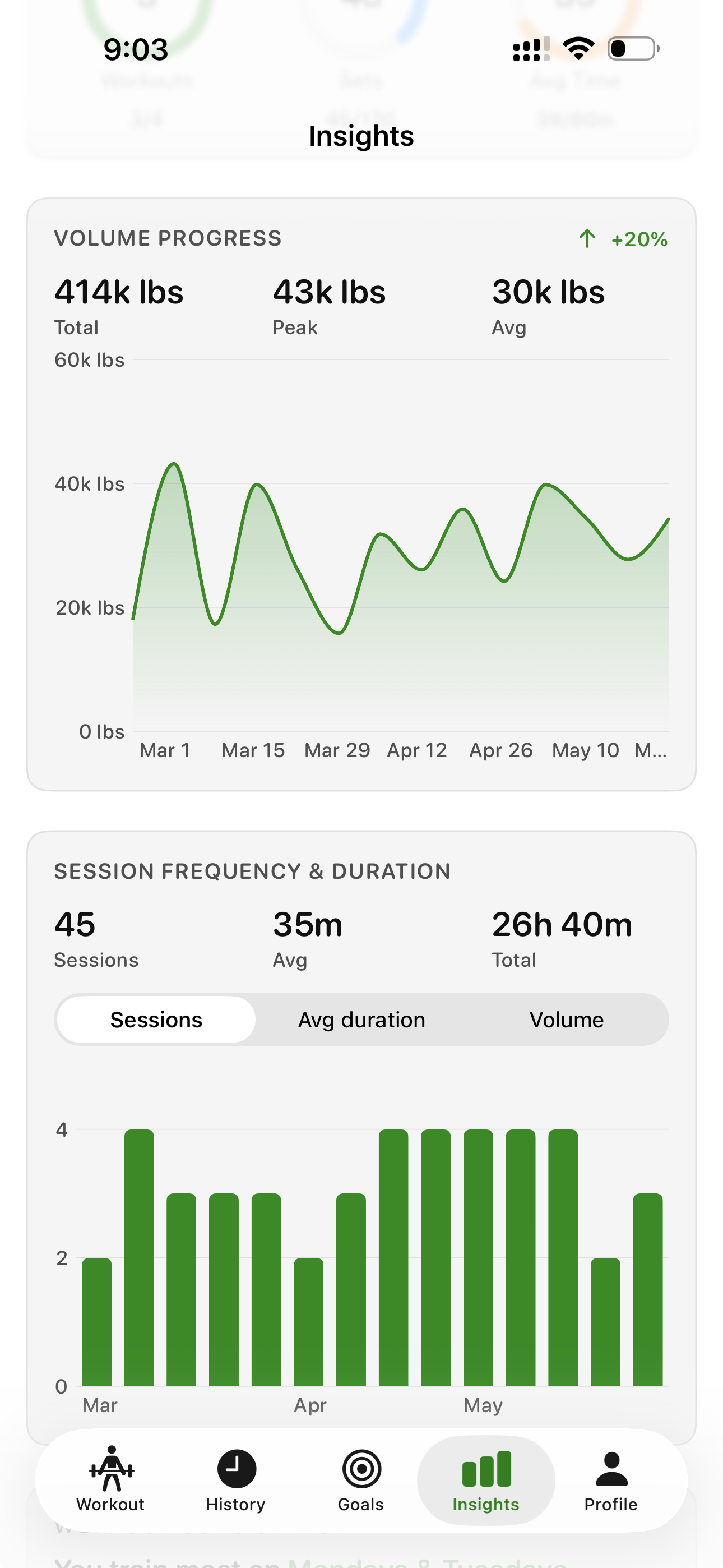
Bazu Free includes the progress data most lifters check week to week:
Full workout history
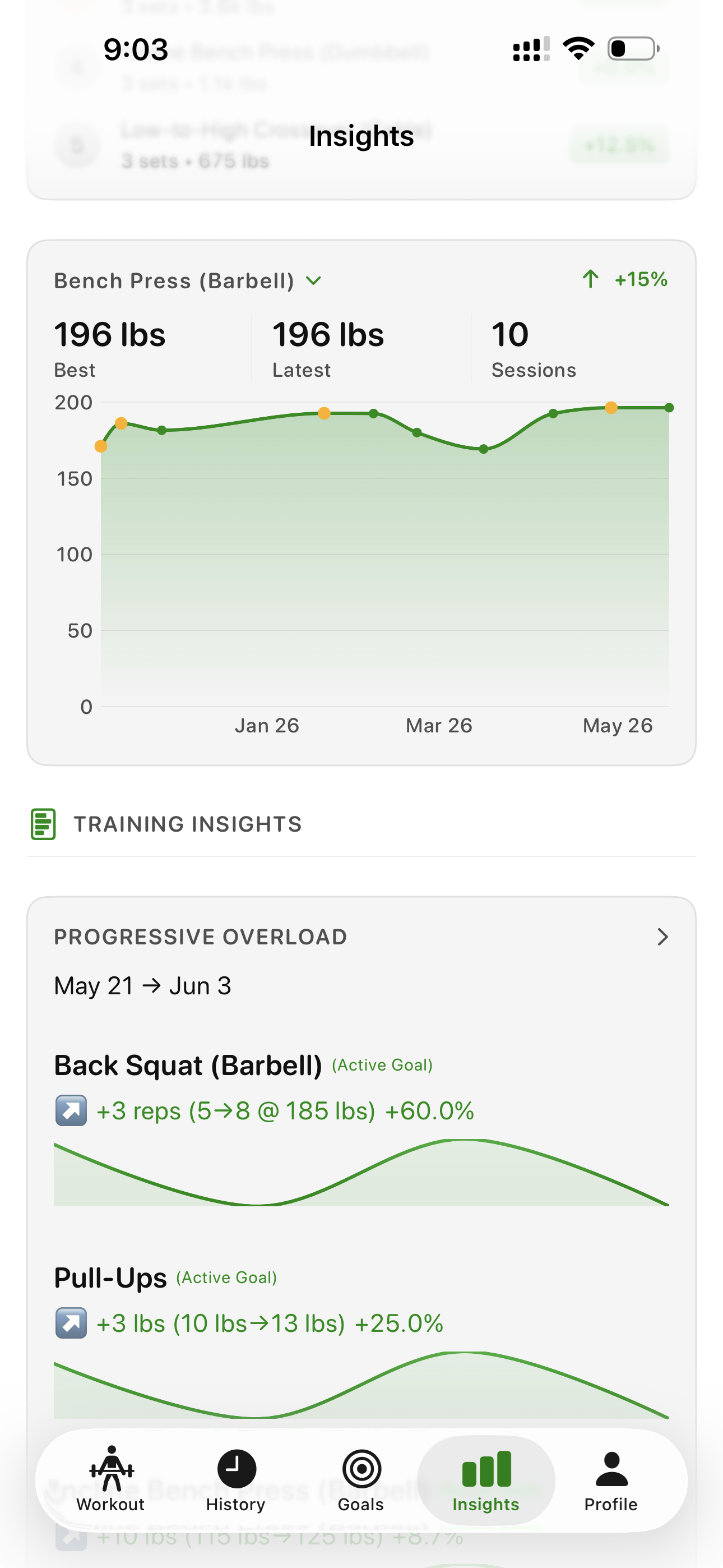
1RM estimates
Exercise-level charts
Volume analytics
Permanent PR history on every exercise
PRs earned inside completed workout history
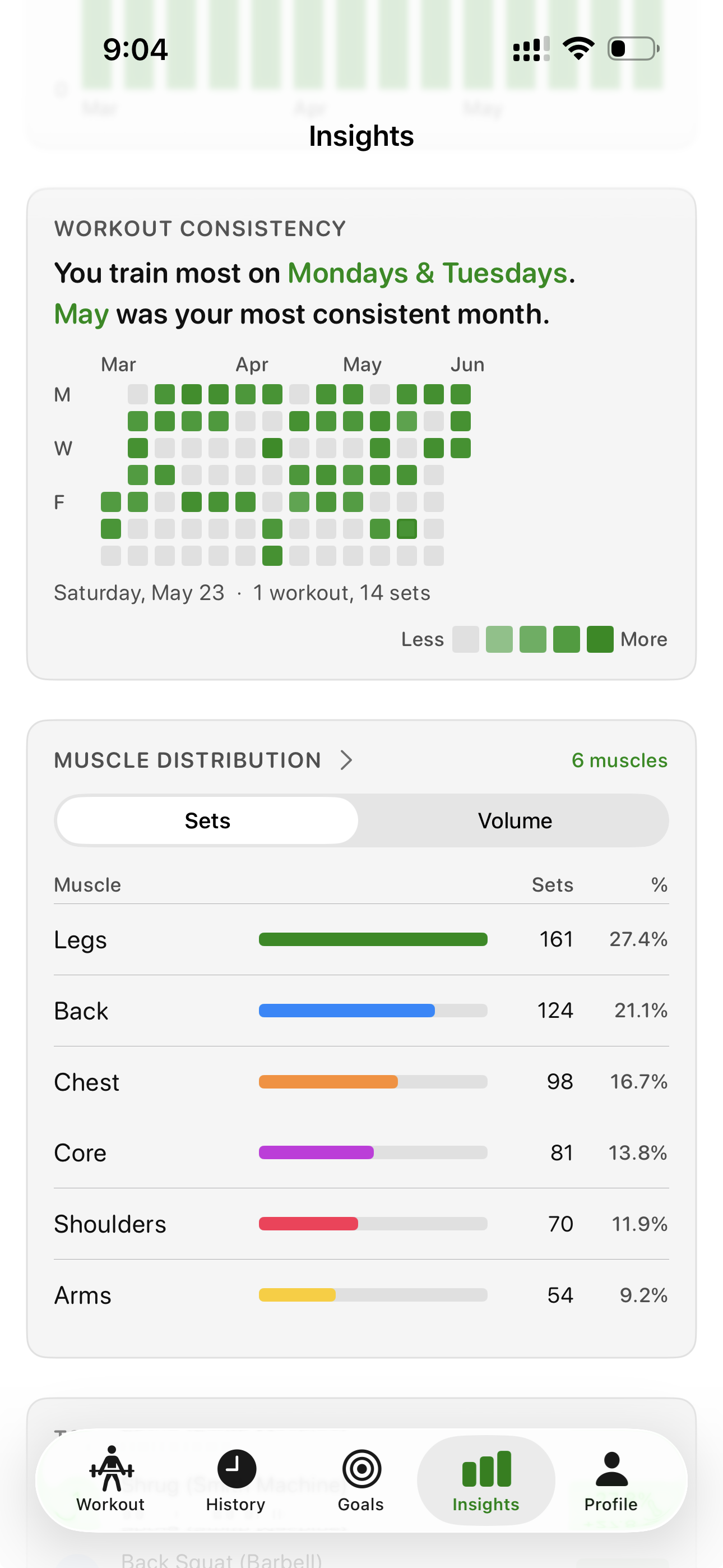
Muscle breakdown across Legs, Chest, Back, Shoulders, Arms, and Core
Drill-down from each muscle group into individual muscles
Fitbod tracks performance too, but the full Fitbod experience is subscription-led after the trial. Bazu's free tier is built so your basic training data stays useful even if you never upgrade.
Progressive overload without handing over the whole plan
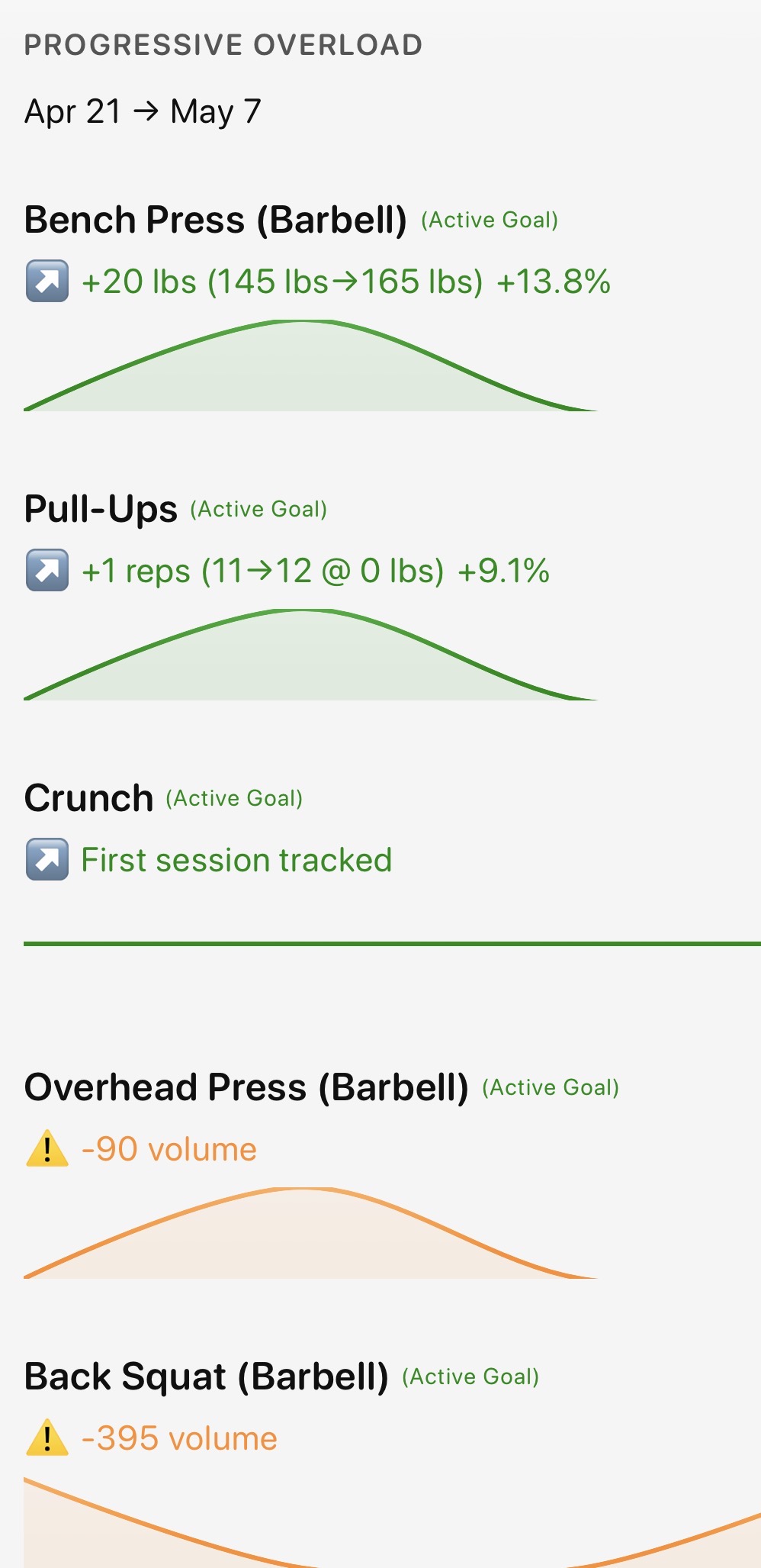
Progressive overload means gradually increasing training demand over time, usually by adding weight, reps, sets, or better execution. Fitbod applies that idea inside its generated planning system.
Bazu Pro applies it inside your own routines. It can suggest your next sets, use goal-aware rep ranges, let you choose an intensity pace, and show Next Workout Targets after a session. That gives you guidance without requiring the app to choose the whole workout for you.
Fitbod asks for goals to personalize workouts. Bazu Free treats goals as visible targets you can track directly.
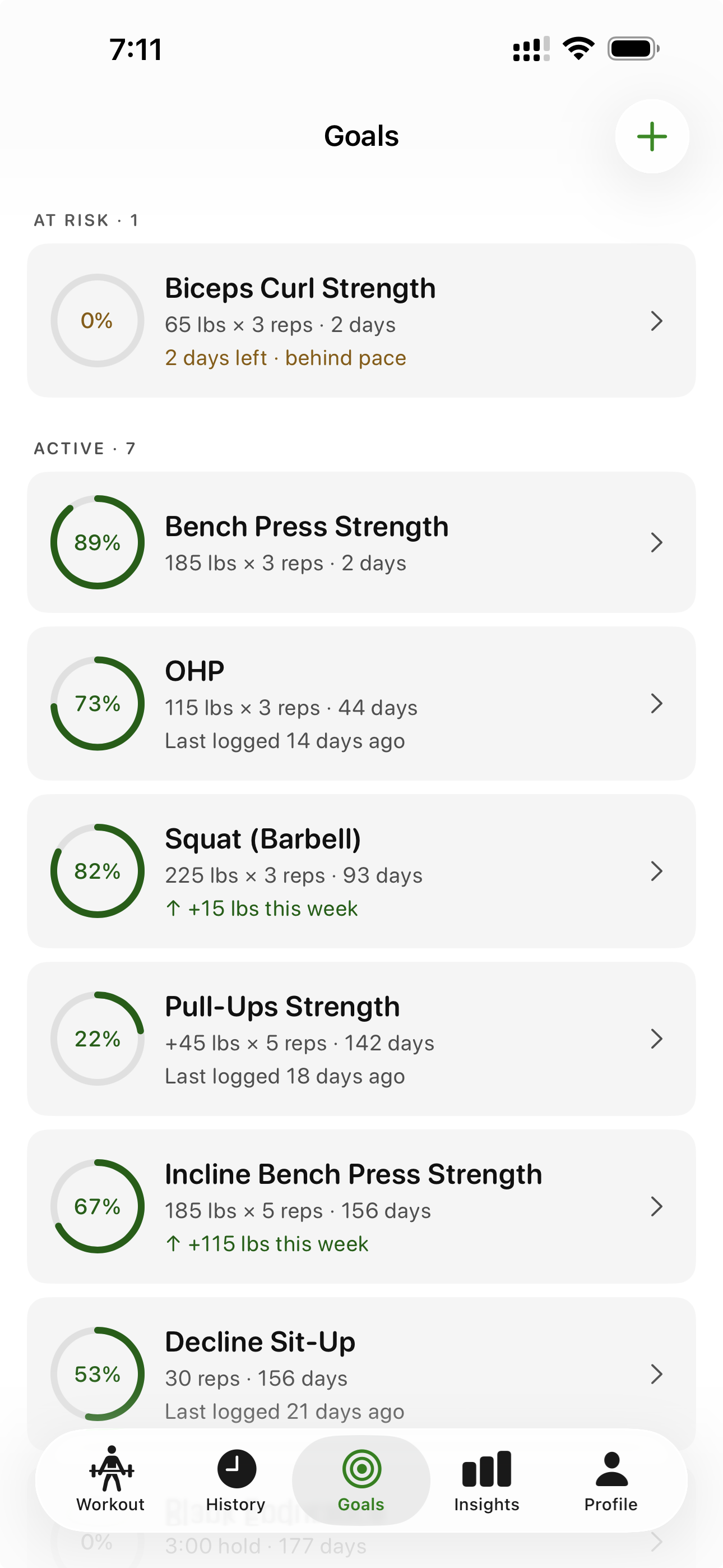
You can set up to 3 goals with target dates free. Those goals can cover strength targets, duration targets for timed exercises, and added-load targets for weighted pull-ups or dips. Progress rings show whether you are moving toward the goal, and Bazu celebrates when you hit it.
That makes Bazu feel less like "what workout should I do today?" and more like "am I moving toward the number I care about?"
Smart rest and Apple Watch in the set/rest loop
Bazu Free includes an exercise-aware rest timer. It can use different rest recommendations for compound exercises (squat, deadlift, bench) and isolation moves (curls, flies), auto-start after a completed set, run on the lock screen, and sync with Apple Watch.
On Apple Watch, Bazu runs a phone-free set/rest loop: choose a routine from your wrist, log weight and reps with the Digital Crown, see previous numbers and overload targets when available, view live BPM during rest, and finish on-device. The workout syncs automatically when Watch reconnects to iPhone.
Fitbod also supports Apple Watch, and it has broader integrations. Bazu's advantage is the narrowness of the workout flow: fewer surfaces, more focus on the next set.
If you want Fitbod's AI workout generator, broad exercise video library, Wear OS support, and Apple Health/Strava/Fitbit integrations, Fitbod Elite may be worth the price. Those are real advantages.
Fitbod is strongest when you want planning. Its product promise is that it creates and updates workouts based on your goal, equipment, performance, and recovery. If that is the job you need done, Bazu is not trying to replace it one-for-one.
Bazu is stronger when you want tracking and progression at a lower price. Bazu Free already includes charts, 1RM, permanent PRs, muscle drill-down, goals, offline logging, 4 routines, 10 custom exercises, Apple Watch logging, and smart rest. Bazu Pro is for progressive overload recommendations, intensity pace, Next Workout Targets, unlimited routines, unlimited goals, and unlimited custom exercises.
So the decision is not "which app has more automation?" Fitbod does. The better question is whether you want automation enough to pay for it, or whether a focused training log with lower-cost progression guidance fits your lifting better.
Feature Comparison: Fitbod vs. Bazu
Category
Bazu
Fitbod
Free workouts
Unlimited logging and history
Free to download; subscription unlocks premium workouts and features after trial
Main workflow
Start a library program or build your own, log fast, track progress
Apple Health, Strava, Fitbit, Apple Watch, Wear OS
Offline mode
Offline logging with auto-sync
Not evaluated here
Monthly price
$4.99
$12.99-$15.99 listed in U.S. App Store
Annual price
$24.99
$79.99-$95.99 listed in U.S. App Store
Design philosophy
Focused, progression-first logbook
AI planner and workout generator
If your must-haves are Wear OS, 1000+ exercise videos, broad integrations, or an app that decides your workout from scratch, Fitbod may still be the better fit. If your priority is fast logging, free progress visibility, lower Pro pricing, and explicit targets inside your own routines, Bazu is the cleaner choice.
Bazu workout logging — 1-tap sets, rest timer, and progressive overload in action
Who Bazu Is (and Isn't) For
Here is the plain version.
Choose Bazu if...
Choose Fitbod if...
You want a focused workout log, not a full AI planner
You want AI-generated workouts
You want a ready-made program you can read in full, or prefer writing your own
You want the app to decide what to train
You want free charts, 1RM, permanent PRs, and muscle drill-down
You are comfortable subscribing for the full planning experience
You want lower Pro pricing
You want 1000+ exercise videos and trainer email access
You want Apple Watch logging centered on sets and rest
You need Wear OS, Strava, Fitbit, or broader integrations
You want progressive overload targets inside your own plan
You want progressive overload handled through generated workouts
Bazu is not a Fitbod clone. It is for the serious-but-busy lifter who values control, repetition, fast logging, permanent history, and measurable progress.
Fitbod is not the wrong choice. It is a strong choice for lifters who want a training planner, especially if they want more exercise demonstrations, Wear OS support, and a bigger integration surface.
The Short Answer
For iPhone and Android lifters who want a simpler Fitbod alternative, Bazu is the first app to try.
Fitbod wins on AI workout generation, Wear OS, 1000+ exercise videos, trainer email access, and broad integrations. Bazu wins on focused logging, free full-history progress data, permanent PR history, individual-muscle drill-down, smart rest, goals with deadlines, and lower Pro pricing.
The decision is straightforward:
Pick Fitbod if you want the app to generate your workouts.
Pick Bazu if you want to own your plan, log faster, and see progress more clearly.
The best workout tracker is the one that reduces friction without taking away the parts of training you actually want to control.
FAQ
What is a good alternative to Fitbod?
Bazu is a good Fitbod alternative for iPhone lifters who want a focused gym log instead of a full AI workout planner. Bazu Free includes charts, 1RM, permanent PR history, muscle breakdown with drill-down, 4 routines, 10 custom exercises, goals with deadlines, warm-up sets, supersets, Apple Watch logging, live BPM during rest, offline mode, and a smart rest timer. Bazu Pro adds progressive overload recommendations, intensity pace, Next Workout Targets, unlimited routines, unlimited goals, and unlimited custom exercises.
What is the main difference between Bazu and Fitbod?
Fitbod is built around AI-generated workouts that adapt to your equipment, goals, performance, and recovery. Bazu is built around fast workout logging, full-history progress tracking, permanent PRs, goals, smart rest, and progressive overload targets for lifters who already want control over their training structure.
Is Bazu cheaper than Fitbod?
Yes in the U.S. App Store pricing checked for this article. Bazu Pro is $4.99/month or $24.99/year. Fitbod's U.S. App Store listing includes monthly plans at $12.99 and $15.99 and annual Fitbod Elite plans at $79.99 and $95.99, along with legacy pricing entries. Prices can vary by region and change over time.
Does Bazu generate workouts like Fitbod?
No. Fitbod's main product is AI-generated workouts. Bazu is a focused workout tracker: you build or save routines, log workouts quickly, and use free progress tools plus Bazu Pro progressive overload recommendations to know what weight and reps to aim for next.
Does Bazu work on Android?
Yes. Bazu is available on iPhone, Android, and Apple Watch. Fitbod adds Wear OS support, which Bazu does not currently have.
Which app is better for progressive overload?
Fitbod applies progressive overload as part of its generated training plan. Bazu Pro focuses on visible progressive overload targets inside your own routines: next-set recommendations, intensity pace, goal-aware rep ranges, and Next Workout Targets after a session. Fitbod is better if you want the app to plan the whole workout; Bazu is better if you want a simpler logbook with explicit targets and full-history tracking.
Is Bazu good for hypertrophy (muscle growth) training?
Yes. Bazu supports hypertrophy training with volume analytics, 1RM trends, muscle breakdown, individual-muscle drill-down, exercise-aware rest timing, warm-up sets, supersets, and permanent PR history. Bazu Pro adds goal-aware rep ranges and progressive overload recommendations.
See Bazu in Action
Clean, powerful, and free to use.
Volume analytics — track total reps and weight week to week
1RM chart — see your estimated max lift on a timeline
Progressive overload — suggestions for your next set with Bazu Pro
Consistency — see your training frequency and streaks at a glance
Goals — track deadlines and see if you're on track or at risk
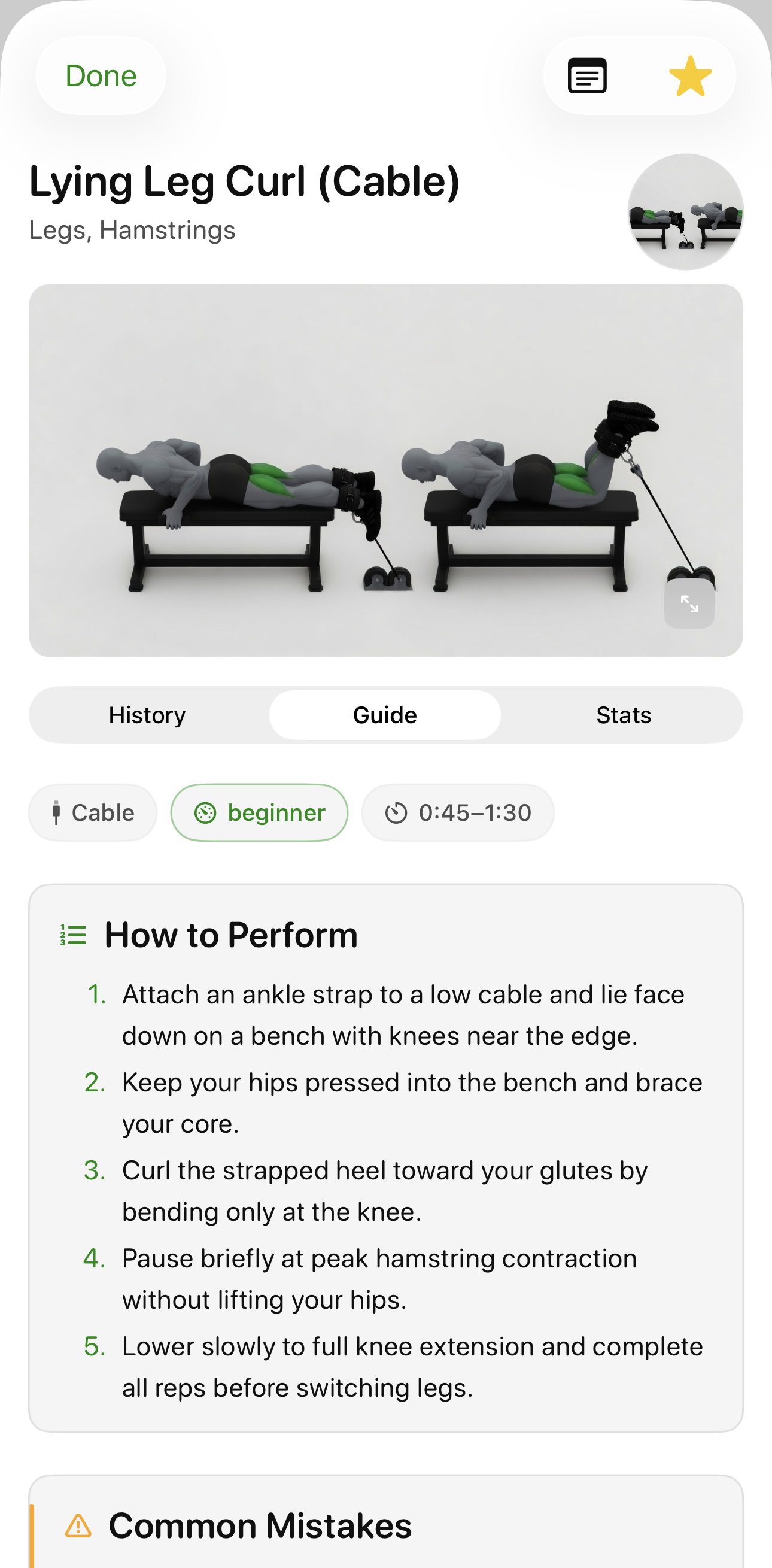
Exercise guides — form tips and anatomy for every movement
Try Bazu Free on iPhone
If Fitbod feels heavier than the workout tracker you want, try Bazu before paying for a full AI planner. You get full-history charts, 1RM, permanent PR history, muscle breakdown, goals, warm-up sets, supersets, Apple Watch logging, live BPM during rest, offline mode, and a smart rest timer free.
I'm the builder and user of Bazu. I've been lifting for over 10 years across strength and hypertrophy work, and I built Bazu to make progress simpler for serious lifters — every feature is designed around how real training actually works.
Put this guide into practice
Continue with a relevant calculator, exercise guide, or Bazu feature.