Best Strong App Alternative (2026): Bazu for Progressive Overload & Free Charts
Looking for a Strong app alternative in 2026? Bazu offers free charts, 1RM, PRs, and muscle breakdown — plus progressive overload recommendations for Pro lifters and a usable free tier.
Waleed S.·May 11, 2026·Updated Aug 26, 2026·16 min read
I tracked my lifts in the Strong app for a long time. On paper it had everything, but during workouts it felt cluttered and dated — and the part that pushed me over the edge was realizing I needed a Pro subscription just to see my own progress in charts and analytics.
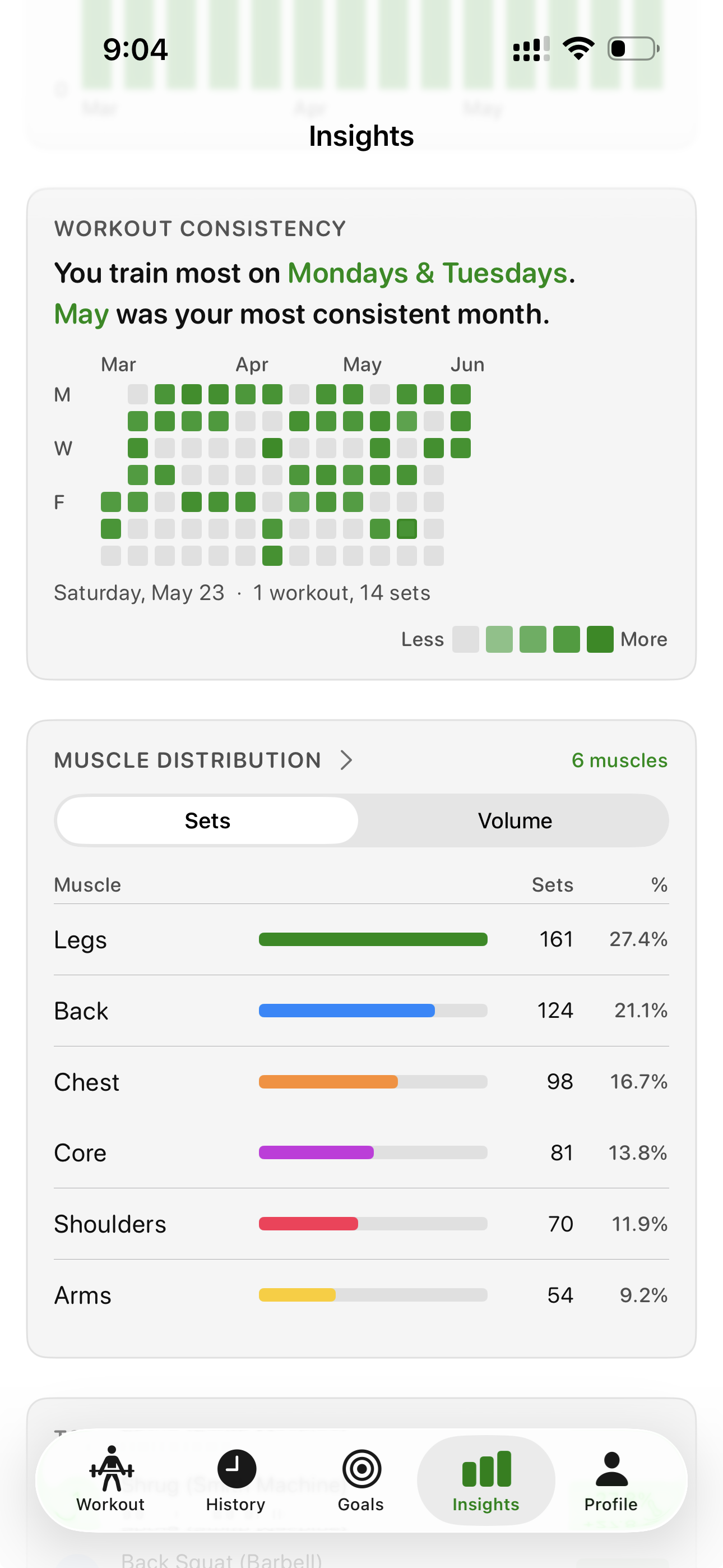
So I built Bazu. The idea was simple: the numbers that actually drive strength and muscle should come standard, not locked behind a paywall. Your one-rep max (1RM), permanent load and rep PRs (personal records) on every exercise, training volume, streaks, session duration, top lifts, and a muscle breakdown — all free. If you want to estimate a lift before logging it in the app, use Bazu's one-rep max calculator.
I also wanted progressive overload on autopilot. Strong showed me last session's numbers, but it stopped there. I'd stand at the bar with the history right in front of me and still second-guess the call: add a rep, add weight, or hold — and by how much? Now Bazu knows my history and suggests my next sets the moment I start the session, and because a beginner and a ten-year lifter don't progress at the same rate, I can set my overload intensity to match my experience.
If you're searching for a Strong app alternative or a cleaner weightlifting tracker for iPhone for the same reasons I was — too much friction, too much locked behind Pro, not enough guidance — here's a look at how the two compare.
Quick Comparison: Bazu vs. Strong
If you're scanning before committing to a deep read, here's how the two stack up on what actually matters between sets.
Feature
Bazu
Strong
Charts & 1RM
✅ Free
Advanced stats are Pro-positioned
Permanent PR history
Every exercise + workout history
Personal records
Warm-up sets
Tracked, excluded from PRs/volume/PO
Warm-up tags + calculator
Supersets
✅
✅
Progressive overload
Auto-suggested + intensity pace + next targets
No published equivalent found
Muscle analytics
Free, with drill-down
Pro heatmap only
Goals with deadlines
✅ Free (up to 3)
❌ None
Rest timer
Science-based rest per exercise type, set by each exercise's goal (free)
Custom timer
Apple Watch
Phone-free workouts + Digital Crown + live BPM
Logging
Free routines
4
3
Program library
Routine Library — complete programs, free
No published equivalent found
Platform
iOS + Android
iOS + Android
Annual price
$24.99
$29.99
Lifetime option
—
$99.99
Bottom line: Strong is a solid, full-featured logger, but Bazu is the better choice if you want the app to keep progress clearer with less setup. You get free charts, 1RM, permanent PR history, PRs on every exercise, muscle breakdown, warm-up sets that stay out of working-set metrics, and progressive overload recommendations on Pro. Strong's $99.99 lifetime plan makes sense if you already love Strong and want to pay once. But if you want free progress insights and guidance on what to lift next, Bazu gives you more of what matters during training.
Bazu
Strong
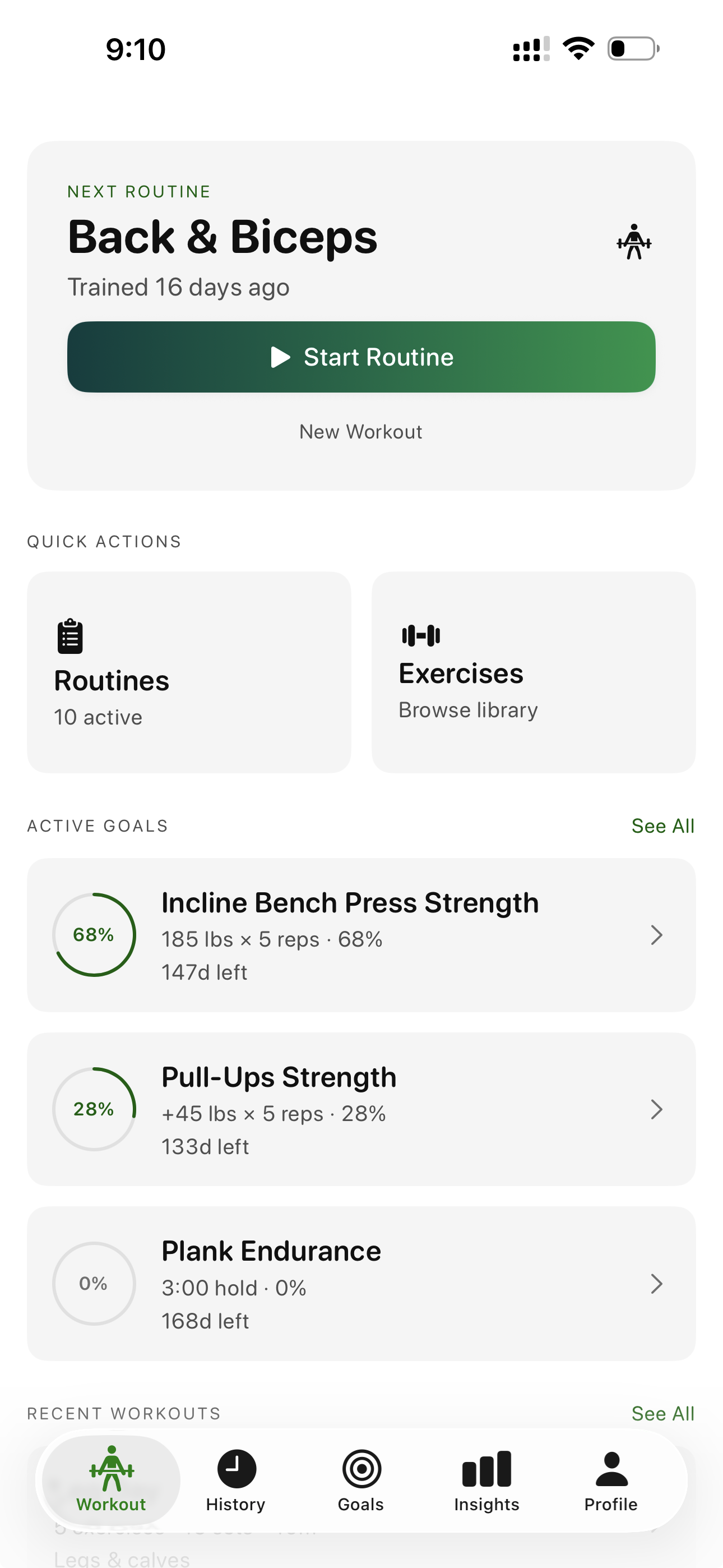
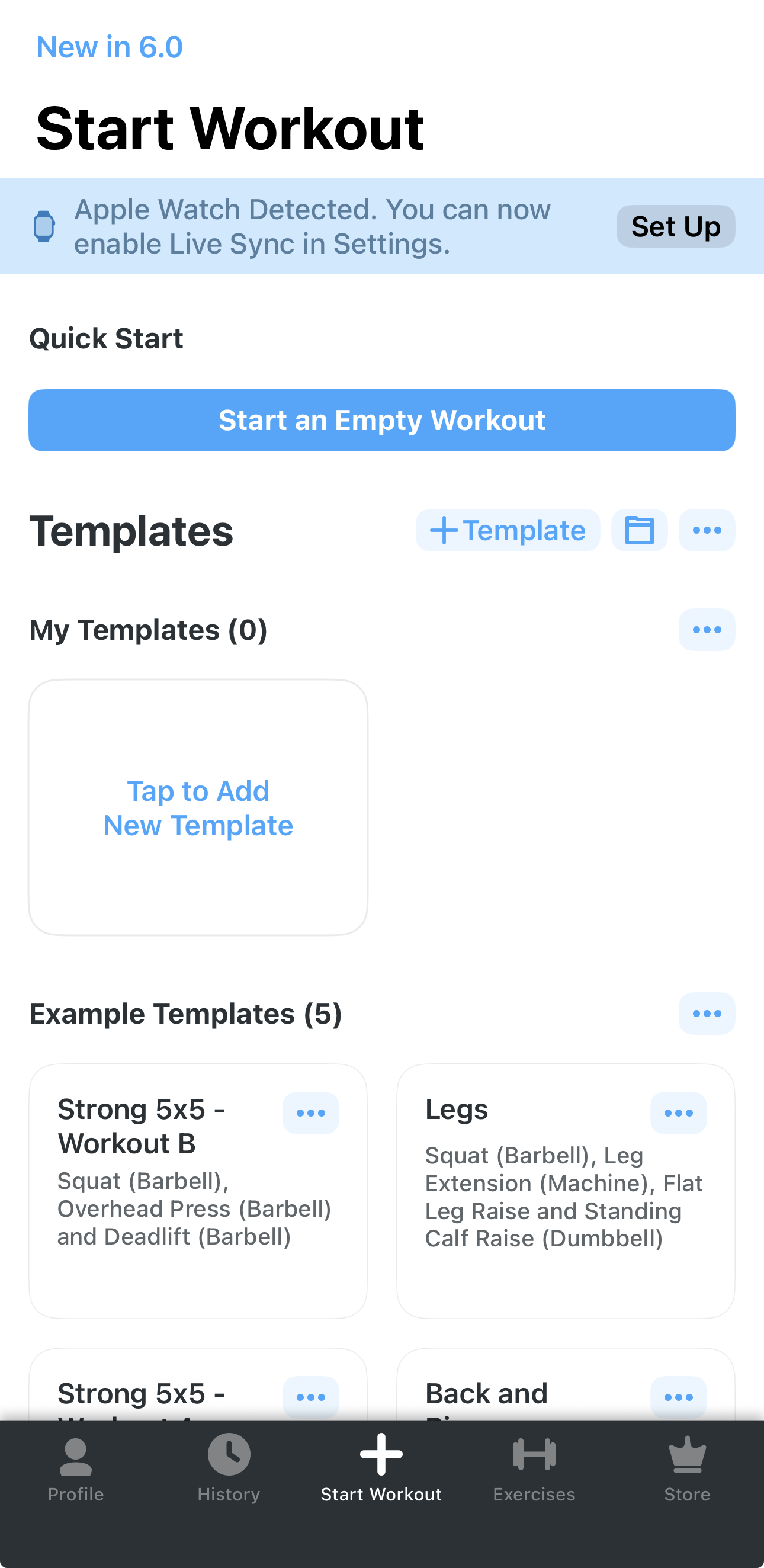
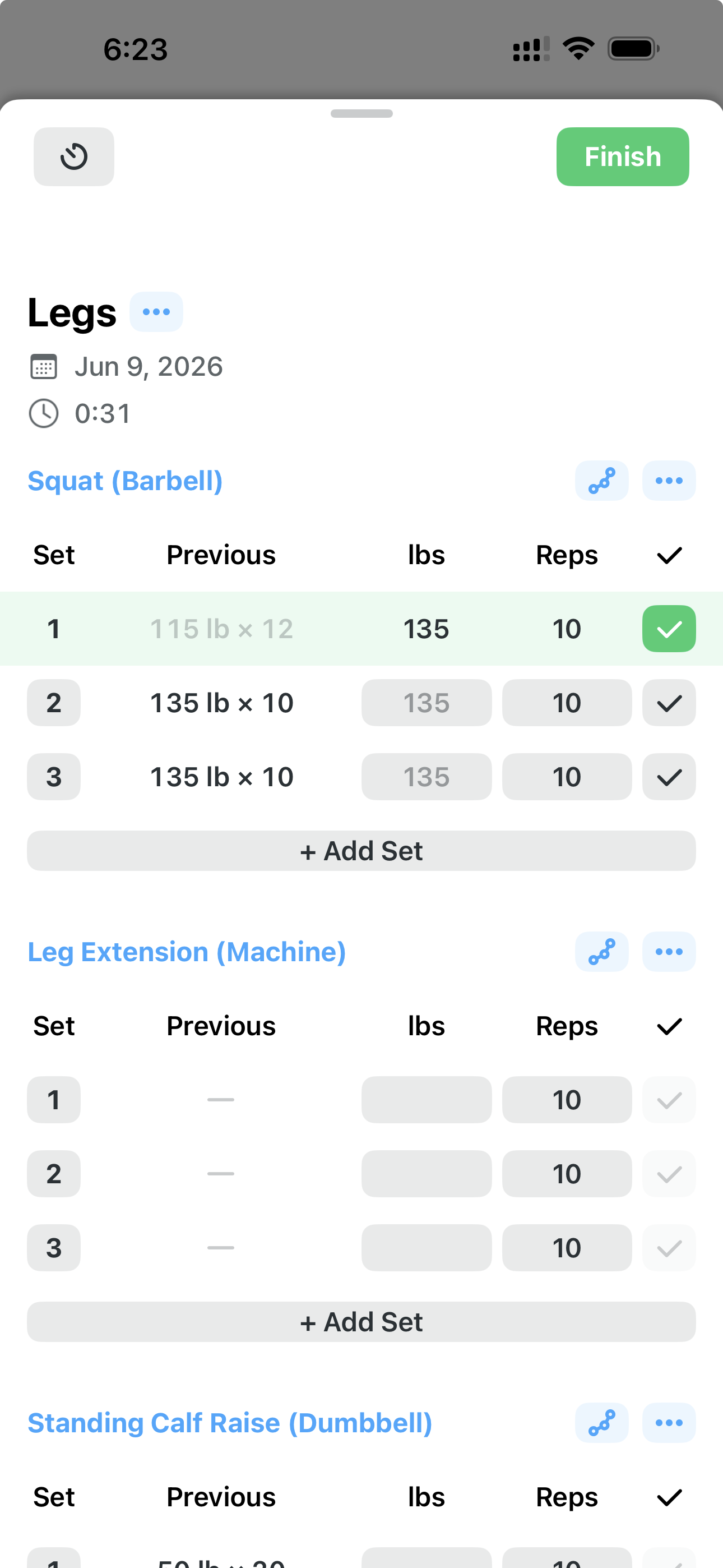
Bazu keeps the home view focused on starting your next workout, checking progress, and getting back to training.
Ready to Try Bazu?
If this sounds like your workout app, Bazu is free to download on iPhone. Log your sets, track permanent PRs, view your charts, see your progress — no Pro subscription needed just to understand your own training. You can also try the free Strength Standards Calculator to benchmark a squat, bench press, deadlift, or total by bodyweight.
When lifters ask on fitness forums and Reddit for a Strong app alternative, the most common complaint is the same: basic progress charts locked behind a subscription. By 2026 almost any tracker can log sets and store history — what separates them is what they give you free.
If you're searching for apps like Strong — or just a no-nonsense gym log app that tracks your lifts without ads or extra subscription tiers — the options have gotten meaningfully better.
So if you're asking what do I actually get if I switch?, here's the short version:
Strong's free tier caps you at 3 routines.
Most charts and deeper insights require Strong Pro.
Strong tracks workouts well, with warm-up tools, supersets, Apple Watch logging, CSV export, and a plate calculator.
Strong's official feature set does not publish an equivalent automated progression coach.
Bazu gives you free charts, permanent PRs, 1RM, muscle breakdown, warm-up sets, supersets, live Watch BPM during rest, and progression guidance on Pro.
Strong's interface can feel heavier than it needs to be
Strong's workout screen is functional, but it can feel table-heavy during a live session. Between repeated columns, dense controls, and multiple small fields, it asks lifters to scan more than they should between sets. Bazu takes the opposite approach: fewer visible decisions, clearer set actions, warm-up and superset controls that stay lightweight, and faster logging when your rest timer is already running — longer for compound exercises (squat, deadlift, bench), shorter for isolation moves (curls, flies) — automatically.
Bazu
Strong
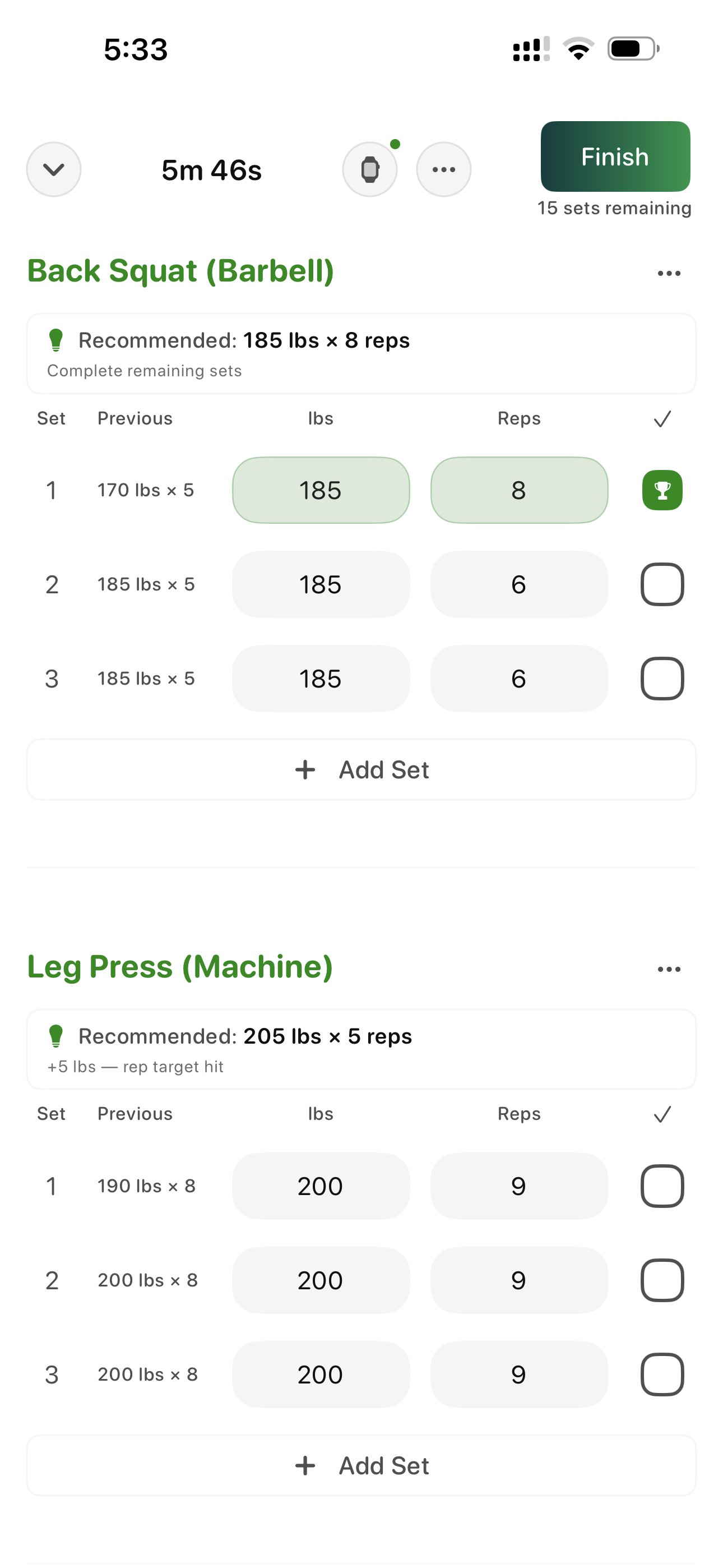
The active workout view is where the difference matters most: Bazu prioritizes the next set, rest timer, and progression cues.
The free tier caps you at 3 routines
This is the wall most lifters hit first. Strong's free plan limits you to 3 routines. A simple full-body or upper/lower split fits fine, but a Push/Pull/Legs program is already at the edge. Add a deload week (a lighter recovery week), a travel template, or a conditioning day and you're over the line — often within your first week of setup.
Key insights sit behind Pro
This is the one that got me. Strong's muscle heatmap and deeper analytics are Pro features, so seeing the full picture of your own training means subscribing. Paying to view data you generated yourself is a hard sell for a lot of lifters.
There's no built-in progressive overload
Strong tracks your performance well, but its official materials emphasize logging, history, charts, timers, and planning tools rather than an automated progression coach. If you want the app to make the next weight-or-rep call for you, that is where Bazu Pro is different.
How Bazu Answers Each Reason
Here's what switching actually changes for you, point by point — each one answers a frustration above.
Know your next set before you grab the bar
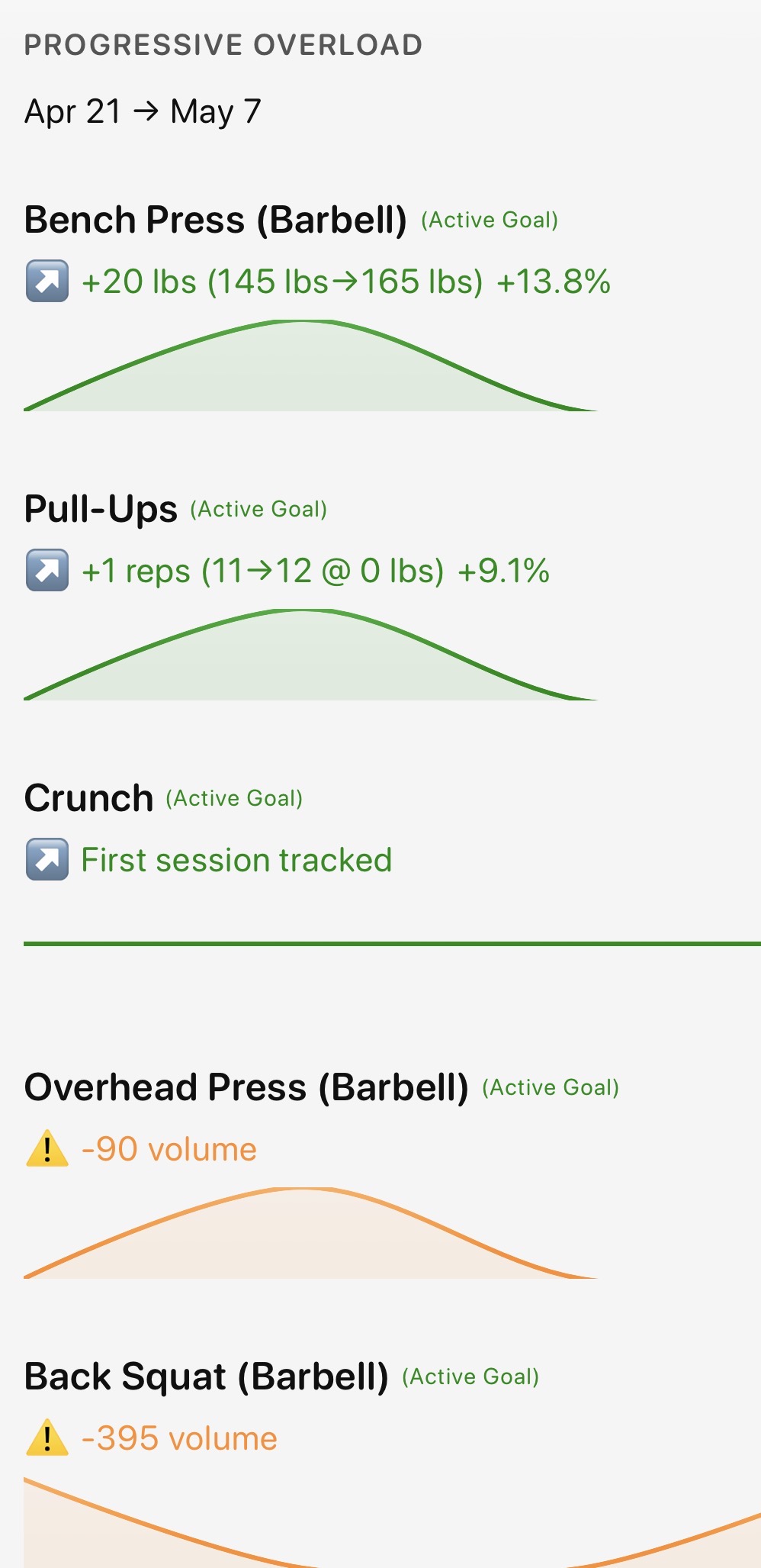
No more standing at the rack doing math. Bazu suggests your next sets the moment you start the session, so you walk in with the plan already made. When you build a routine, Bazu sets a science-based default for each exercise — the right number of sets for your goal, whether that's Strength, Muscle (hypertrophy), Fat Loss, or Consistency. On Pro, you set the intensity pace — Conservative, Standard, or Aggressive — so progression matches your experience instead of one fixed rate. Recommendations also respect your training goal: lower-rep targets for strength, moderate rep ranges for muscle, and higher-rep targets for endurance. After the workout, Next Workout Targets can show what to lift or confirm next session while the workout is still fresh. New to the idea? Our progressive overload guide covers the fundamentals.
So which workout app has better progressive overload than Strong? If "better" means actionable guidance inside each session with less setup, the answer is Bazu — Strong shows you the numbers, while Bazu can make the call.
See your progress without paying for it
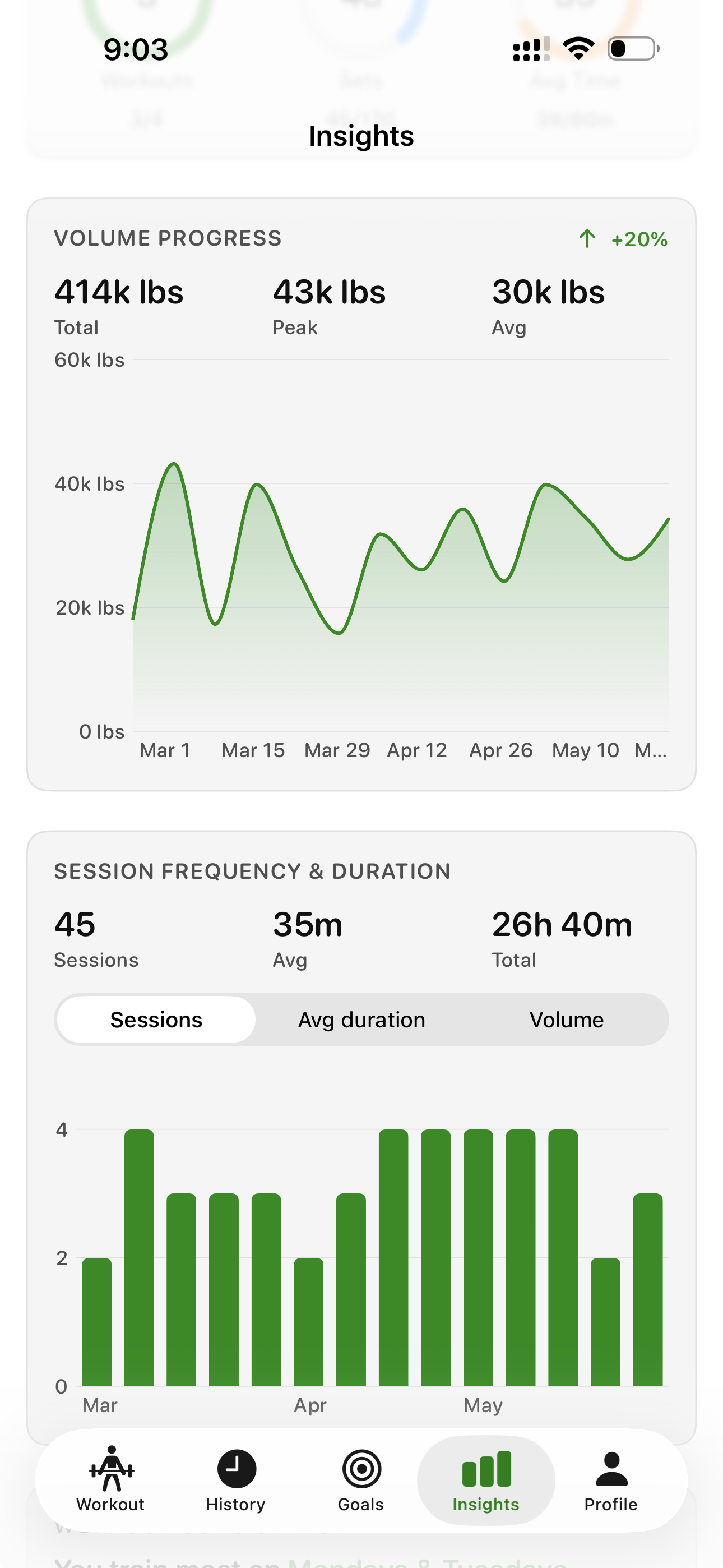
You generated the data; you shouldn't rent it back. Your one-rep max, permanent PR history, exercise-level records, training volume, and a muscle breakdown you can drill into are all on the free plan — so you can actually tell what's working week to week without a subscription. Strong puts many deeper insights behind Pro.
Train toward a goal with a real deadline
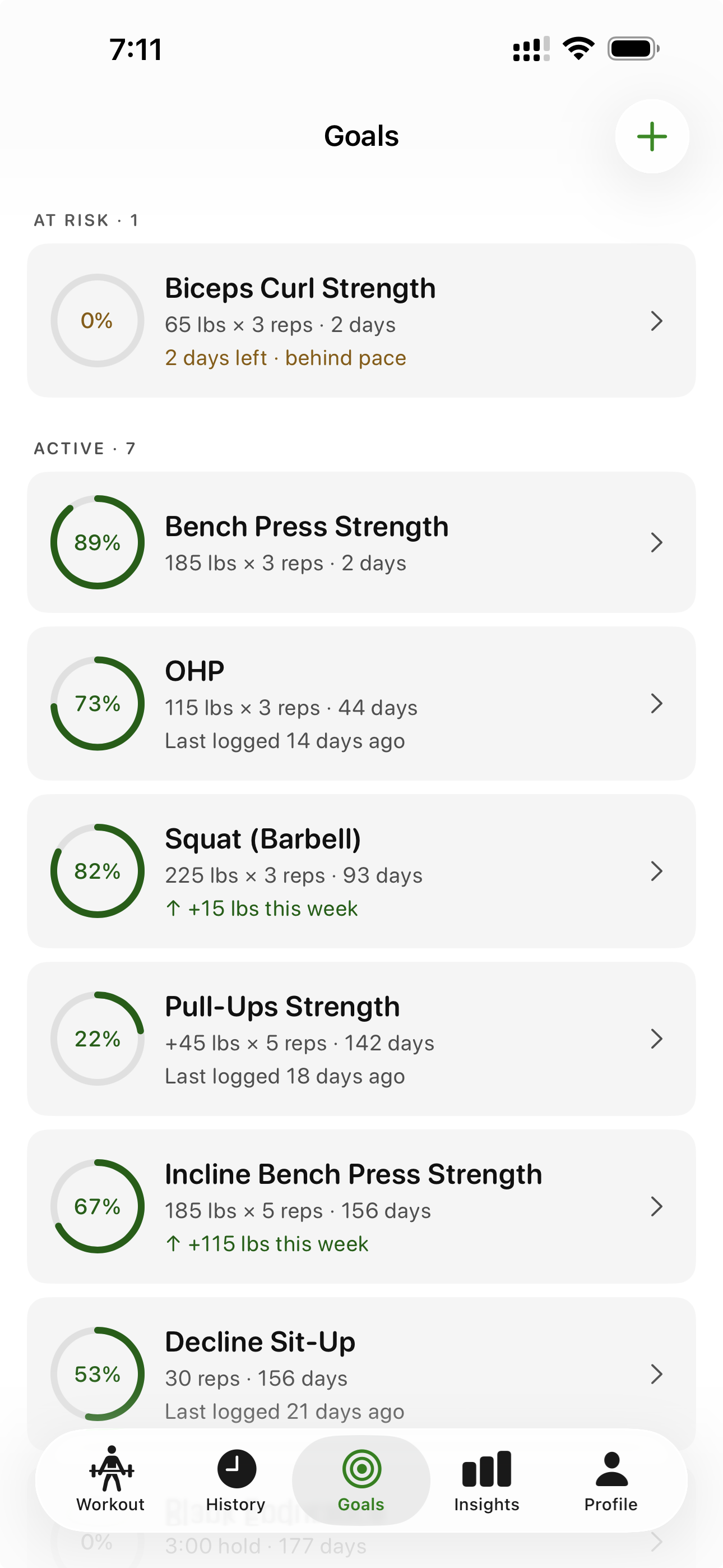
A logbook tells you what you did; a goal tells you where you're headed. Set strength goals with target dates, watch daily progress toward each one, and get a celebration the moment a goal closes out. It turns your history into a dated plan — and it's something Strong doesn't offer at all.
Run the active session from your wrist
Choose a routine directly on Apple Watch, log weight and reps with the Digital Crown, see live BPM during rest, and finish without an iPhone in the session. The workout runs on-device and syncs automatically when Watch reconnects. The live rest timer prescribes rest based on whether it is a compound or isolation exercise — a squat gets more recovery than a bicep curl automatically, rather than using one fixed number — and a live trophy confirms PRs on your wrist. Strong has a Watch app too, so the distinction is in the details of each live-session workflow.
A free tier you can actually train on
This is a plan you can stay on for years, not a teaser that walls you off in week one:
Unlimited workouts and full history
Permanent PR history on every exercise
PR milestones in workout history
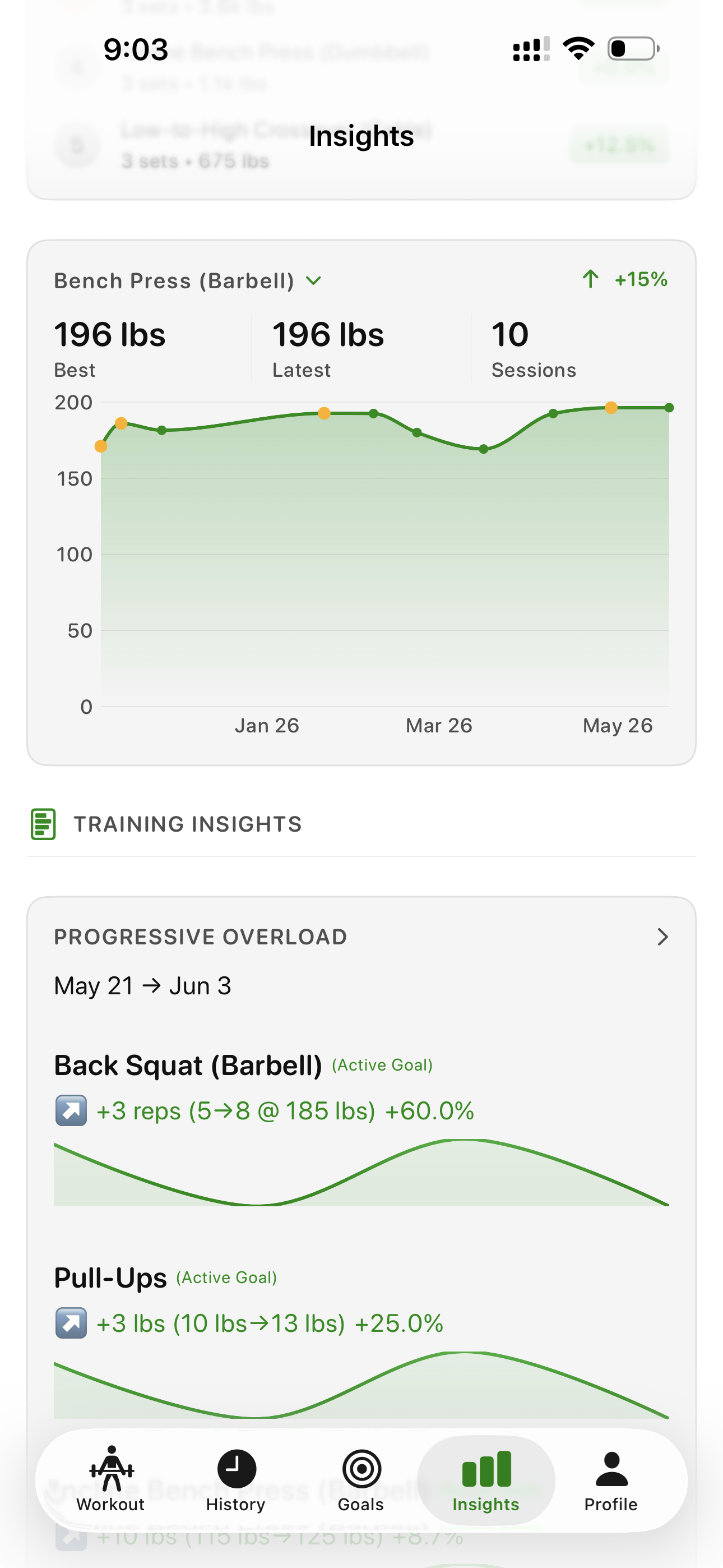
Charts and one-rep max tracking
500+ exercises with form guides
Warm-up sets and supersets
4 routines
Volume analytics and trends
Muscle breakdown with drill-down
No ads
If you ever want more, Bazu Pro ($4.99/month or $24.99/year) adds the intensity pace selector and unlimited routines, goals, and custom exercises — but your core data is never held hostage. For the full picture, see our guide to the best free workout tracker for strength training.
Strong App Free vs Pro: Upgrade or Switch to Bazu?
If you're sitting with your thumb over the Strong Pro upgrade button, it's worth a 60-second read on this section.
Strong Pro removes some friction. It lifts the 3-routine cap and unlocks advanced charts and the muscle heatmap. If you're already comfortable with Strong's workflow, those unlocks are real.
But here's the thing: Bazu's free plan already includes much of the progress data Strong positions around Pro: charts, 1RM, permanent PR history, exercise-level PRs, volume trends, muscle breakdown, and full history. It also includes practical session tools like warm-up sets, supersets, offline mode, a smart rest timer, and 4 routines. So the cost comparison isn't actually "Strong $29.99/year vs. Bazu $24.99/year." It's "pay Strong Pro to see more of your progress data" versus "get the core progress loop free in Bazu."
The one thing Strong Pro still doesn't add: a published equivalent to Bazu's progression guidance. Even after you pay, you're still largely making the next weight-or-rep call yourself. Bazu Pro suggests your next sets automatically and can show Next Workout Targets after the session.
The lifetime plan changes the math. If you know you'll use Strong forever and want a one-time purchase, Strong's $99.99 lifetime plan is a genuine edge Bazu doesn't match.
For most lifters: the question is "do I want to pay to see my own data, or switch and see it for free?" If free insights and progression guidance matter, switching is the clearer choice.
Feature Comparison: Strong vs. Bazu
Here's a side-by-side on the things lifters actually weigh day to day. For the full three-way breakdown including Hevy, see our Bazu vs. Strong vs. Hevy comparison.
Category
Bazu
Strong
Free routines
4
3
Program library
Routine Library — complete programs, free
No published equivalent found
Charts & 1RM
Free
Advanced stats are Pro-positioned
Permanent PR history
Every exercise + workout history
Personal records
Warm-up sets
Tracked, excluded from PRs/volume/PO
Warm-up tags + calculator
Supersets
Yes
Yes
Progressive overload
Built in, with intensity pace, per-exercise goal-driven rep ranges, and Next Workout Targets (Pro)
No published equivalent found
Muscle breakdown
Free, with drill-down
Pro-only heatmap
Goals with deadlines
Free (up to 3; unlimited Pro), with progress + celebration
None
Logging speed
1-tap with sets pre-filled from last session
Solid
Free history
Unlimited
Unlimited
Ads
None
None
Offline support
Available, with auto-sync (free)
Available
Apple Watch & live session
Watch app + live BPM during rest + lock-screen timer, two-way sync
Watch app
Rest timer
Science-based rest per exercise type (compound vs. isolation), auto-starts
Custom timer
Music auto-play
Apple Music starts with your workout
Manual
Monthly price
$4.99
$4.99
Annual price
$24.99
$29.99
Lifetime option
Not offered
$99.99
Design philosophy
Minimal, progression-first
Feature-rich, established
If your must-haves are specific tools Bazu doesn't carry — a plate calculator, body-measurement tracking, CSV export, or a one-time lifetime purchase — Strong may still be your pick. If your priority is consistent execution under time pressure — with permanent PR history, charts, and progression you don't have to pay extra to understand — Bazu is the better fit.
Bazu workout logging — 1-tap sets, rest timer, and progressive overload in action
Who Bazu Is (and Isn't) For
Bazu isn't trying to be everything for everyone. It's built for a specific kind of lifter. If you want the one-glance answer, here it is:
Choose Bazu if…
Choose Strong if…
You want free charts, 1RM, permanent PRs, and muscle breakdown
You want a one-time lifetime purchase
You want progressive overload suggestions and next-target guidance
You want a plate calculator or CSV export
You want a cleaner, faster workout flow
You're already deep in Strong's ecosystem and happy there
In plain terms: Bazu fits the serious-but-time-pressed lifter who prioritizes progression — you want routines that launch fast, history that's easy to scan, clear data over gamification, and overload guidance that shows up when you need it. It's built for consistency over years, which depends on a system simple and fast enough to actually sustain.
If you instead want deep enterprise-style programming, or a lifetime license, Strong (or another tool) might suit you better. That's a fair trade-off, and worth being honest about.
The Short Answer
For lifters who want a cleaner workflow, free charts and 1RM, and built-in progression, Bazu is the Strong app alternative to try first.
Strong still deserves respect for helping define the category and serving a huge base well, and its lifetime plan is a genuine perk for set-and-forget users. But if your pain points are interface friction, the 3-routine cap, or locked-away analytics, Bazu wins on merit:
Faster logging
A simpler interface
Progressive overload guidance and next targets
Charts, 1RM, permanent PR history, and muscle breakdown free
A genuinely usable free tier
The best app is the one that helps you train better, more consistently, with less mental drag. For a lot of serious lifters in 2026, that app is Bazu.
FAQ
What is a good alternative to the Strong workout app?
Bazu is a good Strong alternative if you want fast logging, charts and one-rep max tracking for free, permanent PR history on every exercise, built-in progressive overload, and a usable free tier without ads.
Is there a simpler workout tracker than Strong?
Yes. Bazu is built to cut setup and decision fatigue with a clean interface and 1-tap logging — sets pre-fill from your last session, so you spend your time lifting instead of tapping through menus.
Which workout app has better progressive overload than Strong?
Bazu is better if you want explicit progression guidance. Bazu suggests your next sets automatically. Pro users get goal-driven rep ranges, an intensity pace (Conservative, Standard, or Aggressive), and post-workout Next Workout Targets, so you progress in the right window without doing the math mid-workout. Strong's official feature set focuses on logging, history, timers, charts, and planning tools rather than an equivalent automated progression coach.
Is Bazu cheaper than Strong?
Both cost $4.99/month. Bazu Pro is $24.99/year versus Strong's $29.99/year. Strong also offers a $99.99 lifetime plan, which Bazu does not. Bazu's bigger edge is what it gives away free, including charts and 1RM.
Is Bazu's free tier good enough to train on long-term?
Yes. The free tier includes unlimited workouts and history, permanent PR history, PRs on every exercise, charts and 1RM, 500+ exercises, 4 routines, warm-up sets, supersets, volume analytics, a rest timer, muscle breakdown, Apple Watch logging with live BPM during rest, and offline mode with sync.
Is Bazu available on Android?
Yes — Bazu is available on both iPhone and Android.
What is the difference between Strong app free vs Pro?
Strong Free caps you at 3 routines and Strong Pro unlocks unlimited routines plus advanced analytics features such as charts and the muscle heatmap ($4.99/month or $29.99/year in the U.S. App Store). Strong also lists warm-up tools, supersets, CSV export, Apple Health, Apple Watch, and a plate calculator as part of its broader feature set. Bazu's free plan includes charts, 1RM, permanent PR history, PRs on every exercise, muscle breakdown, 4 routines, warm-up sets, supersets, live Watch BPM during rest, and goal tracking — plus progressive overload recommendations on Bazu Pro.
Is Bazu good for hypertrophy (muscle growth) training?
Yes. Bazu supports hypertrophy training with science-based rep ranges per exercise, volume analytics to track total training load week to week, and a muscle breakdown showing which muscle groups you've worked. The rest timer prescribes longer recovery for compound lifts and shorter for isolation moves — the balance most hypertrophy programs call for. Progressive overload recommendations (Pro) keep you adding stimulus each session instead of repeating the same weights.
See Bazu in Action
Clean, powerful, and free to use.
Volume analytics — track total reps and weight week to week
1RM chart — see your estimated max lift on a timeline
Progressive overload — suggestions for your next set with Bazu Pro
Consistency — see your training frequency and streaks at a glance
Goals — track deadlines and see if you're on track or at risk
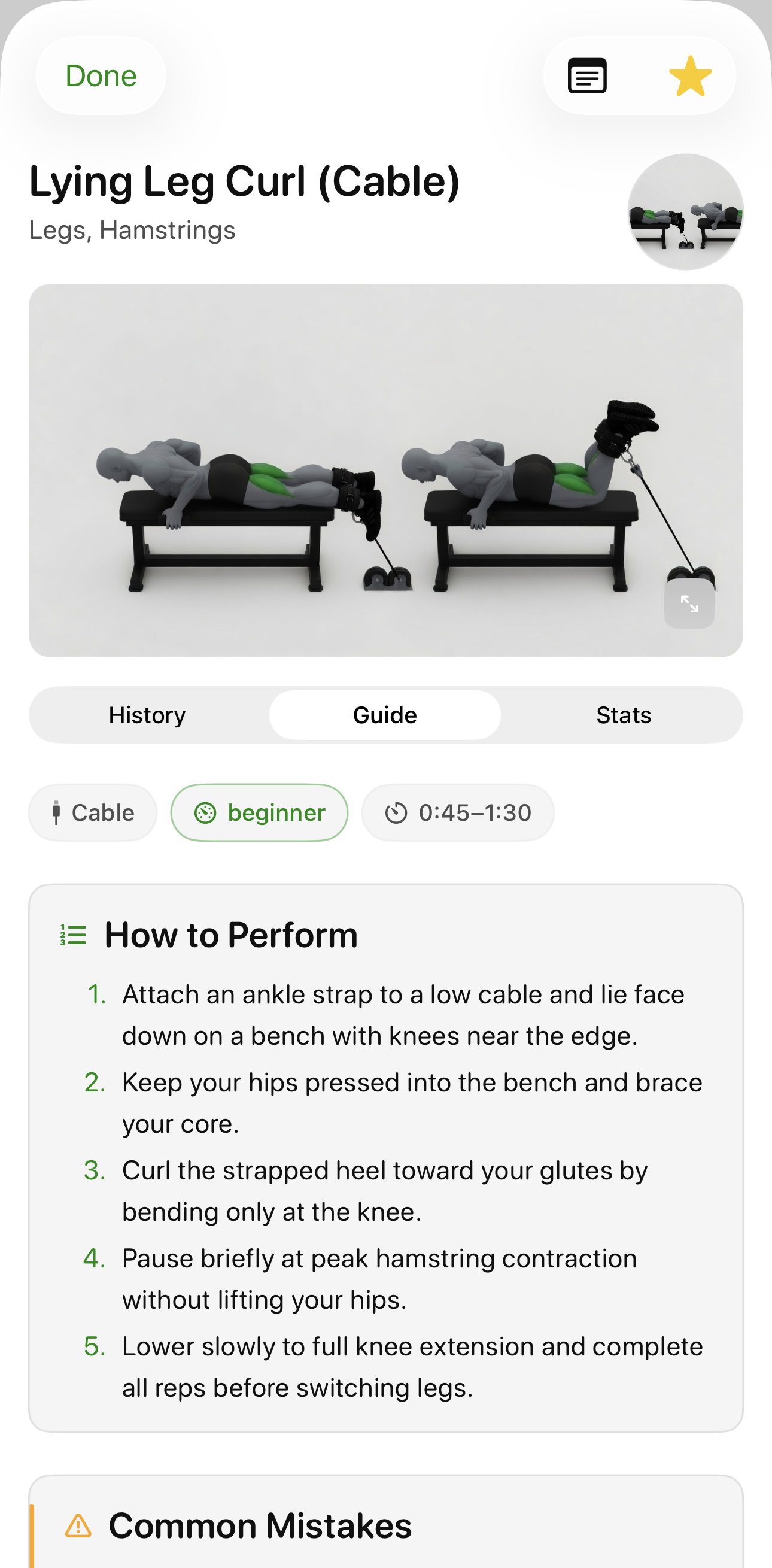
Exercise guides — form tips and anatomy for every movement
Get one useful lifting idea at a time.
Short notes on progression, workout logging, and product improvements. No noisy fitness spam.
Try Bazu free before paying for Strong Pro. You get charts, 1RM, permanent PR history, muscle breakdown, warm-up sets, supersets, and a smart rest timer with no ads — so you can judge the switch by outcomes, not promises. Progressive overload recommendations on Pro. Did logging feel faster? Did the overload suggestions cut the guesswork? Did the free tier cover what you actually need? If yes, you've found your alternative.
I'm the builder and user of Bazu. I've been lifting for over 10 years across strength and hypertrophy work, and I built Bazu to make progress simpler for serious lifters — every feature is designed around how real training actually works.
Put this guide into practice
Continue with a relevant calculator, exercise guide, or Bazu feature.