Compare Bazu and Boostcamp by free features, programs, workout logging, analytics, Apple Watch support, and pricing to choose the right gym log.
Waleed S.·Jul 29, 2026·Updated Aug 26, 2026·12 min read
Boostcamp is hard to beat if you want to find and follow a strength or hypertrophy program. Its free tier includes a large coach and community program library, RPE/RIR logging, a plate calculator, rest timer, PR tracking, weekly reports, and a capable workout tracker.
Bazu is the better Boostcamp alternative if one good program is enough. Its Routine Library gives you a complete plan to start from, then gets out of the way — a focused iPhone, Android, and Apple Watch gym log with free long-term analytics, lower Pro pricing, and no catalog to browse.
Key takeaways
Choose Boostcamp for a large coach and community program marketplace, RPE/RIR, and a plate calculator.
Choose Bazu for a curated Routine Library, fast logging, Apple Watch workouts, free charts and permanent PRs, and lower Pro pricing.
Both apps have useful free tiers and work offline.
Boostcamp Pro costs $14.99 monthly or $59.99 yearly. Bazu Pro costs $4.99 monthly or $24.99 yearly.
Both ship with programs now. The choice is whether you want a marketplace to browse or a short curated list and a better logbook.
Boostcamp is more than a basic logbook. It pairs workout tracking with coach-built and community-made programs. That is a major advantage when you need a plan.
It can also be more app than you need when you already know what to train. Common reasons lifters consider an alternative include:
They want to open the app and start training without browsing a catalog first.
They want a dedicated Apple Watch logging experience.
They want long-term progress analytics without another upgrade.
They want a lower annual subscription for progression tools.
They prefer a simple log that stays out of the way between sets.
Some Boostcamp users also ask for easier editing of preset programs and better data portability. Boostcamp has acknowledged export and dedicated Apple Watch work on its 2026 product roadmap. Those requests do not make Boostcamp a bad app; they show that a program-first product and a logbook-first product solve different problems.
How Bazu answers each reason
1. Start training without browsing a catalog
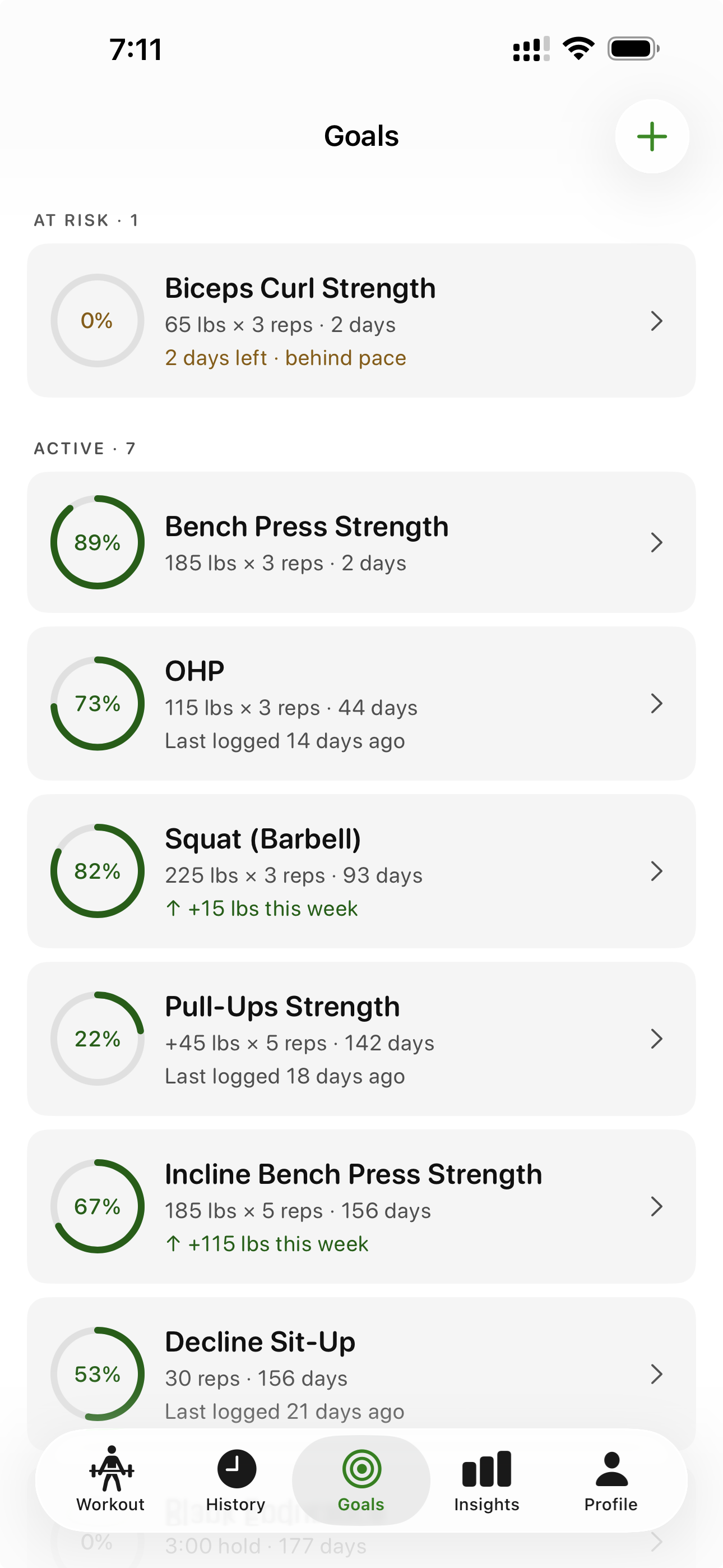
Open the Routine Library, filter by what you're training for and how long you've got, read the full program, and start. If you already have a routine from a coach, spreadsheet, or your own training block, build it once and start it from the dashboard instead.
The trade-off is scale. Bazu's library is a short curated list, not Boostcamp's marketplace. If you want to compare programs from many different coaches, or follow a specific named program, Boostcamp is the stronger starting point.
2. Use progress data without paying first
Bazu Free includes:
Unlimited workouts and workout history
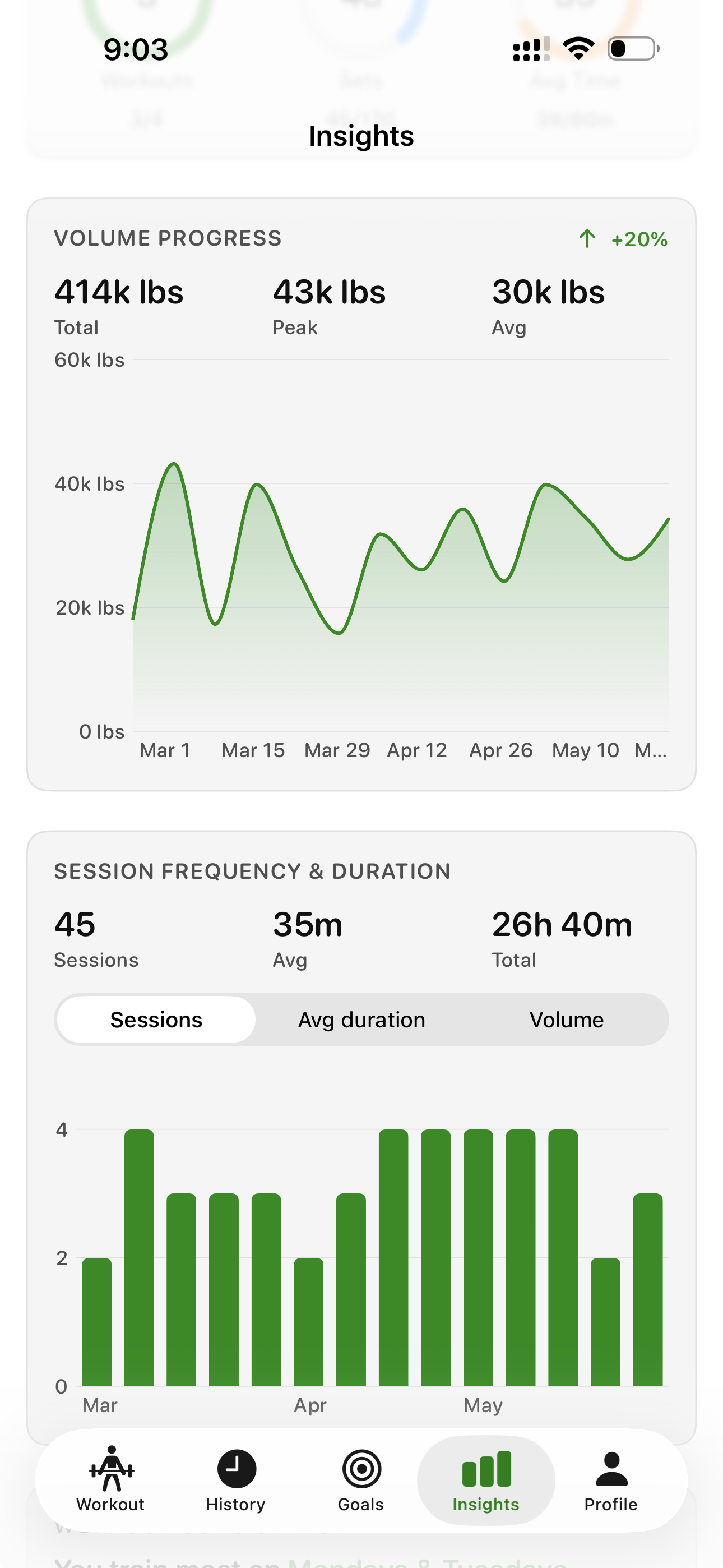
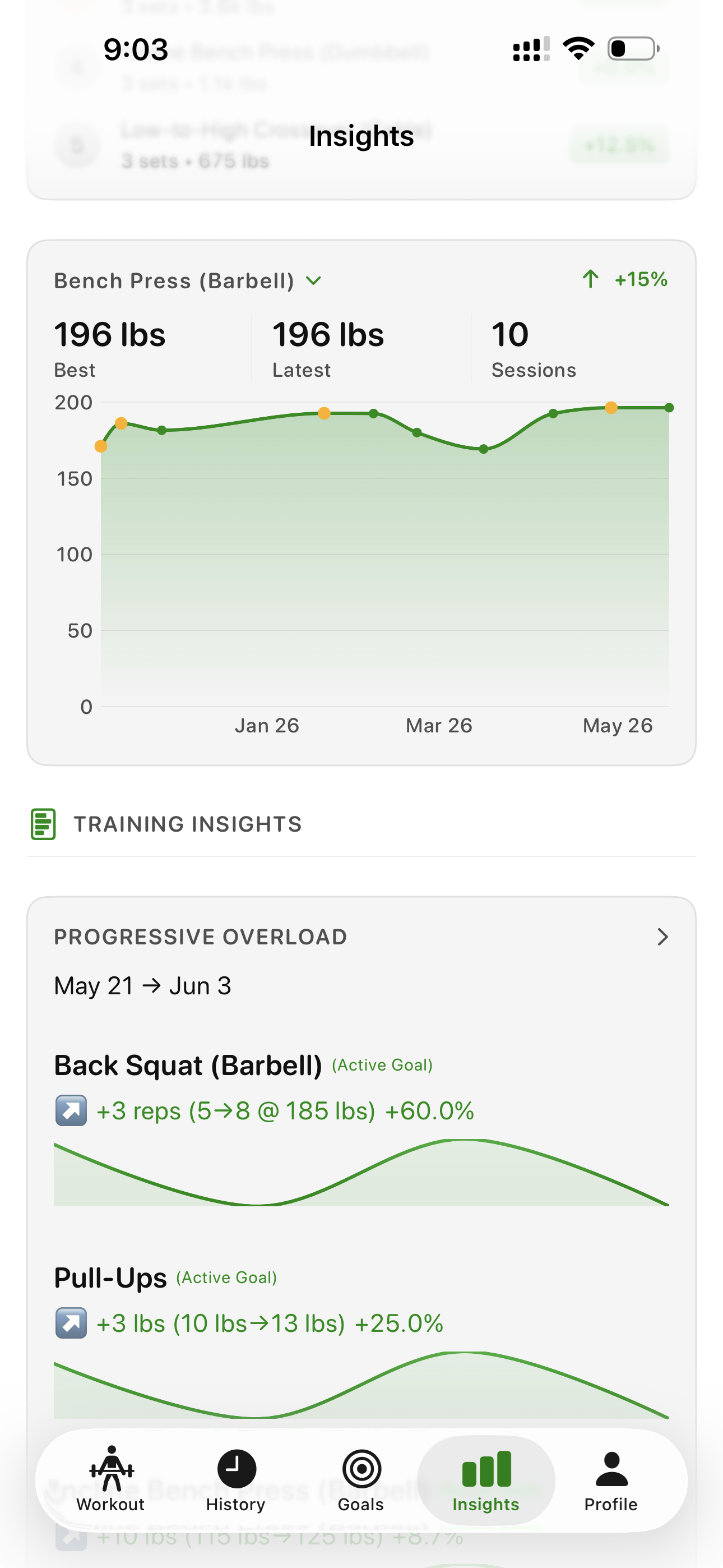
Exercise charts and volume trends
Estimated one-rep max
Permanent PR history for every exercise
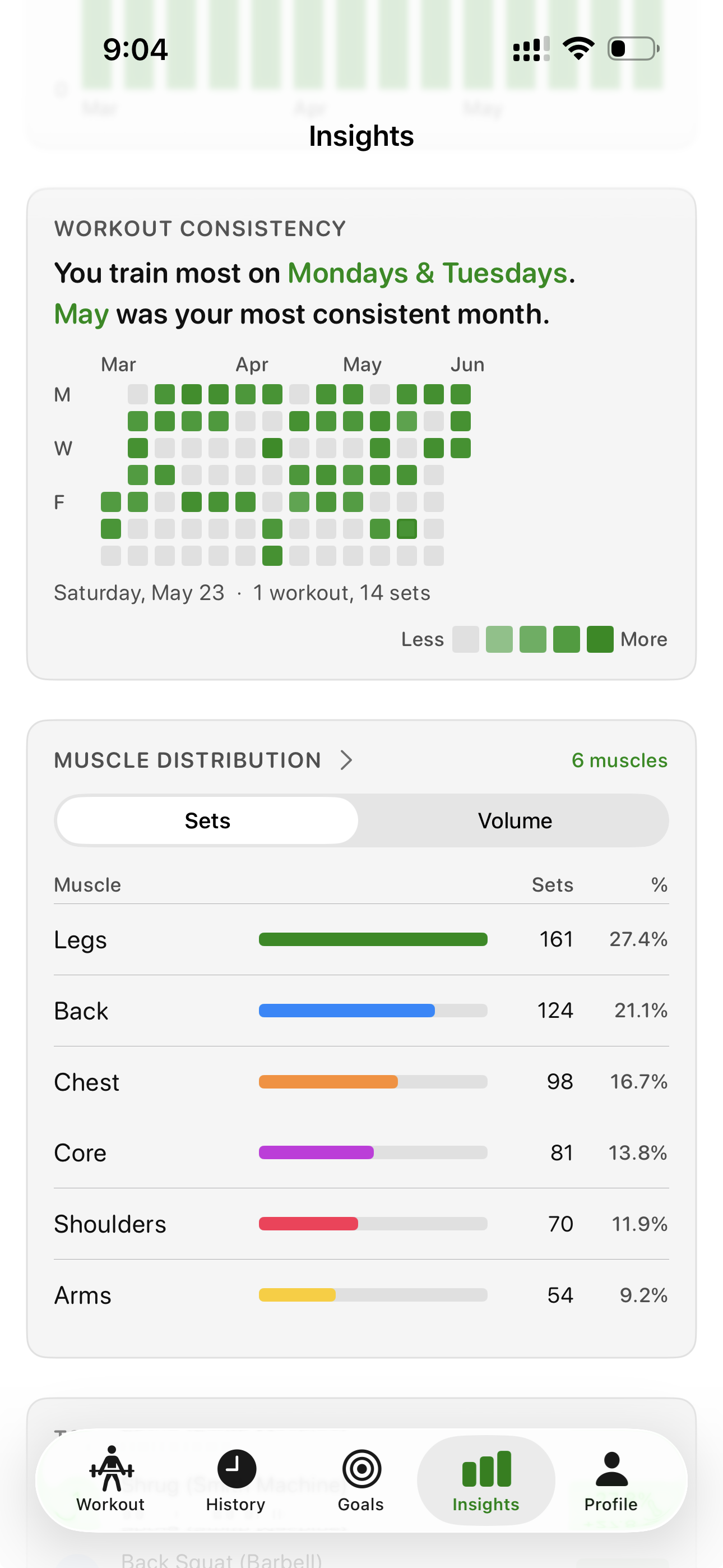
Muscle-group breakdown with individual-muscle drill-down
Up to 4 saved routines and 3 goals
That is enough for most lifters to answer the practical question: am I doing more quality work than I was a month ago?
Boostcamp Free is generous too. It includes PR/e1RM tracking and weekly reports. Its advantage is the training content surrounding that log; Bazu's advantage is keeping more of its progress analysis in a focused free tracker.
3. Log sets from Apple Watch
Bazu lets you choose a routine directly on Apple Watch, log weight and reps, view prior performance and available overload targets, and follow the smart rest timer with haptics and live heart rate. The workout runs on-device and syncs automatically when Watch reconnects to iPhone.
As of July 29, 2026, Boostcamp's U.S. App Store compatibility section lists iPhone and iPad, not Apple Watch. Boostcamp's team said in a July 2026 community update that its dedicated Watch app is being built.
If phone-free set logging matters today, Bazu has the practical edge, on iPhone or Android.
4. Pay less when you need progression guidance
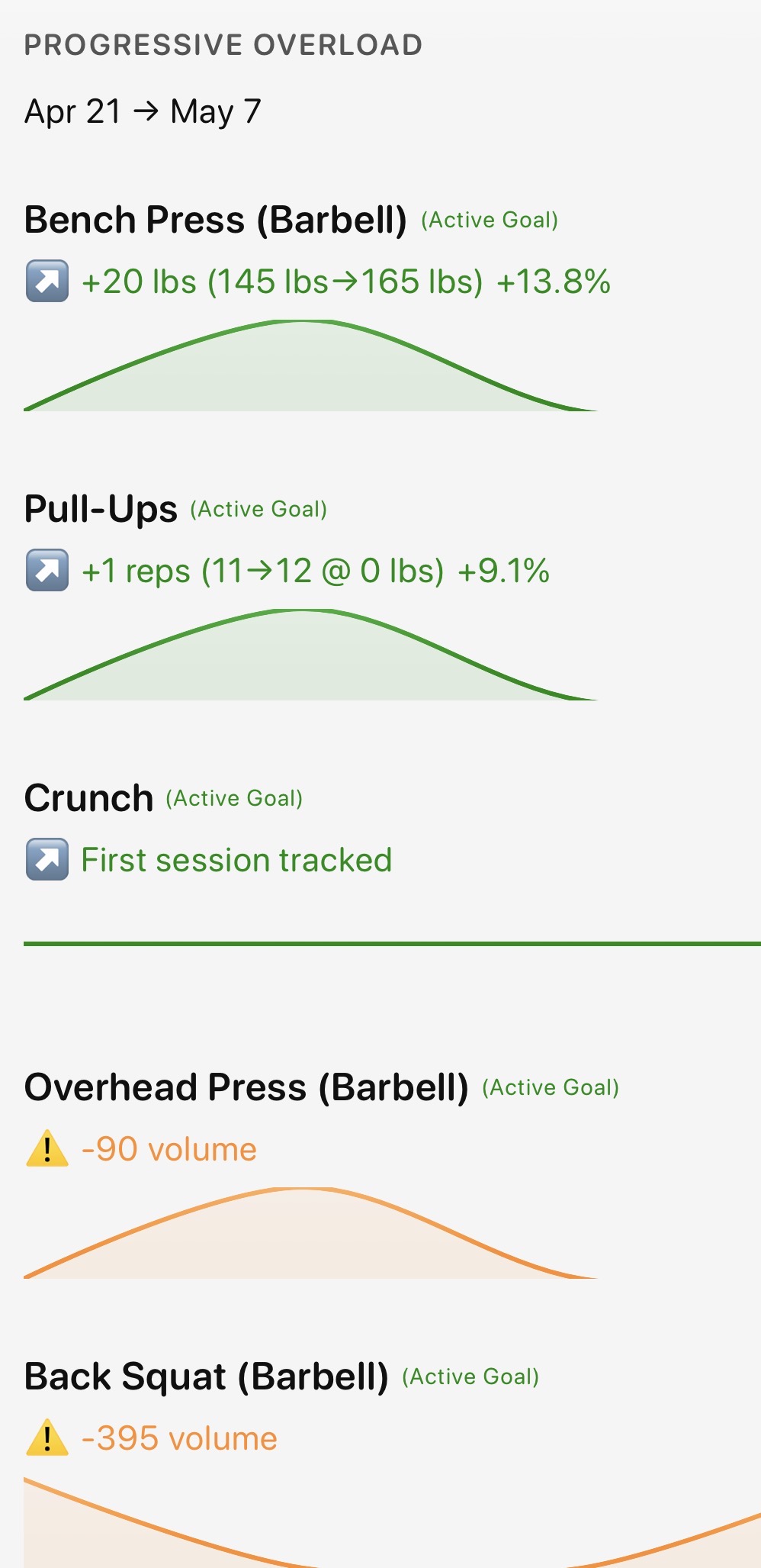
Bazu Pro adds progressive overload suggestions, an intensity pace selector, Next Workout Targets, and unlimited routines, goals, and custom exercises. It costs $4.99 monthly or $24.99 yearly.
Boostcamp Pro costs $14.99 monthly or $59.99 yearly. It adds exclusive programs, Strength Score, per-muscle volume heatmaps, personalized programs, advanced exercise analytics, and unlimited custom programs.
The cheaper option is not automatically the better value. Boostcamp Pro includes deeper program content. Bazu Pro costs less because it concentrates on logging and progression inside routines you control.
Boostcamp Free vs. Pro: upgrade or switch to Bazu?
Stay with Boostcamp Free if you want its program library, RPE/RIR, plate calculator, weekly reports, and current tracker. You may already have everything you need.
Upgrade to Boostcamp Pro if exclusive coach programs, Strength Score, muscle-volume heatmaps, advanced exercise analytics, or unlimited custom program building will change how you train.
Try Bazu Free if you want a program to start from without a marketplace to browse, plus quick logging, Apple Watch support, full workout history, free charts, permanent PRs, muscle drill-down, and smart rest.
Upgrade to Bazu Pro if you want explicit next-set guidance inside your own routines at a lower annual price.
FREE PDF
Get the Workout Tracker Switch Checklist
Download the one-page decision guide, six-step handoff, and baseline worksheet for moving your active training plan safely.
By submitting, you’ll receive the cheat sheet and occasional Bazu emails. Unsubscribe anytime.
Boostcamp wins on scale. Its official pages list more than 11,000 programs, including most of its 130+ coach programs in the free tier. Programs can include exercise notes and built-in progression.
Bazu now ships a Routine Library, but it is a different thing: a curated set of complete programs grouped by training goal and filtered by experience, equipment, and session length, free to browse and add. You read every training day before committing. There is no coach marketplace, no community submissions, and no catalog to get lost in — which is the point if browsing programs is the part you want to skip.
Set logging and exercise tools
Both apps support common strength-training workflows such as supersets, warm-up sets, rest timing, exercise history, and offline use.
Boostcamp goes further with RPE/RIR tracking and a plate calculator. Choose it if subjective effort ratings are central to your program.
Bazu focuses on a compact set-and-rest loop, including exercise-aware rest recommendations and Apple Watch input. If you are unsure how much rest your program needs, use this rest-between-sets guide.
Progress analytics
Boostcamp Free includes PRs, estimated 1RM, weekly reports, and a yearly recap. Pro adds Strength Score, per-muscle volume heatmaps, and advanced exercise analytics.
Bazu Free includes exercise charts, volume analytics, estimated 1RM, permanent PRs, completed-workout PRs, and muscle breakdown with individual-muscle drill-down. Bazu Pro adds progression recommendations rather than locking the basic history behind Pro.
Progressive overload
Boostcamp can apply automatic progression within compatible programs, while Pro includes personalized programs.
Bazu Pro works inside your routines. It uses logged performance to suggest whether to add reps, increase weight, repeat a target, or adjust slightly. Read progressive overload for beginners before following any app recommendation blindly: technique and recovery still matter.
Platform support
Both apps run on iPhone and Android. Bazu also supports phone-free Apple Watch workouts; as of July 29, 2026, Boostcamp's dedicated Watch app is still in development.
Bazu is the better fit when Watch logging matters to your training.
Price
Plan
Bazu
Boostcamp
Free
$0
$0
Monthly Pro
$4.99
$14.99
Annual Pro
$24.99
$59.99
Annual trial
No trial needed for Free features
7 days
At listed annual prices, Bazu Pro costs $35 less per year. Boostcamp Pro may justify the difference if you use its exclusive programs and advanced program analytics.
Bazu workout logging — 1-tap sets, rest timer, and progressive overload in action
Who Bazu is—and is not—for
Bazu is a good fit if you:
Want one solid program to follow, or already have your own
Train on iPhone, Android, or Apple Watch
Want fast set logging and a synchronized rest timer
Care about long-term charts, PRs, 1RM, and muscle breakdown
Want optional progression targets without a larger program subscription
Stay with Boostcamp if you:
Want to browse and compare many coach or community programs
Log RPE or RIR on most working sets
Use a built-in plate calculator
Want Strength Score, muscle-volume heatmaps, or exclusive programs
How to switch from Boostcamp to Bazu without losing your plan
There is no automatic Boostcamp-to-Bazu history import today, so treat the switch like a short training-block handoff:
Record your current program. Save the exercise order, sets, reps, schedule, and progression rule.
Capture your baselines. Keep your last two working sessions, current loads, rep targets, top PRs, units, and important set notes.
Move the active block first. Recreate the routines you are using now instead of copying years of inactive templates.
Validate one workout. Compare the first Bazu session set by set with the source before relying on it.
Keep the old history temporarily. Do not delete your Boostcamp account or screenshots until you have completed at least two successful sessions in Bazu.
The free Workout Tracker Switch Checklist below puts those steps on one printable page.
The short answer
Boostcamp is better when you want to shop for a program. Bazu is better when you want one and then want to be left alone to train.
Choose Boostcamp for a large program marketplace, RPE/RIR, and its plate calculator. Choose Bazu for iPhone, Android, and Apple Watch logging, free long-term analytics, permanent PRs, muscle drill-down, and lower-cost progression targets inside your own routines.
You can test Bazu Free without abandoning Boostcamp. Recreate one active routine, log two workouts, and compare the friction and usefulness of the data before deciding.
Frequently asked questions
What is a good alternative to Boostcamp?
Bazu is a good Boostcamp alternative for iPhone lifters who want a focused gym log that still gives them a plan to start from. Bazu Free includes a Routine Library of complete programs, unlimited workout history, charts, 1RM estimates, permanent PRs, muscle breakdown, 4 routines, Apple Watch logging, offline mode, and smart rest. Boostcamp remains better for discovering and following coach or community programs.
What is the main difference between Bazu and Boostcamp?
Boostcamp combines a workout tracker with a large marketplace of coach and community programs. Bazu is a focused iPhone and Apple Watch gym log with a smaller curated Routine Library, built around fast set logging, free long-term progress analytics, and optional progressive overload targets inside your routines.
What is the difference between Boostcamp Free and Pro?
Boostcamp Free includes its workout tracker, 11,000+ programs, most coach programs, RPE and RIR, a plate calculator, rest timer, PR and estimated 1RM tracking, weekly reports, and a limited custom program builder. Boostcamp Pro adds exclusive programs, Strength Score, per-muscle volume heatmaps, personalized programs, advanced exercise analytics, and unlimited custom programs.
Is Bazu cheaper than Boostcamp?
Yes, based on U.S. prices checked on July 29, 2026. Bazu Pro costs $4.99 per month or $24.99 per year. Boostcamp Pro lists $14.99 per month or $59.99 per year, with a seven-day trial on the annual plan. Prices can change and vary by region.
Does Boostcamp have an Apple Watch app?
As of July 29, 2026, Boostcamp's U.S. App Store compatibility section lists iPhone and iPad, not Apple Watch, and a current Boostcamp community update says its dedicated Apple Watch app is still in development. Bazu already supports workout logging and rest timing on Apple Watch.
Is Bazu available on Android?
Yes. Bazu is available on both iPhone and Android.
Which app is better for hypertrophy?
Boostcamp is better if you want to browse a large catalog of hypertrophy programs from different coaches. Bazu is better if one solid hypertrophy program is enough — pick one from its Routine Library or bring your own — and you want a focused log with muscle breakdown, exercise charts, PRs, 1RM estimates, and optional next-set progression targets.
Try one routine in Bazu
You do not need to migrate everything to compare the experience. Build one current routine, log two workouts, and see whether the focused set-and-rest flow works better for you.
I'm the builder and user of Bazu. I've been lifting for over 10 years across strength and hypertrophy work, and I built Bazu to make progress simpler for serious lifters — every feature is designed around how real training actually works.
Put this guide into practice
Continue with a relevant calculator, exercise guide, or Bazu feature.