Training
20-Minute Dumbbell Workout Plan for Beginners (6 Weeks)
Waleed S.Nov 7, 2026Updated Nov 9, 202611 min read

A 20-minute dumbbell workout works when each session is limited to four required exercises: a squat, a hip-focused movement, a push, and a row. Train three days a week for at least six weeks, doing two working sets of 8–12 reps. The time is a target, not a guarantee, so take longer when you need it.
The name is a time-saving aim, not a stopwatch guarantee. Prepare your equipment, prioritize controlled sets, and allow longer when you need it. If you want a longer plan without a bench, use our dumbbell-only home workout instead.
Disclaimer: This is general exercise education, not individualized medical advice. Stop if you develop pain, dizziness, or an unstable setup. Seek qualified guidance when an injury, health condition, or unfamiliar movement affects safe training.
| Day | Workout | Required work |
|---|---|---|
| Monday | A: DB Squat & Press | Goblet squat, Romanian deadlift, floor press, single-arm row |
| Wednesday | B: Hinge & Pull | Hip thrust, dumbbell squat, seated press, incline row |
| Friday | C: Sumo Squat & Row | Sumo squat, deadlift, decline push-up, chest-supported row |
Repeat A/B/C each week for a minimum of six weeks. The weekdays can change; leave a recovery day between sessions when possible. This is a low-volume starting plan, not a universal prescription or a maximum hypertrophy (muscle growth) routine.
The 2026 ACSM guidance supports consistent resistance training, including home-based exercise. It does not establish that this particular routine, or exactly 20 minutes, is best for everyone.
Use dumbbells you can adjust or several suitable pairs, an adjustable exercise bench, and enough clear floor space to lie down and move safely. Set out the equipment before starting. Check the bench locks, feet, and load rating, plus any adjustable dumbbell mechanisms.
Several exercise names hide a support requirement: the single-arm row uses a bench, the shoulder press is seated, and both supported rows use an incline bench. Hip thrusts require secure upper-back support. Decline push-ups elevate your feet. Do not improvise with a wheeled chair or unstable furniture.
To keep sessions short:
The source program estimates 20–30 minutes. The warm-up, changing adjustable weights, and doing both sides of a row affect the total. Timing is a constraint to manage, not a reason to turn every repetition into a race.
Warm up with a few minutes of easy movement and lighter practice sets of the day's first lower-body and upper-body exercises. Warm-ups are additional to the working sets below.
Start with two or three reps in reserve: you could do that many more good repetitions before technique deteriorates. Use a comfortable, repeatable range of motion. Do not test your heaviest possible weight to choose a starting load.
The final two required exercises form a superset, meaning you alternate them. Do one set of the push, transition safely to one set of the row, recover, then repeat. This pairing comes from the program. The rest ranges below are the catalog's exercise-level guidance, not a requirement to take zero rest between paired exercises. Extend recovery or use separate sets if you cannot maintain control.
| Exercise | Working sets | Reps | Catalog rest |
|---|---|---|---|
| Goblet squat | 2 | 8–12 | 60–120 sec |
| Dumbbell Romanian deadlift | 2 | 8–12 | 60–120 sec |
| A1: Dumbbell floor press | 2 | 8–12 | 60–90 sec |
| A2: Single-arm dumbbell row | 2 | 8–12 per side | 60–90 sec |
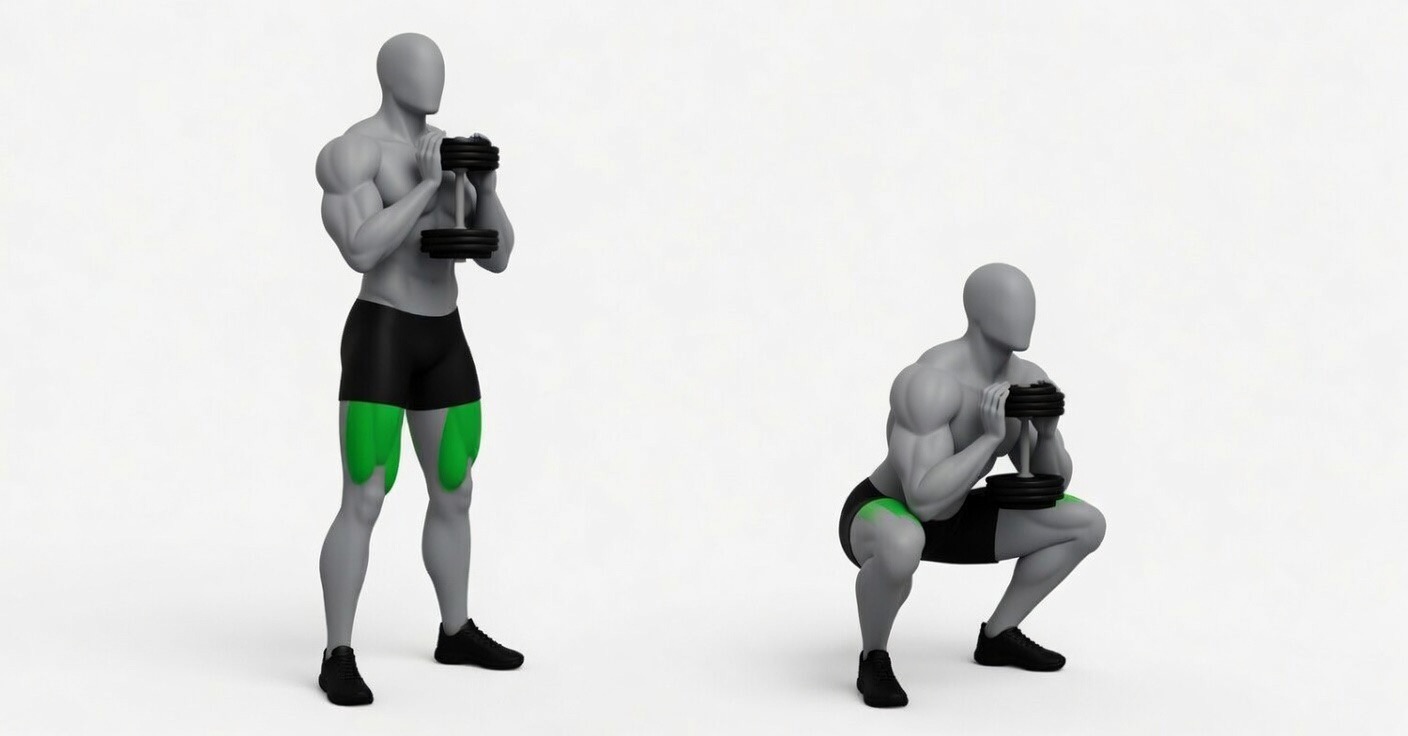
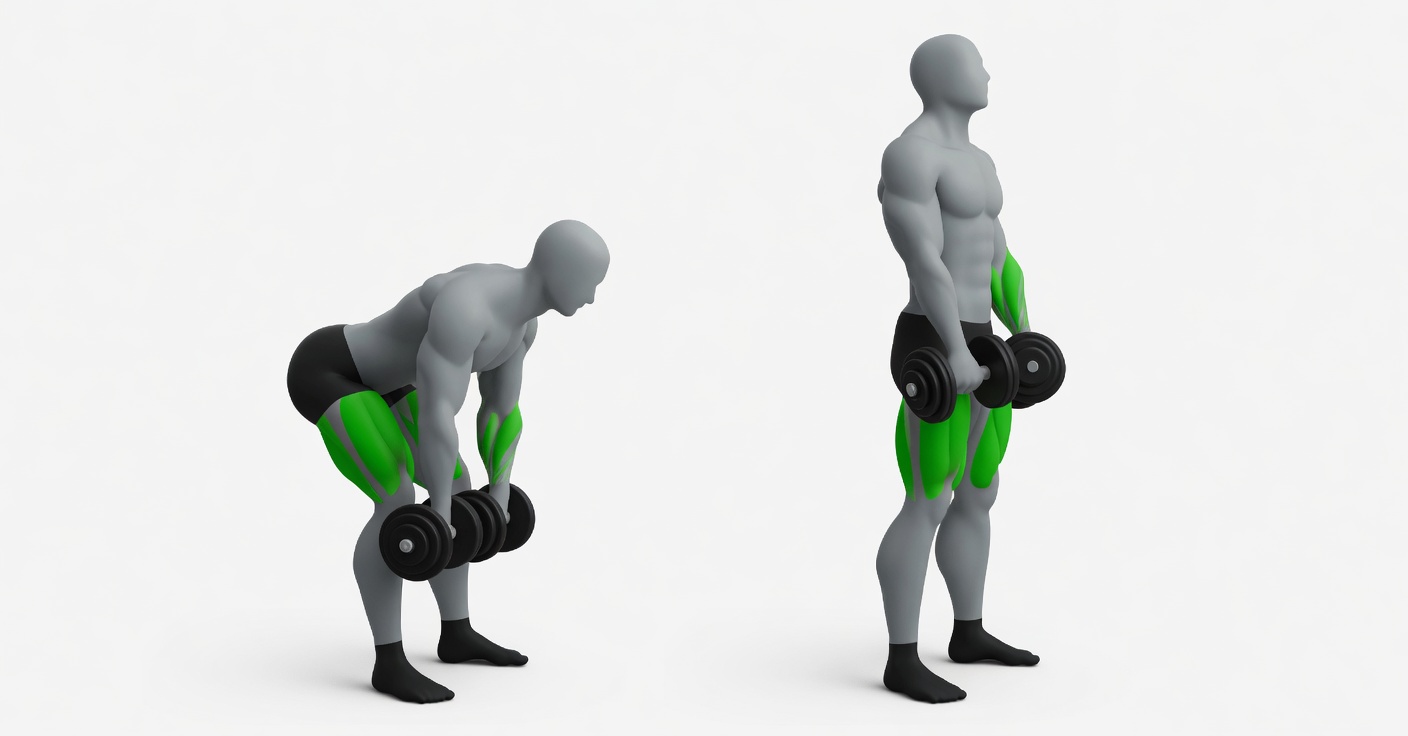
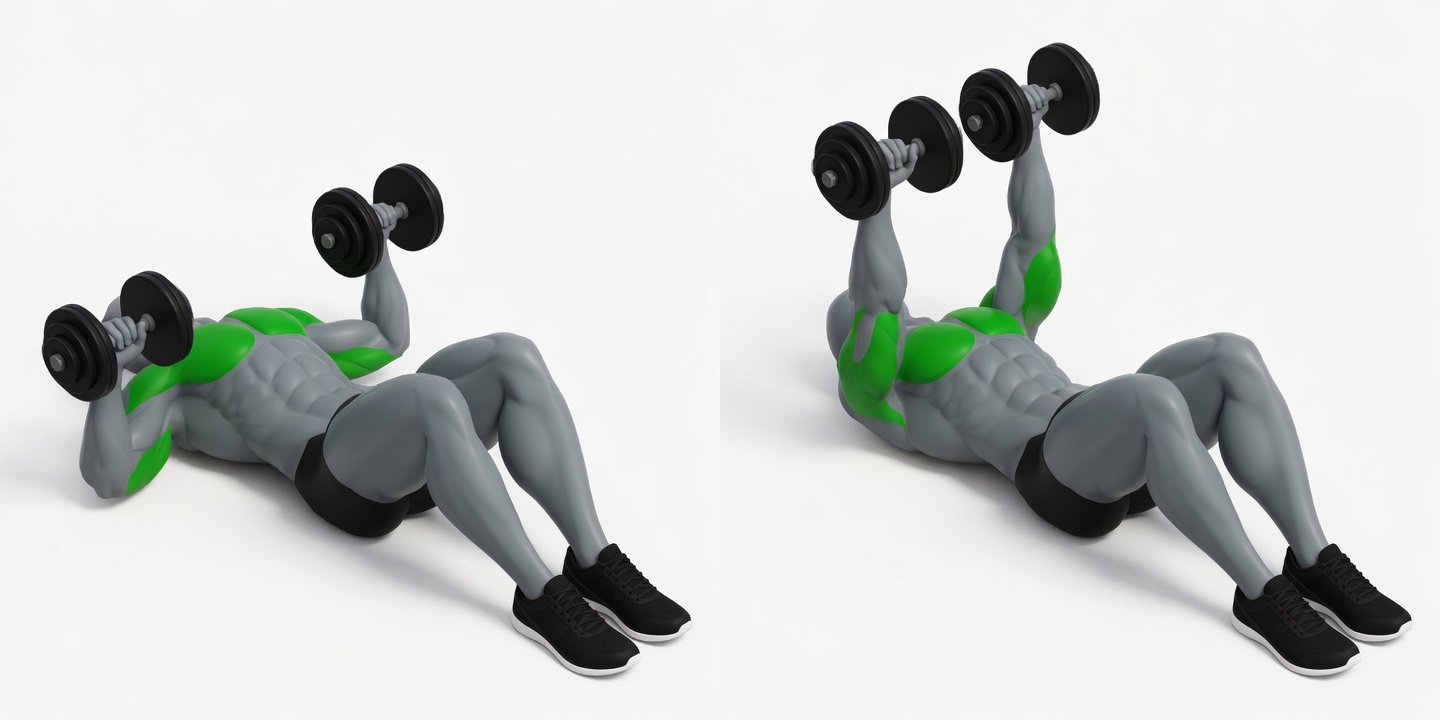
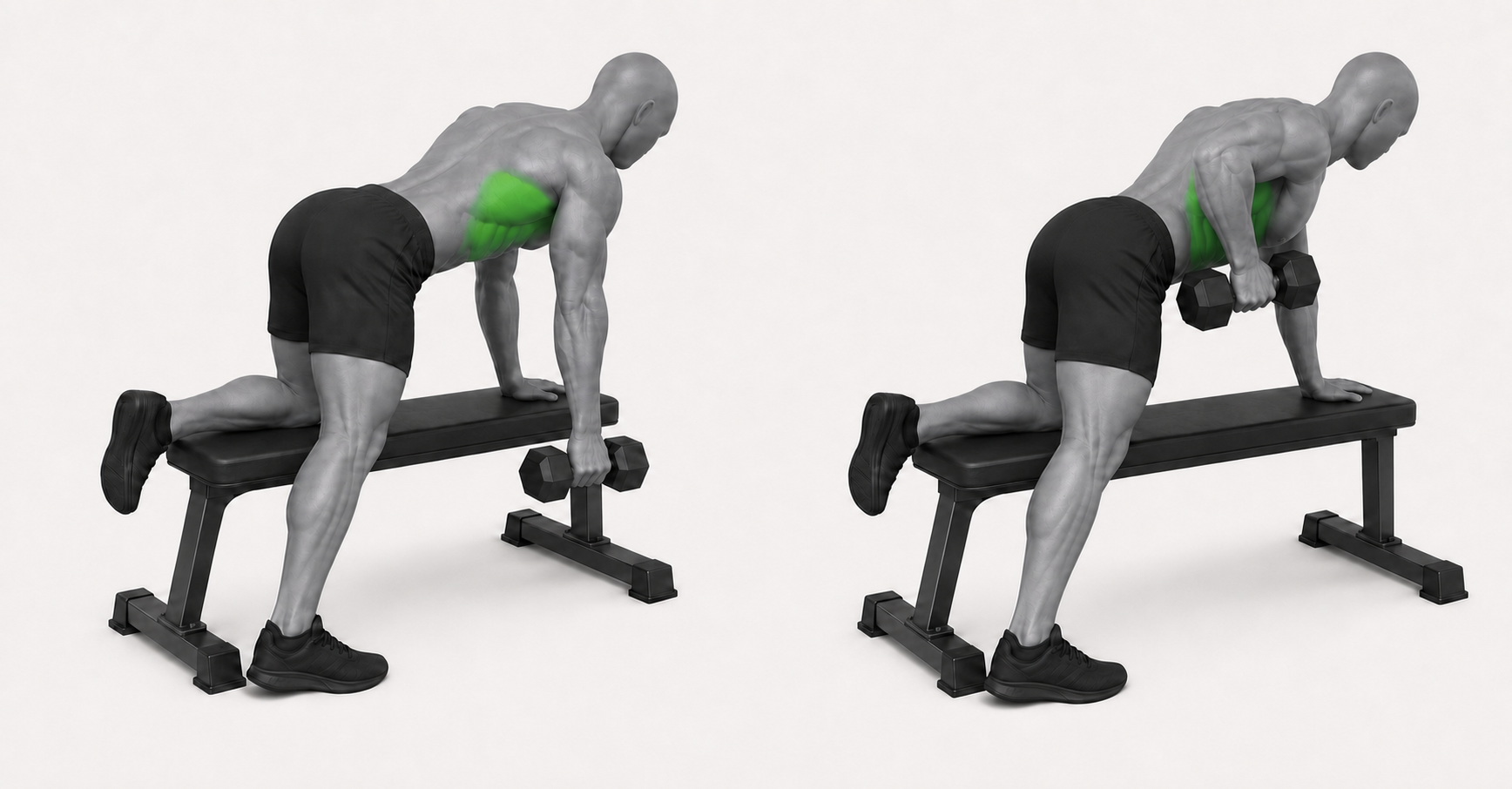
Keep the goblet squat close to your chest. For the Romanian deadlift, move your hips backward with softly bent knees rather than reaching the dumbbells toward the floor. On the floor press, let your upper arms meet the floor gently instead of bouncing. Keep your hips square on the row and finish both sides before counting the set complete.
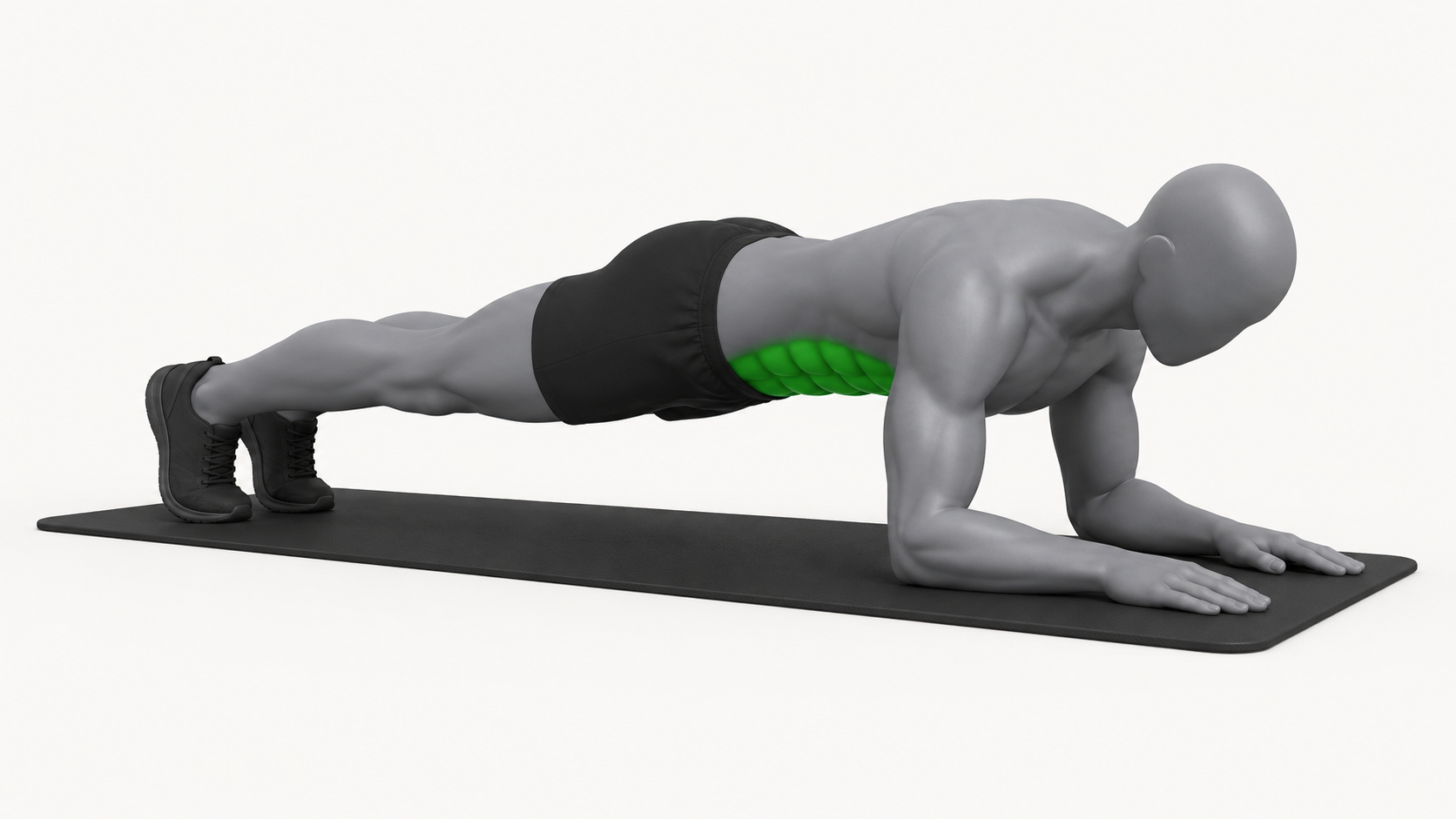
Optional: forearm plank. Try two controlled 15–30-second holds with 60–90 seconds of rest. The hold time is a guide suggestion, not an app-prescribed duration. Skip optional work when time is tight.
| Exercise | Working sets | Reps | Catalog rest |
|---|---|---|---|
| Dumbbell hip thrust | 2 | 8–12 | 60–90 sec |
| Dumbbell squat | 2 | 8–12 | 60–120 sec |
| B1: Seated dumbbell shoulder press | 2 | 8–12 | 60–90 sec |
| B2: Incline dumbbell row | 2 | 8–12 | 60–90 sec |
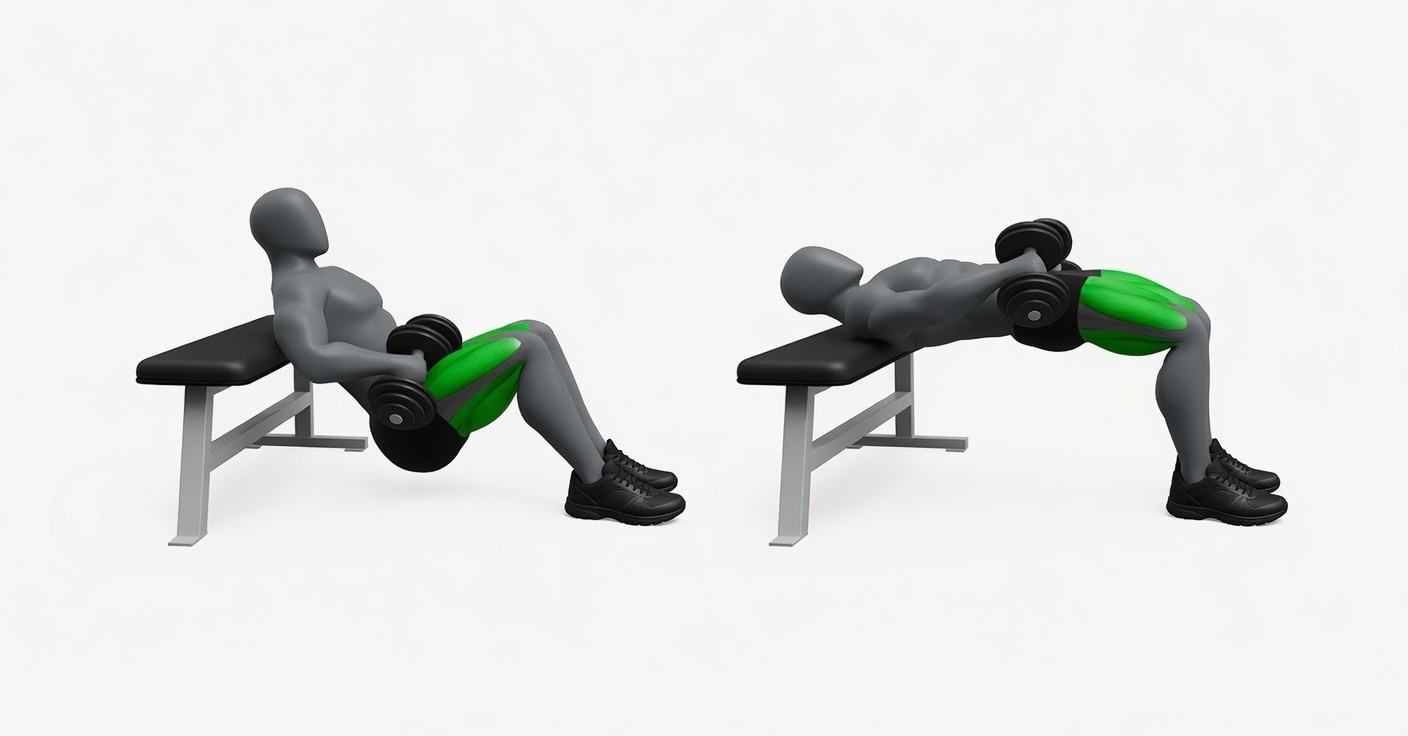
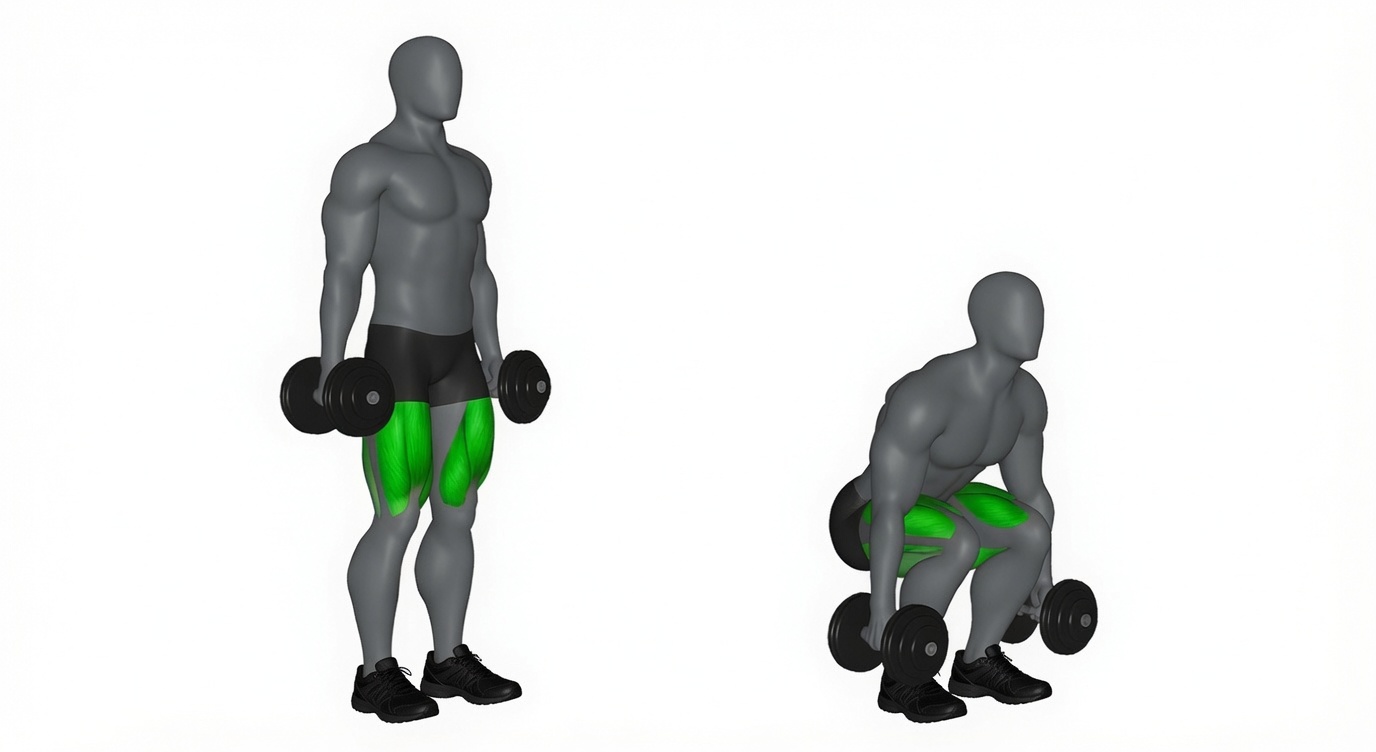
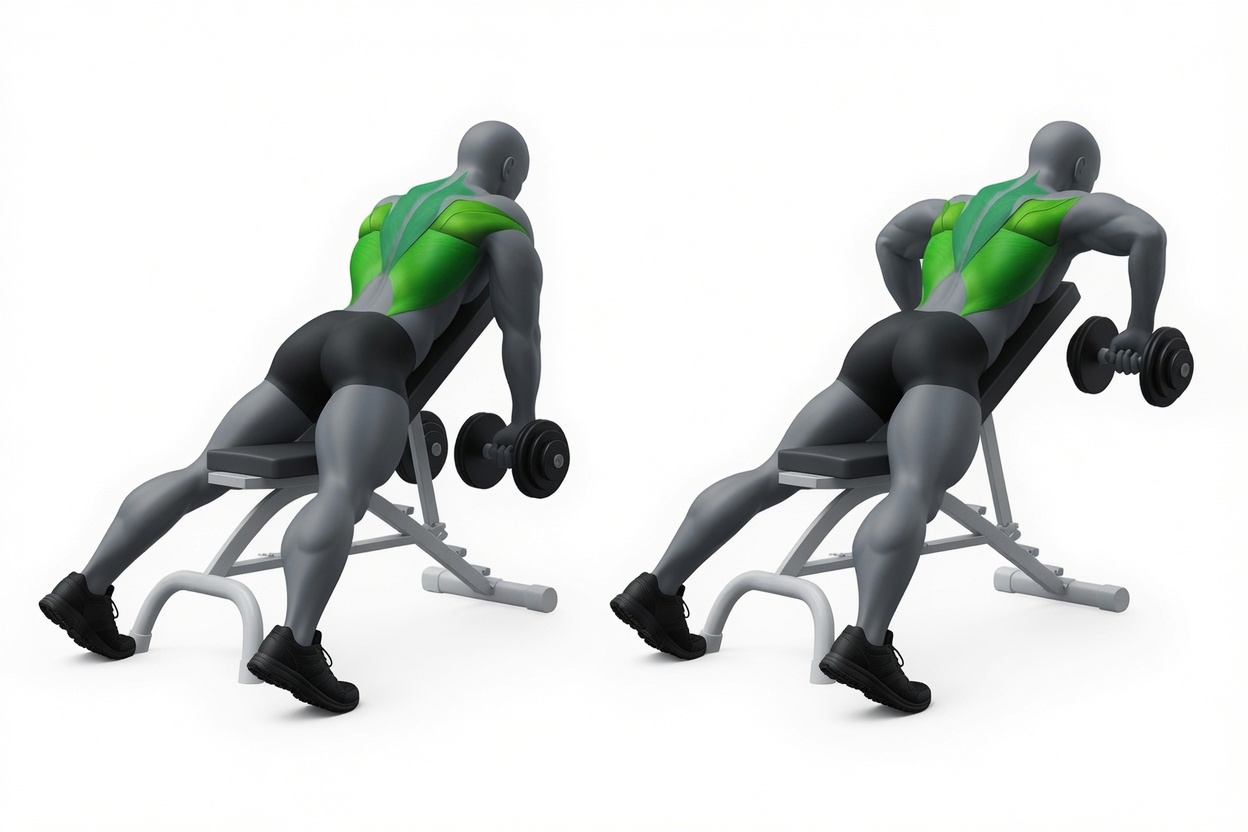
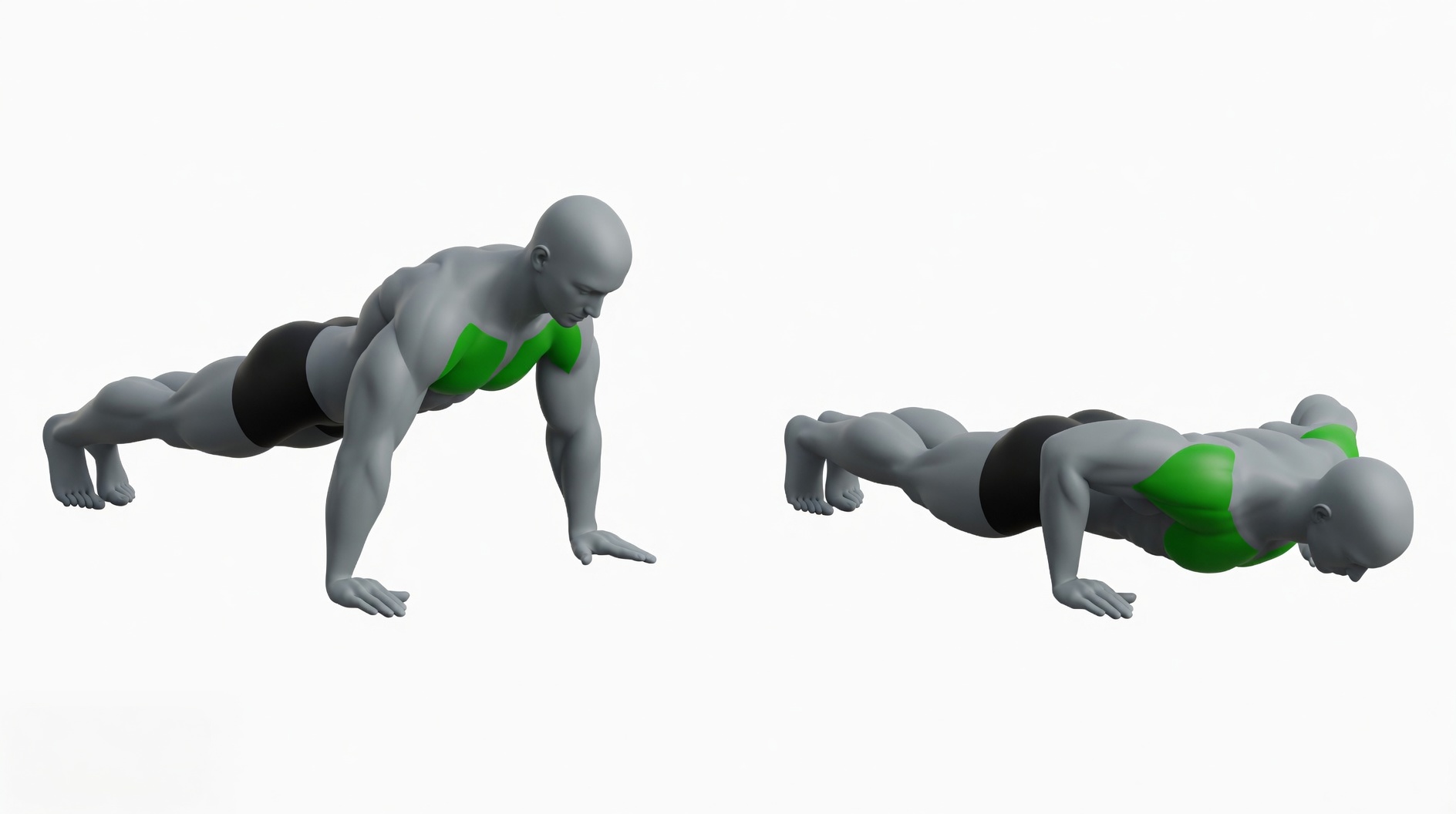
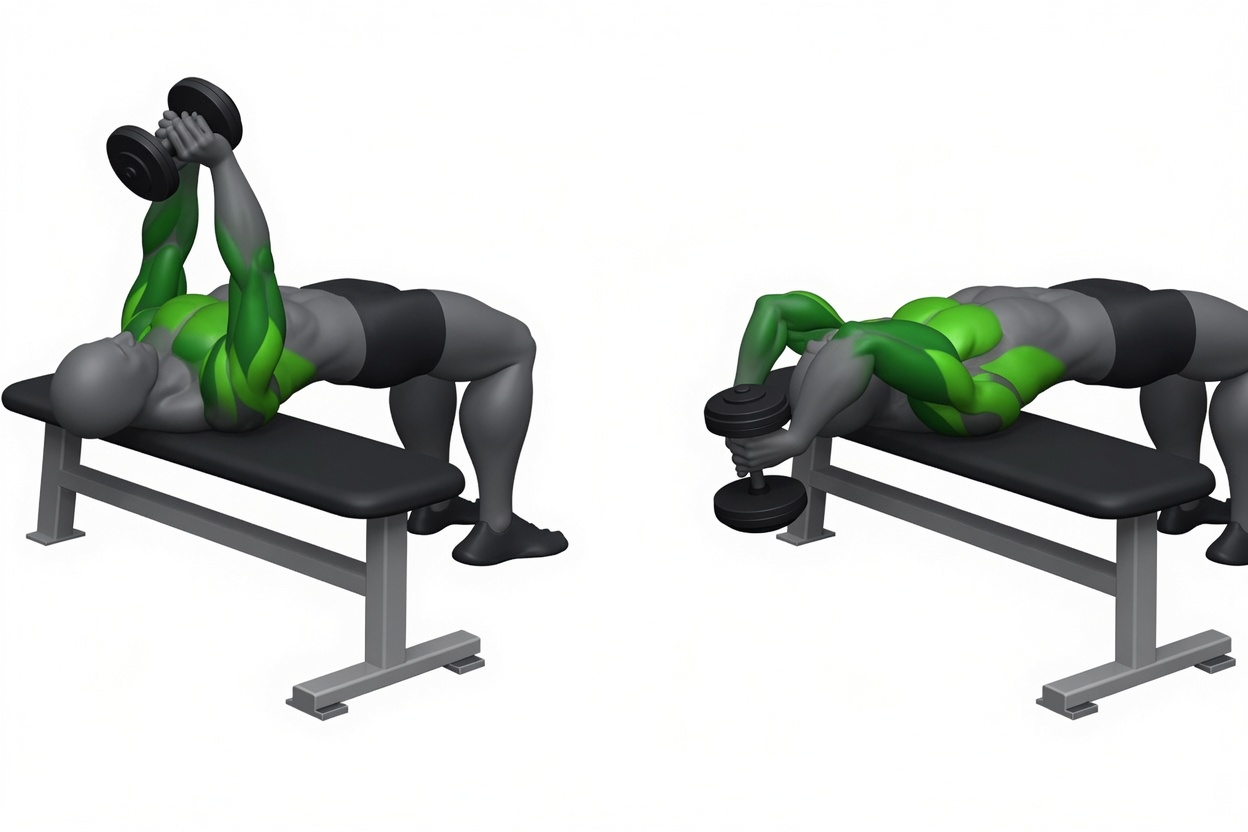
For hip thrusts, keep your upper back supported and finish by extending your hips, not arching your lower back. Use an upright bench for the shoulder press. For the incline row, support your chest on a bench set around 30–45 degrees and avoid bouncing off the pad. Changing the bench position takes time; allow for it.
Optional: push-ups and dumbbell pullovers, each two sets of 8–12 reps with 60–90 seconds of catalog rest. Pullovers need a suitable bench and comfortable shoulder motion. They are not a complete substitute for pull-ups or pulldowns. These additions may extend the session beyond 20 minutes.
| Exercise | Working sets | Reps | Catalog rest |
|---|---|---|---|
| Dumbbell sumo squat | 2 | 8–12 | 60–120 sec |
| Dumbbell deadlift | 2 | 8–12 | 60–120 sec |
| C1: Decline push-up | 2 | 8–12 | 60–90 sec |
| C2: Chest-supported dumbbell row | 2 | 8–12 | 60–90 sec |
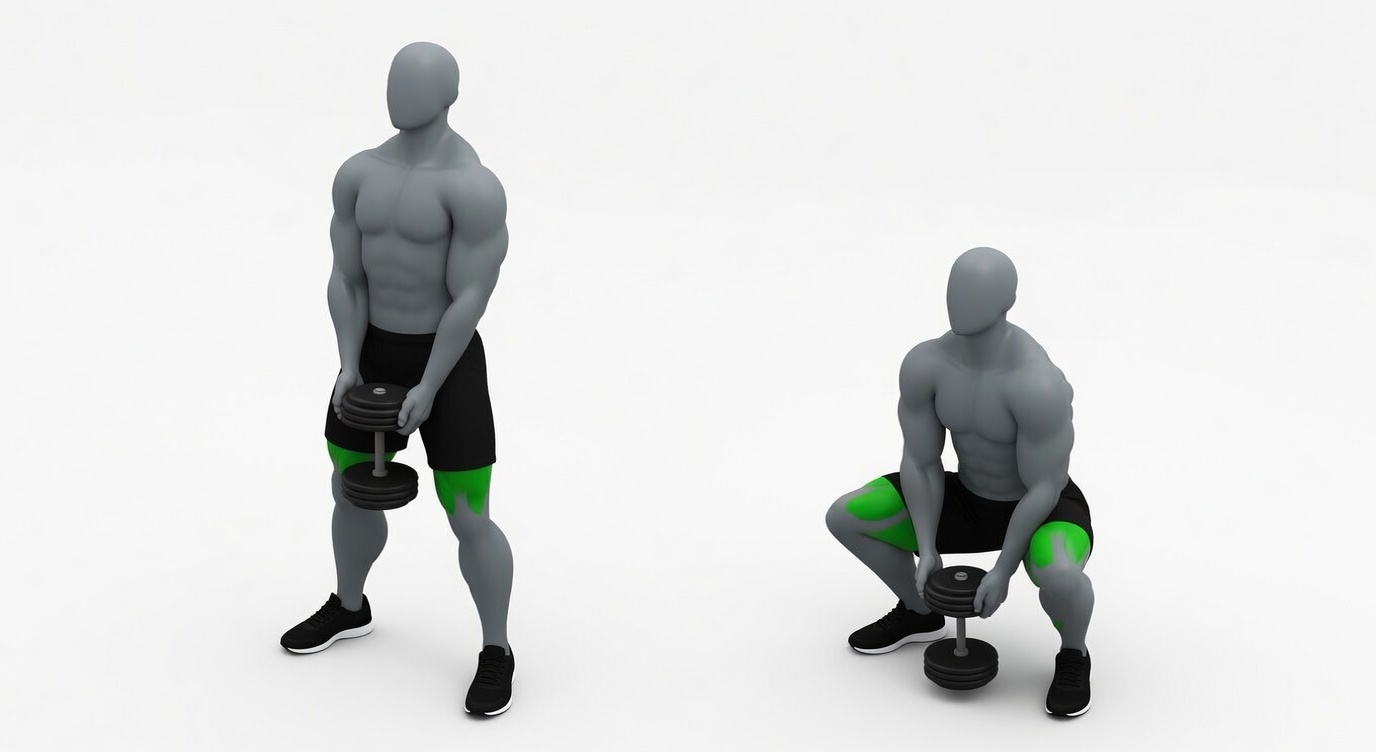
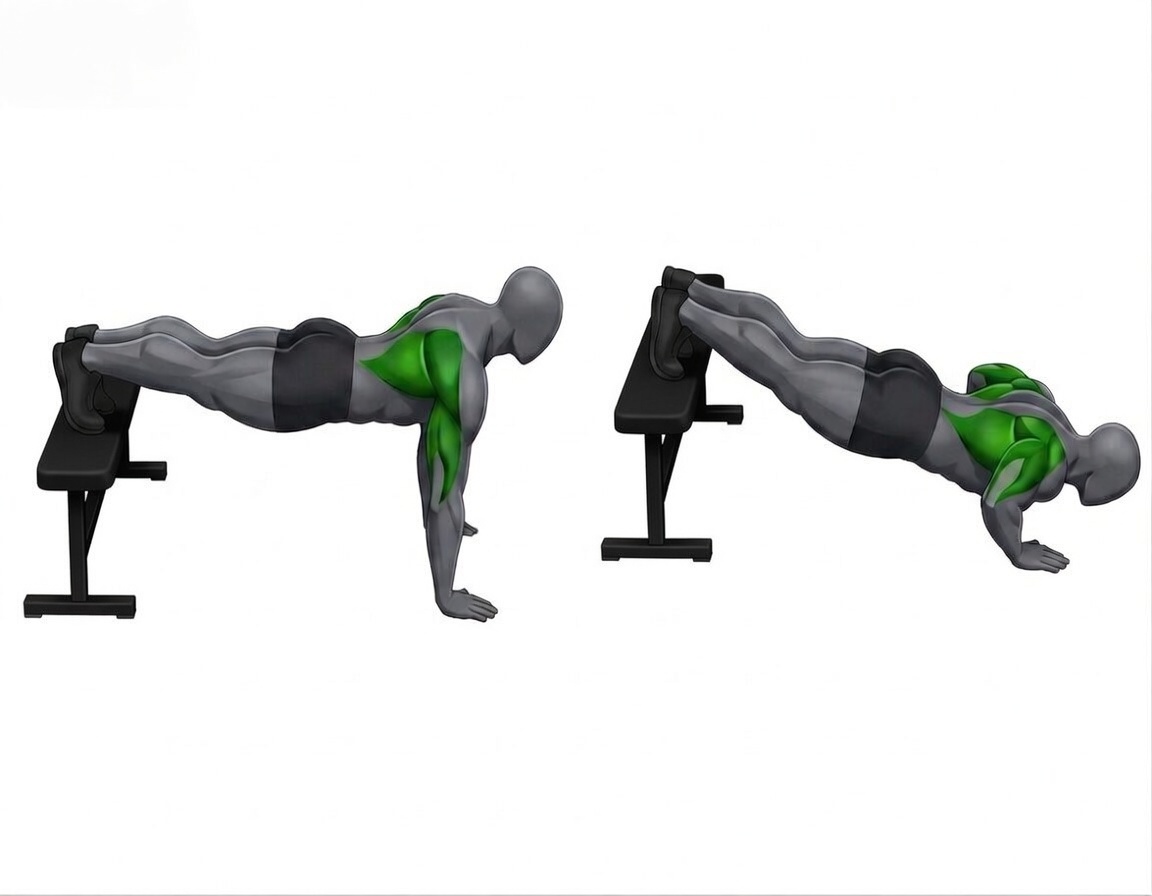
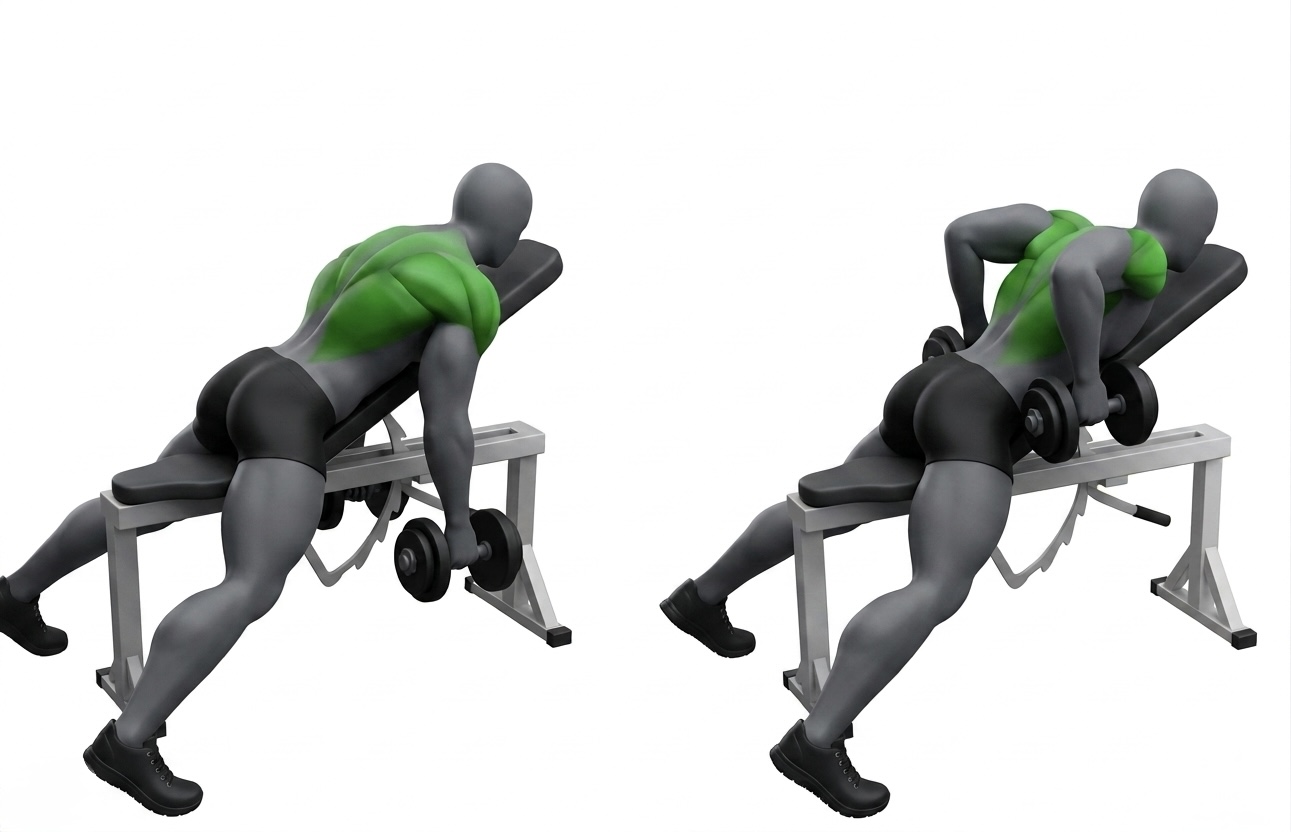
Use a stance that allows your knees to follow your toes on the sumo squat. For deadlifts, keep the weights close and do not round your back to reach low handles. Decline push-ups place your feet on a secure elevated support. They can be demanding even though the program is labeled beginner: do not force the rep target by sagging through your back.
Optional: forearm side plank. Try two rounds of 15–30 seconds per side with 60–90 seconds of rest between rounds. This hold time is a guide suggestion. Complete both sides and stop when your position changes.
Keep the exercise order and required set count stable while learning the movements. Add reps before increasing weight:
For example, your floor press might progress from 10/9 to 11/10 to 12/12 across sessions at the same weight. Increase only then; there is no requirement to add weight every week. Our beginner progressive-overload guide explains this approach in more detail.
| Weeks | Priority |
|---|---|
| 1–2 | Learn the movements, choose manageable weights, and record your starting sets. |
| 3–4 | Add controlled reps where possible without changing everything at once. |
| 5–6 | Increase weight only on exercises that meet the progression rule. |
This outline is coaching guidance. The app repeats the listed weekly schedule; it does not automatically alternate a separate Week A and Week B program. After six weeks, keep going if the routine still fits and performance is improving. If recovery or technique deteriorates, reduce load and effort and reassess rather than adding optional exercises.
If you miss a day, do the next workout in order on your next available training day. Do not cram two sessions together to catch up.
Get all three workouts and 18 sessions of editable space for weights, reps, hold times, and notes. Optional exercises are marked separately.
By submitting, you’ll receive the six-week dumbbell workout spreadsheet and occasional Bazu emails. Unsubscribe anytime.
This site is protected by reCAPTCHA and the Google Privacy Policy and Terms of Service apply. See our Privacy Policy for details on how Bazu handles submissions.
The program lists these alternatives. Recheck the replacement exercise's targets and setup instead of assuming every substitution has the same prescription.
| Original | Program-listed alternative | Setup consideration |
|---|---|---|
| Goblet squat | Dumbbell squat or front squat | Choose a grip you can control. |
| Dumbbell hip thrust | Dumbbell glute bridge | The bridge uses the floor rather than upper-back bench support. |
| Single-arm row | Dumbbell bent-over row | Removes the supported setup, but requires a steady hip hinge. |
| Incline row | Single-arm row or dumbbell bent-over row | Both arms still need to be trained. |
| Dumbbell deadlift | Dumbbell good morning | Learn the different weight position before loading it. |
Decline push-ups too hard? The program's listed substitution is dips, which is not automatically easier and requires appropriate equipment. A regular or hands-elevated push-up may be a sensible individualized regression with coaching, but it changes the exact program; it is not listed as this slot's catalog-approved substitution. Do not attempt an unsafe movement just to preserve a template.
No adjustable bench? The full plan is not bench-free simply because some exercises have floor alternatives. Use the no-bench dumbbell guide rather than improvising supported rows or elevated push-ups.
Dumbbells too light? Build to the top of the range first. If both sets are easy, heavier suitable dumbbells make this progression easier to measure. Slower reps or different exercises change the comparison, so record them. Do not add unlimited extra sets while still calling it the same short workout.
Need more rest? Take it. Our rest-between-sets guide explains why shorter rests are not always the better choice.
Bazu is a workout-tracking app for iPhone and Android. Express Dumbbell (20 Minute) is ready in Bazu Free. Open this free program, review the three sessions, and add it to My Routines.
Log the weight and reps for each working set. For dumbbell movements, keep your weight convention consistent and note whether the figure is per dumbbell. For single-arm rows, complete both sides and record any difference. Mark optional work separately so a longer session does not obscure progress on the four required movements.
Some sessions may fit, but the program estimates 20–30 minutes. Warm-ups, changing weights, unilateral rows, and optional exercises can take longer. Do not rush technique or skip needed recovery to meet the title.
Yes, for the program exactly as written. Hip thrusts, seated presses, supported rows, and decline push-ups need suitable support. Use an adjustable exercise bench, not unstable household furniture.
Train three nonconsecutive days each week, completing A, B, and C in order. Repeat that schedule for at least six weeks. If you miss a session, continue in order rather than doubling up.
Choose a load that lets you complete at least eight controlled repetitions with about two or three more good reps available. Different exercises may need different weights. Increase weight only after both sets reach 12 reps with good control.
Open Express Dumbbell (20 Minute) in Bazu Free, review its three workouts, and add it to My Routines. Log each working set and note any substitutions or optional exercises so your next session is comparable.
Open Express Dumbbell in Bazu Free.

Founder of Bazu · 10+ years strength training
I'm the builder and user of Bazu. I've been lifting for over 10 years across strength and hypertrophy work, and I built Bazu to make progress simpler for serious lifters — every feature is designed around how real training actually works.
Continue with a relevant calculator, exercise guide, or Bazu feature.
Turn your best recent set into a practical next-session target.
ExploreExerciseBrowse proper form, muscles worked, mistakes, and progression advice.
ExploreProduct updateSee how Bazu keeps every personal record tied to your training history.
ExploreProductSee how logging, permanent PRs, charts, and workout history fit together.
ExploreAll three workouts are ready in the Routine Library. Add the program to My Routines and log your first session.
Open this free program

Join for practical strength tips, cleaner logging workflows, and Bazu updates that help you know what to do next workout.
This site is protected by reCAPTCHA and the Google Privacy Policy and Terms of Service apply. See our Privacy Policy for details on how Bazu handles submissions.

Follow a complete 3-day full-body workout for beginners with exercises, sets, reps, rest times, substitutions, progression, and an 8-week tracker.
Follow a complete three-day push pull legs routine with exercises, sets, reps, rest times, substitutions, and a simple progression plan for muscle growth.
Use this balanced 4-day upper/lower split to train each major muscle group twice per week, with exercises, sets, reps, rest times, and progression rules.

Learn 11 bodyweight exercises with no equipment, beginner modifications, a balanced full-body workout, and a simple 4-week progression plan.

Build muscle at home with a complete dumbbell-only workout plan, including three weekly sessions, sets, reps, substitutions, and a simple progression system.
Start Zone 2 cardio with a simple effort check and four-week plan. Learn how long to go, why watch zones differ, and how to fit cardio around strength training.