Resistance Band Workout Plan for Beginners (3 Days, 8 Weeks)
Follow a 3-day resistance band workout plan with full-body workouts, sets, reps, safe anchor setups, progression rules, and a free editable 8-week tracker.
Waleed S.·Oct 24, 2026·12 min read
Key takeaways
Train on three nonconsecutive days for eight weeks: squat focus, hinge focus, then upper-body focus.
Perform two working sets per exercise. Most movements use 8–12 reps; core targets differ.
You need suitable long bands and secure anchors at low, chest, and overhead heights. Mini bands alone are not enough.
Add reps before resistance, and keep your band setup consistent so progress means something.
A useful resistance band workout plan needs more than a list of exercises. It needs a schedule, clear targets, and a way to make the next session slightly harder. The complete plan below covers legs, pushing, pulling, and core without dumbbells or machines.
It follows the Resistance Band Program available in Bazu Premium. The workout instructions here are free to use, and the downloadable spreadsheet is free after email signup; access to the ready-made in-app program requires Premium.
Disclaimer: This is general exercise education, not individualized medical advice. Stop if you experience pain, dizziness, or a slipping band or anchor. If an injury or health condition affects exercise, get appropriate professional guidance.
Your weekly resistance band workout schedule
Day
Workout
Emphasis
Monday
A: Band Squat Focus
Squat, hinge, push, pull, shoulders, core
Wednesday
B: Band Hinge Focus
Hinge, squat, push, row, shoulders, core
Friday
C: Band Upper Focus
Two pulling movements, pressing, legs, core
Repeat this order each week for at least eight weeks. The program lists 25–35 minutes per session, but learning the exercises and changing anchors can take longer. Do not rush setup or cut needed rest to meet the estimate.
Three days is a practical schedule, not a universal requirement. The 2026 ACSM guidance supports regular resistance training, including elastic bands, and emphasizes training major muscle groups at least twice weekly. This is a general-fitness plan, not a specialized maximal-strength or hypertrophy (muscle growth) program.
These sessions cover strength work, not your whole activity week. Federal guidance also recommends aerobic activity; build toward 150 minutes of moderate activity per week, such as brisk walking, as your circumstances allow.
What equipment and anchors do you need?
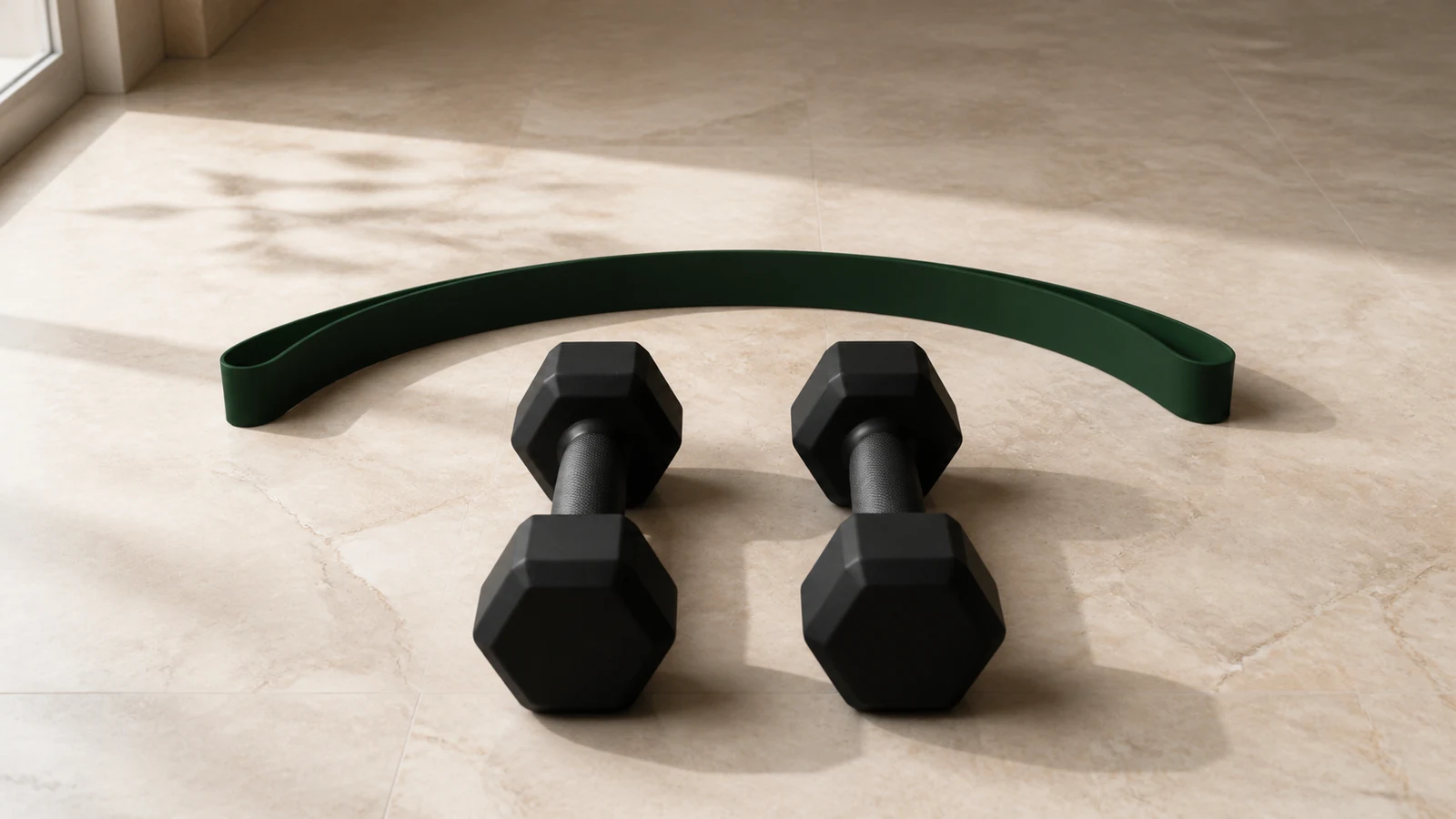
Use long resistance bands suitable for the movements below, with more than one resistance level if possible. Tubes with handles suit many standing movements; a compatible loop band may be more practical for push-ups and bicycle crunches. Check the manufacturer's intended uses. A short fabric mini band cannot replace the full setup.
Setup
Exercises that use it
Band secured under your feet
Squats, deadlifts, overhead presses, bent-over rows, good mornings
Chest-height anchor
Chest press and Pallof press
Overhead anchor
Lat pulldown and standing crunch
Low anchor behind you
Standing incline press; no incline bench needed
Floor setup
Banded push-up, seated row, bicycle crunch
Before every session, inspect the band, handles, clips, and anchor for damage. Follow the manufacturer's door compatibility, placement, and stretch limits. Do not improvise an anchor with a door handle or movable furniture. Check that a door cannot open toward you under load or be opened by someone else, and test the setup with light tension before starting.
For foot-held exercises, make sure the band cannot slip off your shoes. Keep it away from sharp edges and return slowly instead of letting it snap back. If you cannot establish a secure setup, do not perform that movement. Our small-space equipment guide can help you decide whether bands or dumbbells fit your space better.
The complete three-day resistance band workout
Warm up with a few minutes of easy movement, then rehearse the first squat, hinge, push, and pull with little or no resistance. Warm-up sets are separate from the two working sets below. Finish both sets of an exercise before moving on; this is not a timed circuit.
Choose a band that leaves about two or three reps in reserve: you could perform that many more good repetitions before technique breaks down. Use a comfortable, repeatable range of motion. Take the longer end of the rest range when breathing or technique has not recovered.
Workout A: Band Squat Focus
Exercise
Sets
Target
Rest between sets
Squat (Band)
2
8–12 reps
60–120 sec
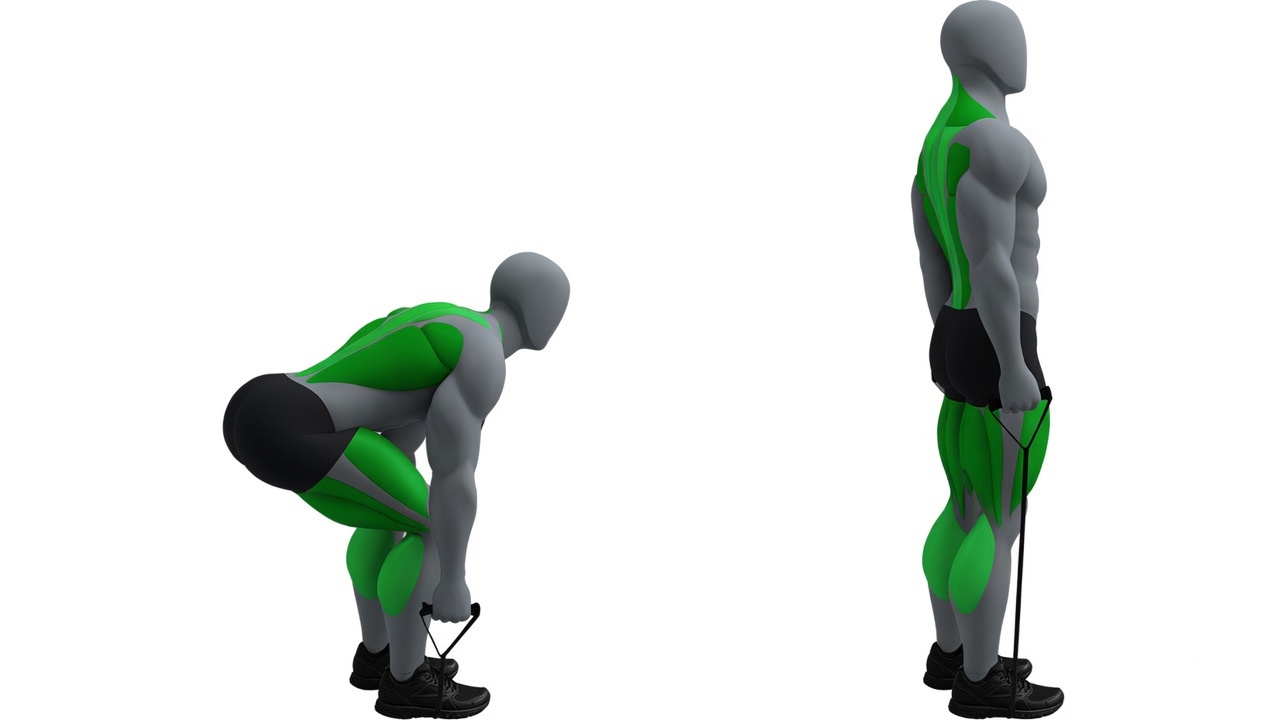
Romanian Deadlift (Band)
2
8–12 reps
60–120 sec
Chest Press (Band)
2
8–12 reps
60–90 sec
Lat Pulldown (Band)
2
8–12 reps
60–90 sec
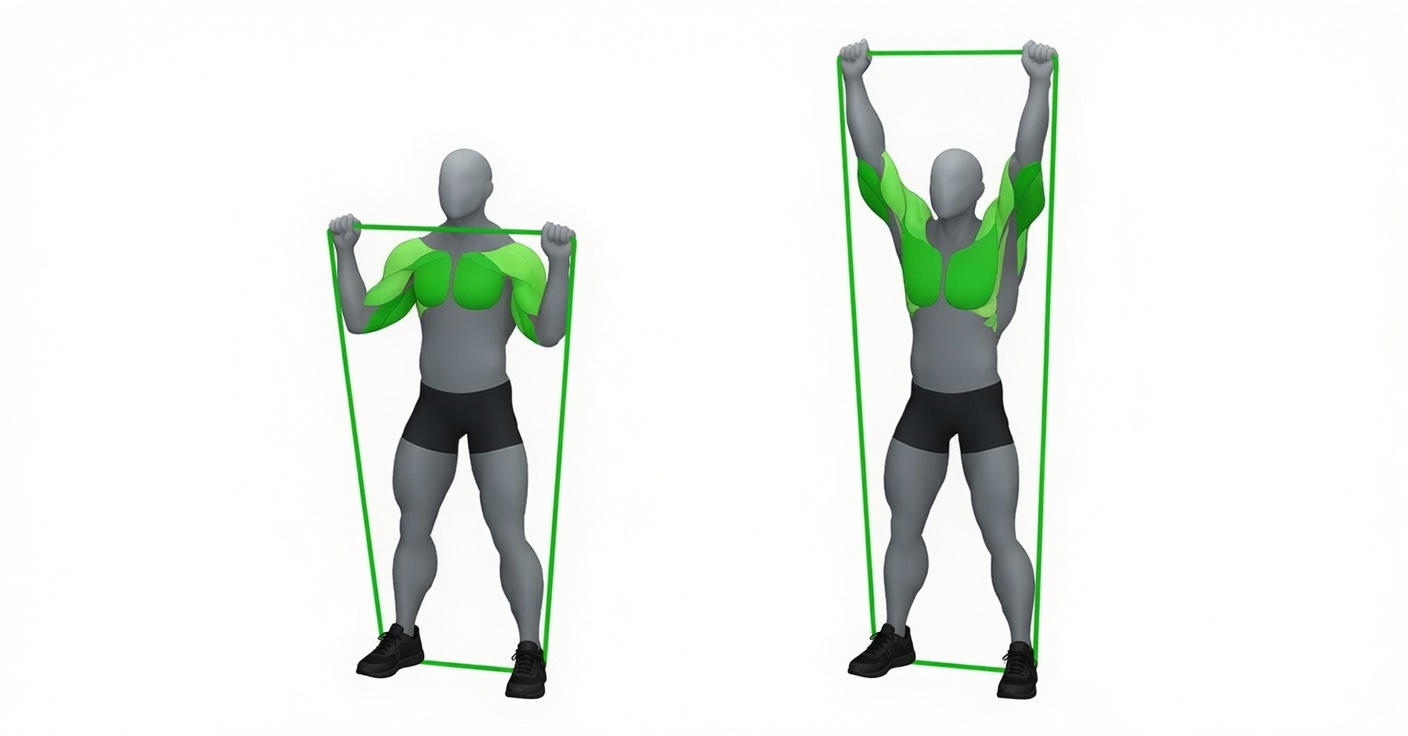
Overhead Press (Band)
2
8–12 reps
60–90 sec
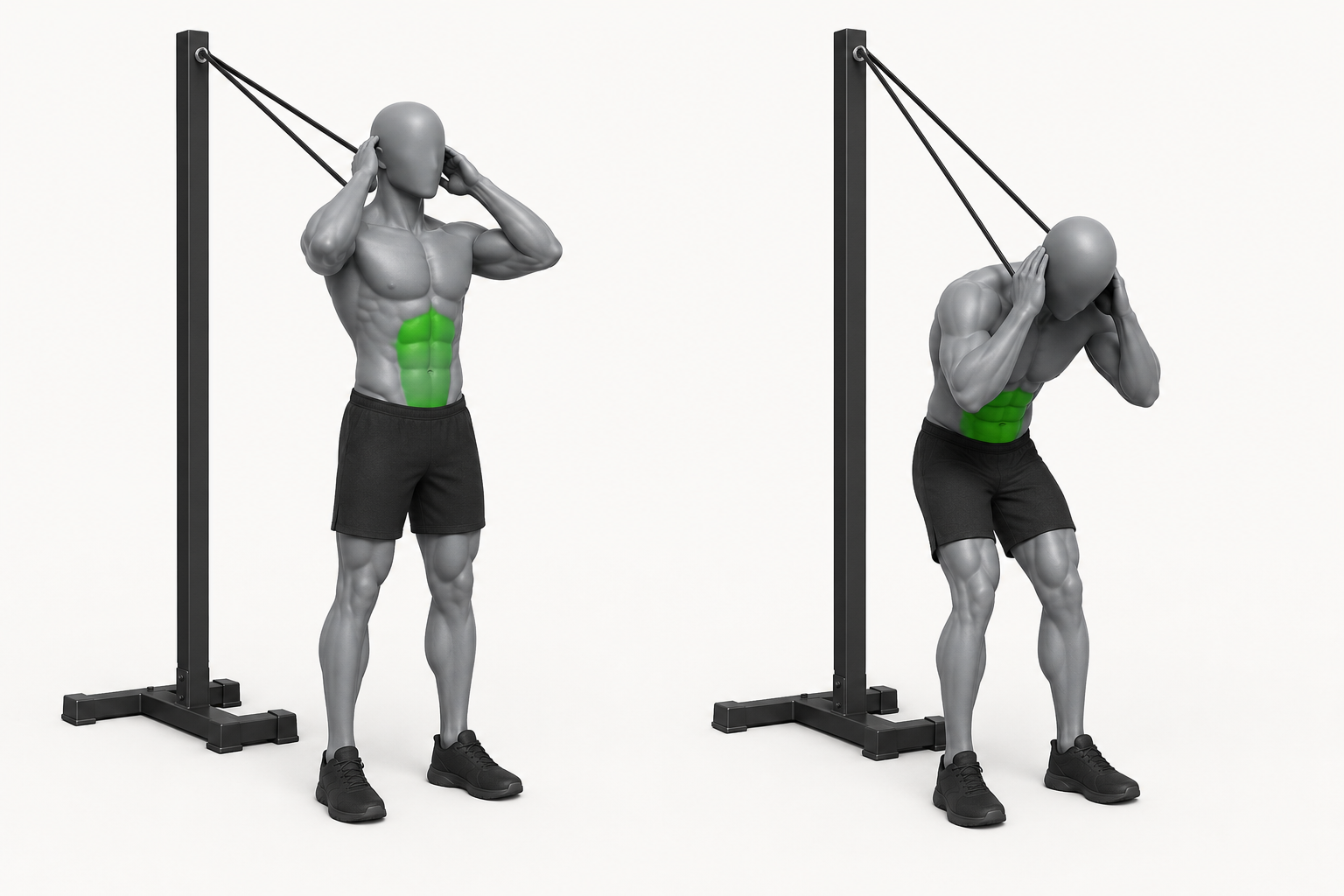
Standing Crunch (Band)
2
8–20 reps
30–60 sec
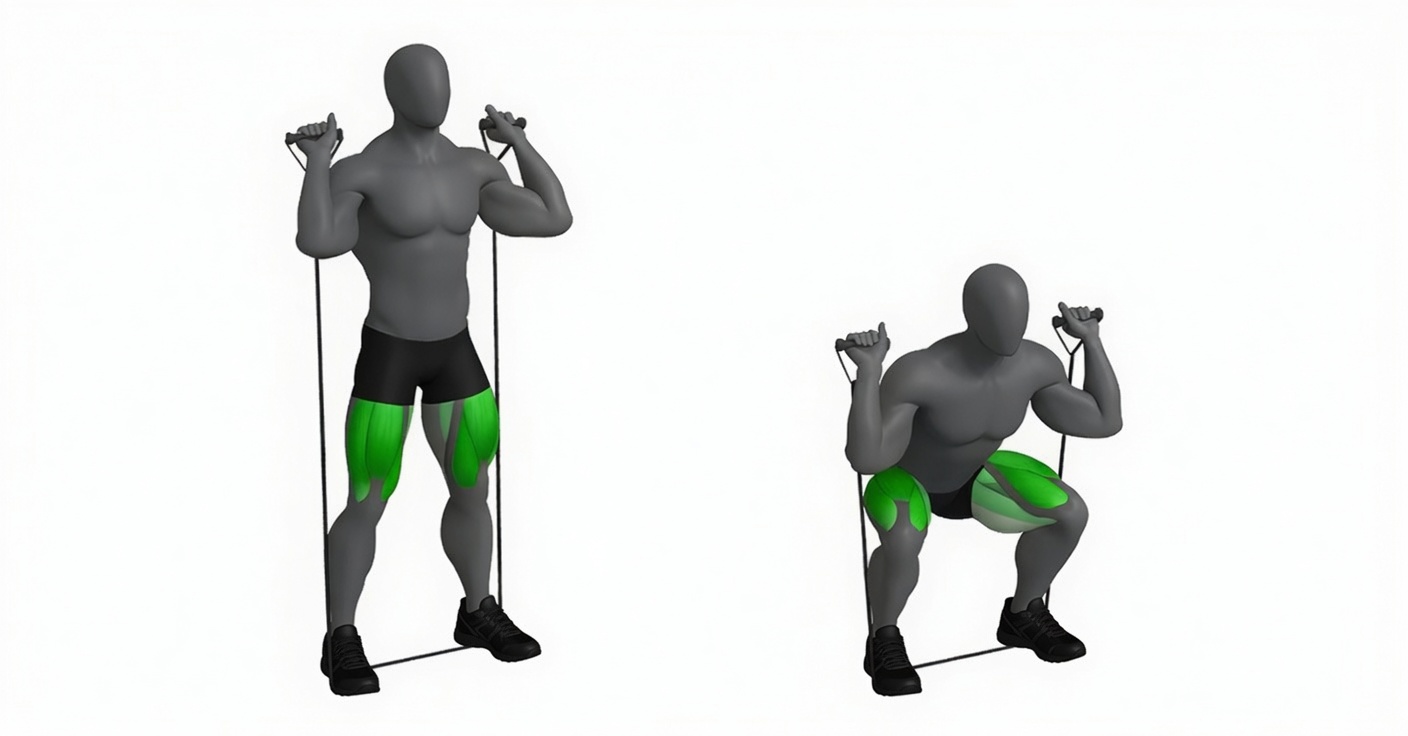
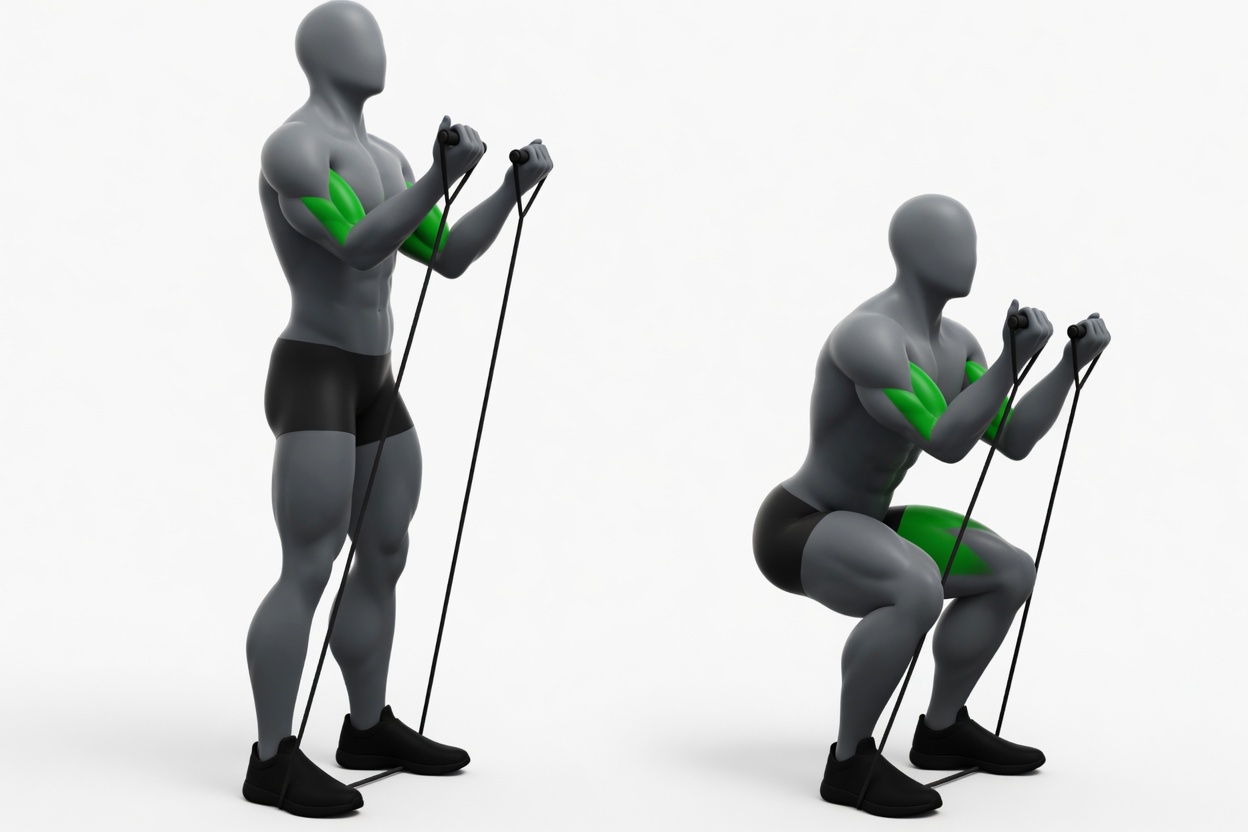
Squat (Band)
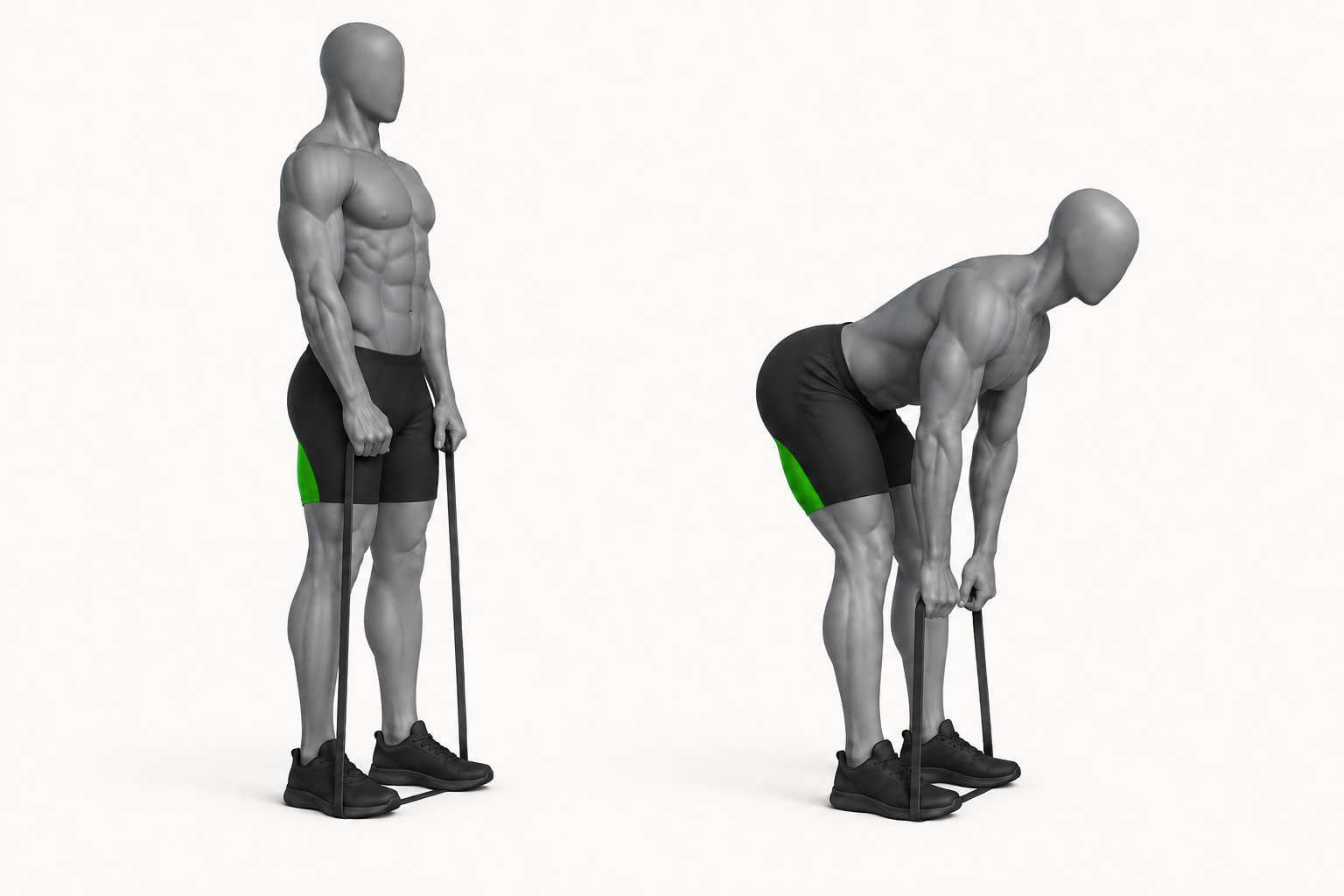
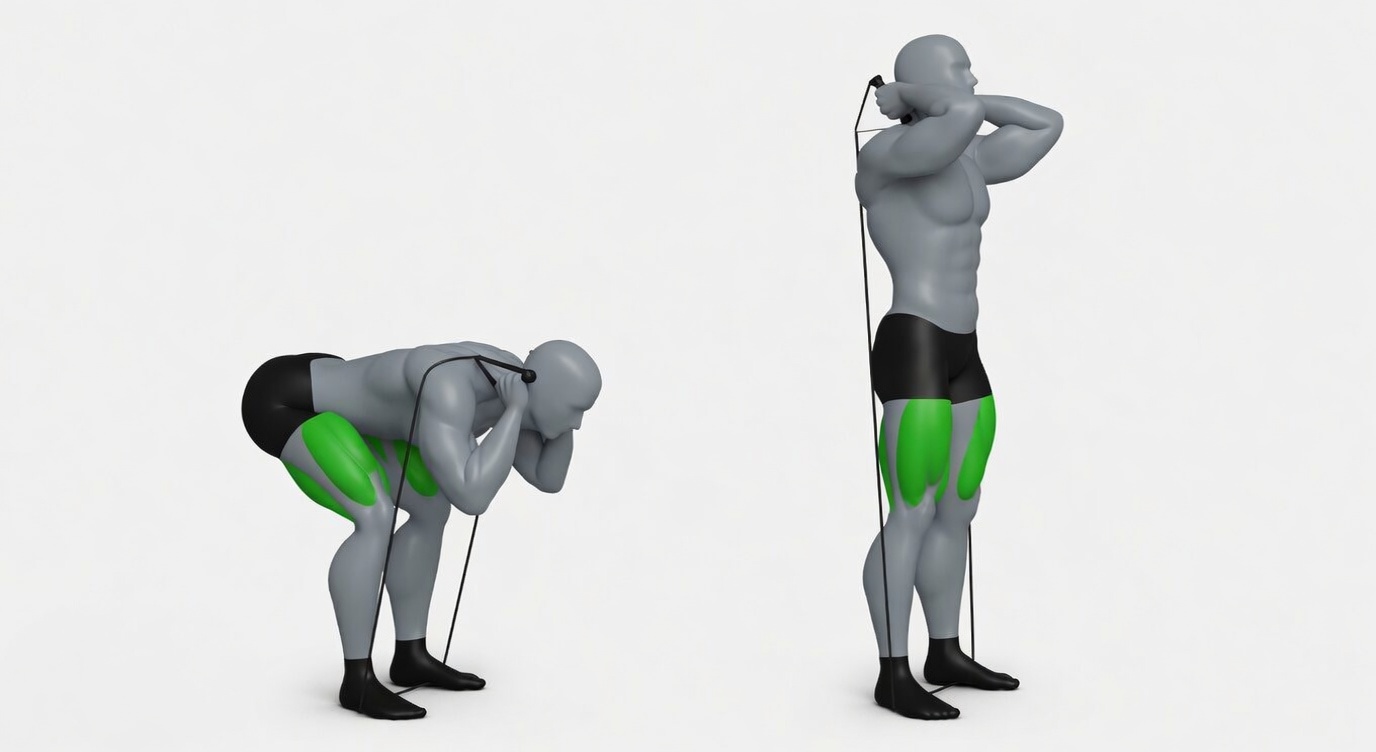
Romanian Deadlift (Band)
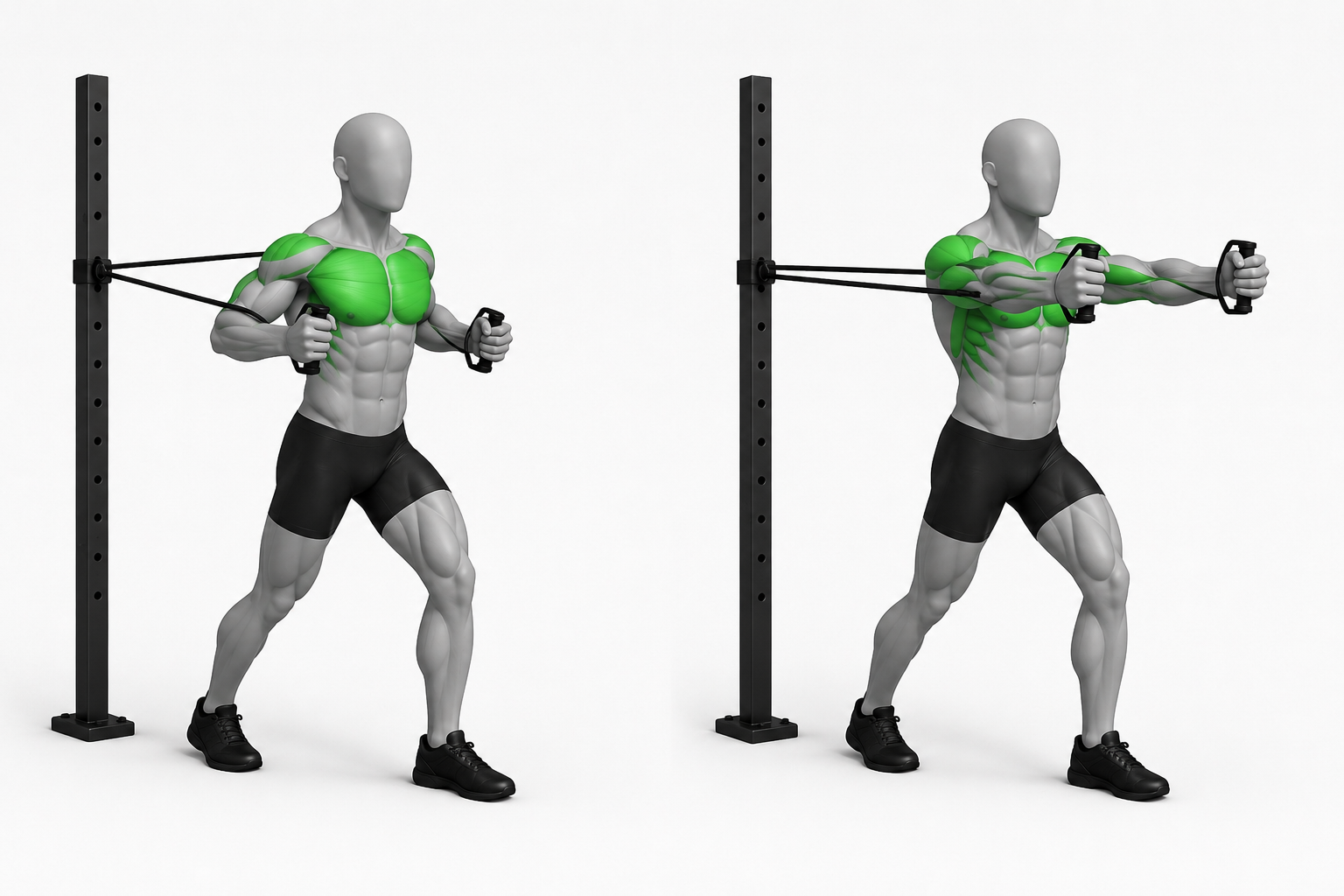
Chest Press (Band)
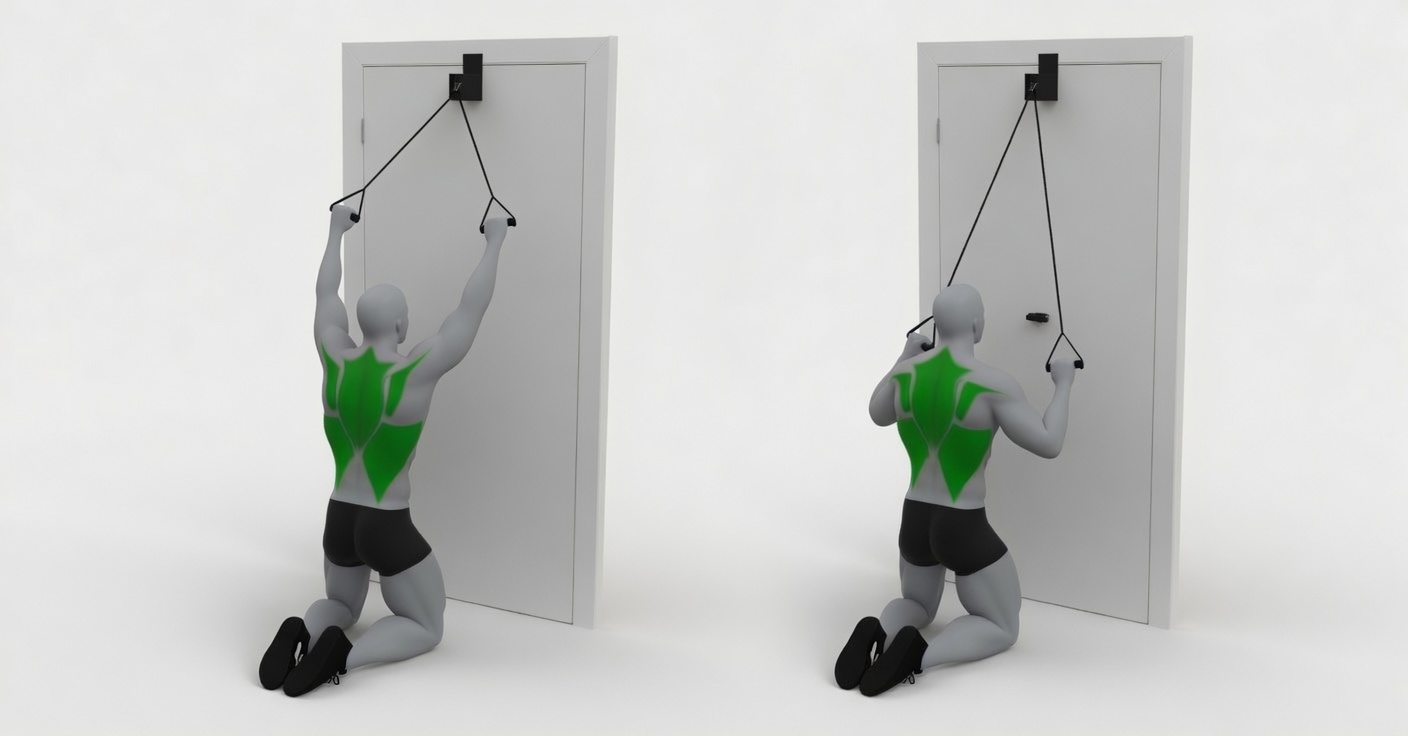
Lat Pulldown (Band)
Overhead Press (Band)
Standing Crunch (Band)
Squat with the band under your feet and handles at your shoulders. For the Romanian deadlift, push your hips back with slightly bent knees. Anchor the chest press behind you at chest height; the pulldown and standing crunch need a high anchor. During crunches, move through your trunk rather than pulling on your neck.
Workout B: Band Hinge Focus
Exercise
Sets
Target
Rest between sets
Deadlift (Band)
2
8–12 reps
60–120 sec
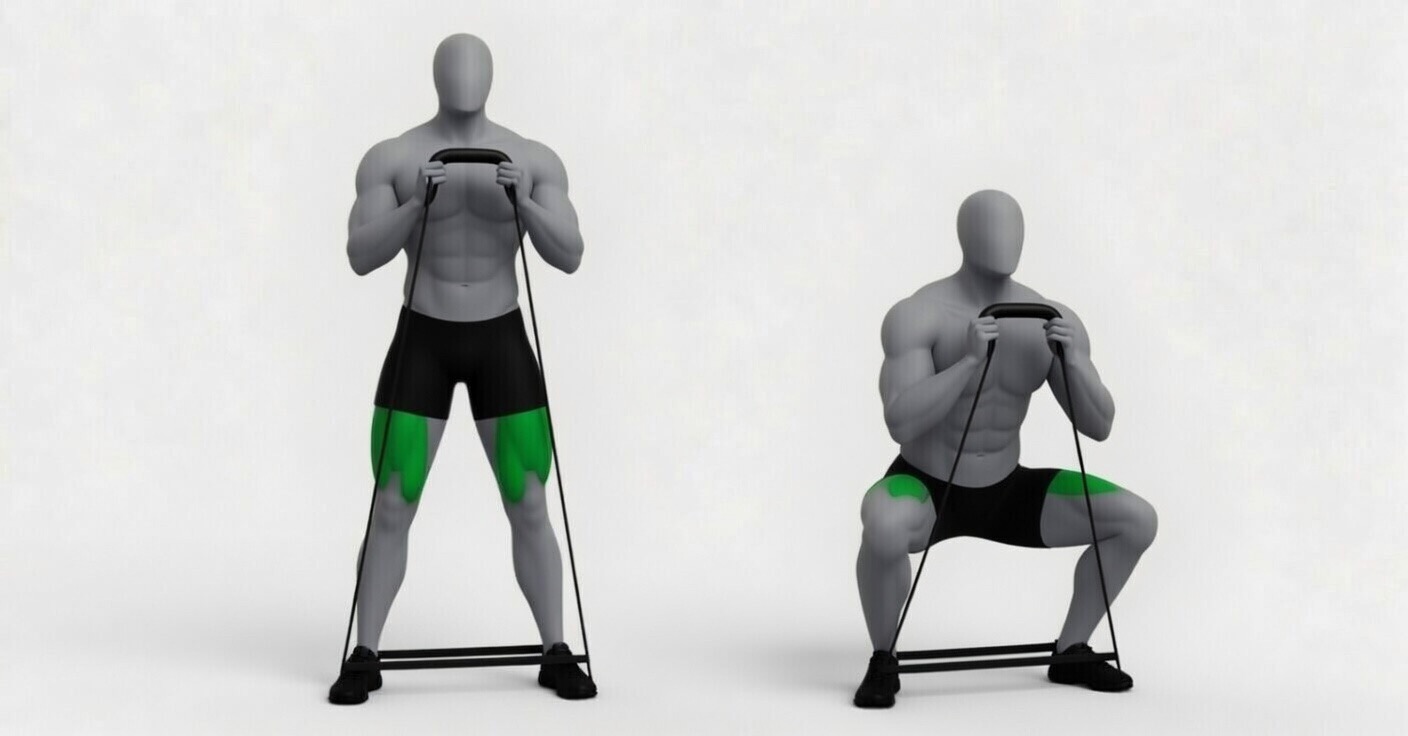
Goblet Squat (Band)
2
8–12 reps
60–120 sec
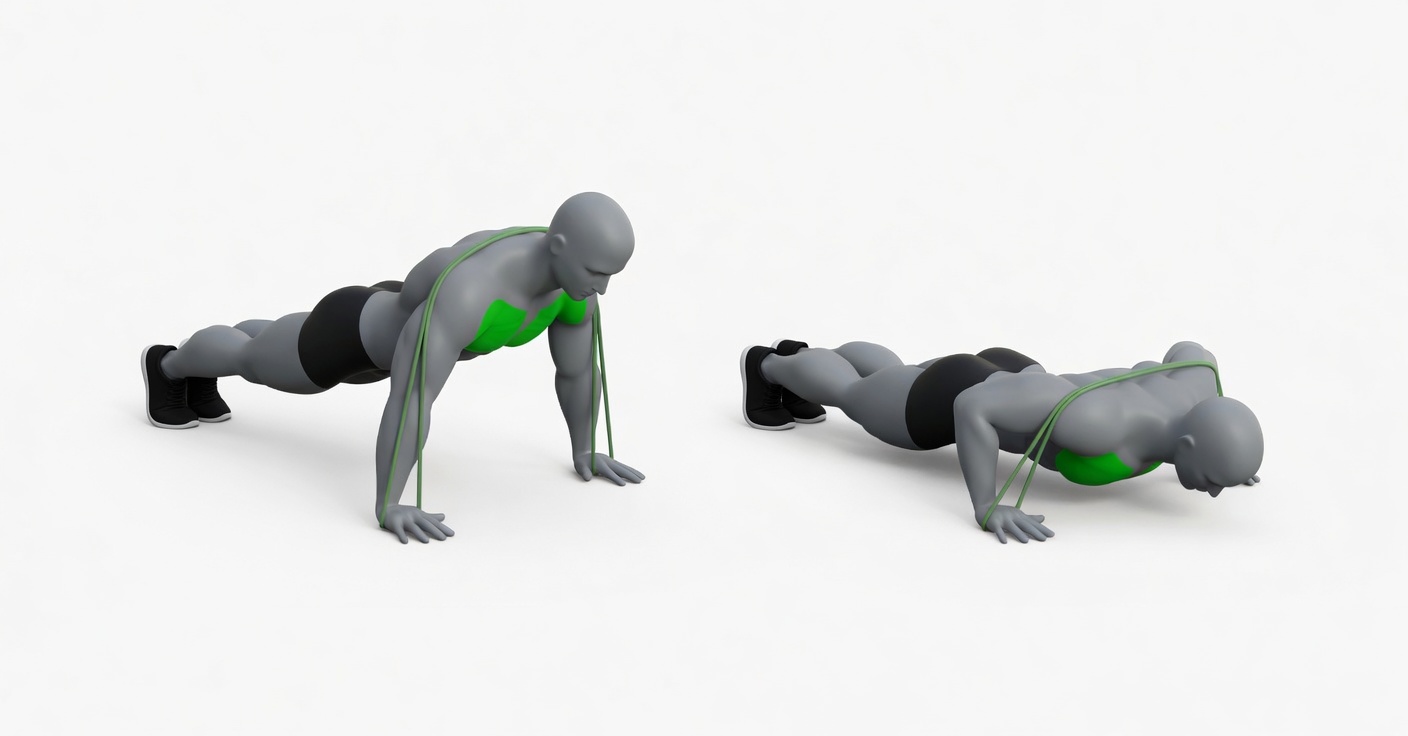
Banded Push-Up
2
8–12 reps
60–90 sec
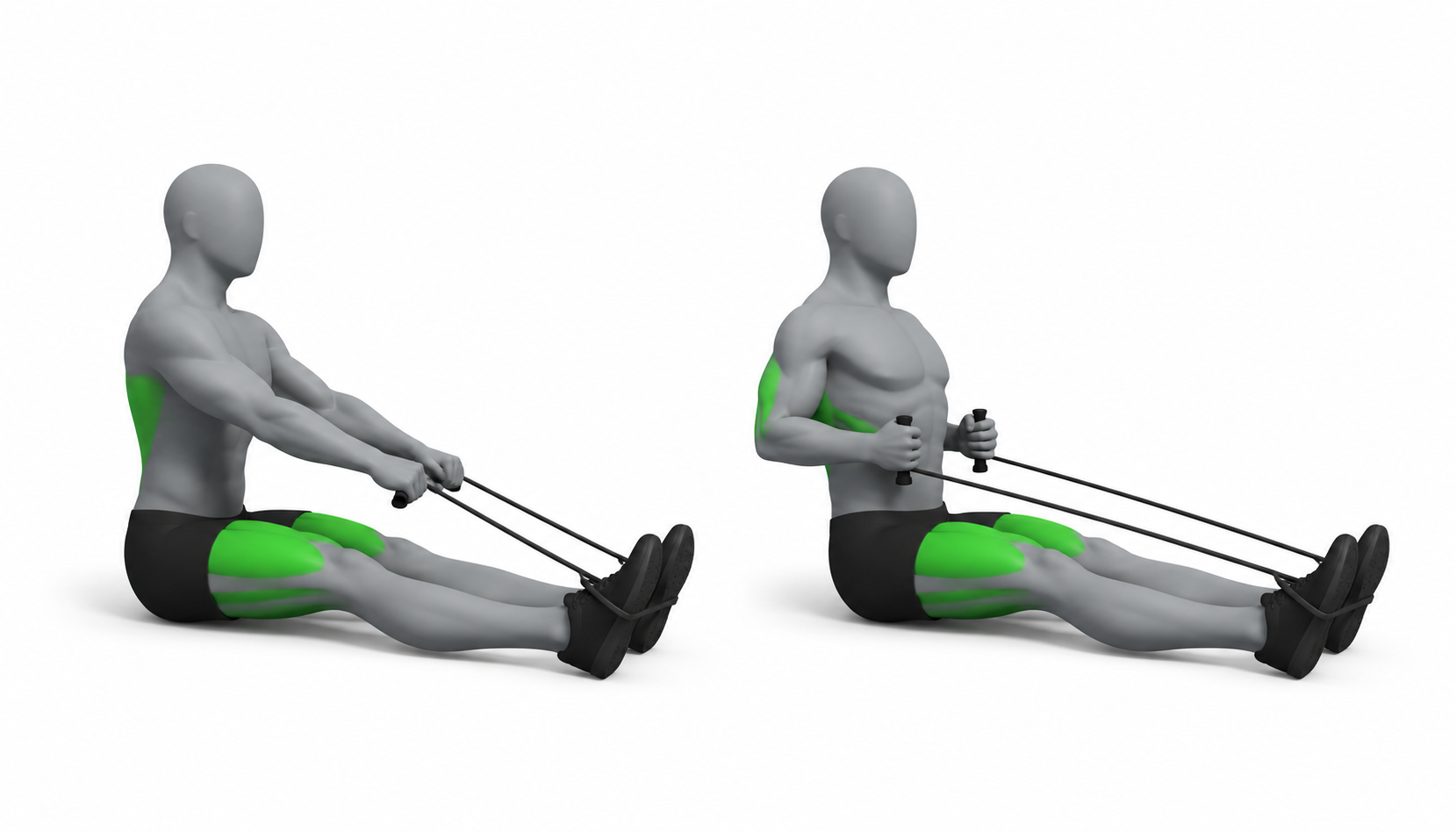
Seated Row (Band)
2
8–12 reps
60–90 sec
Overhead Press (Band)
2
8–12 reps
60–90 sec
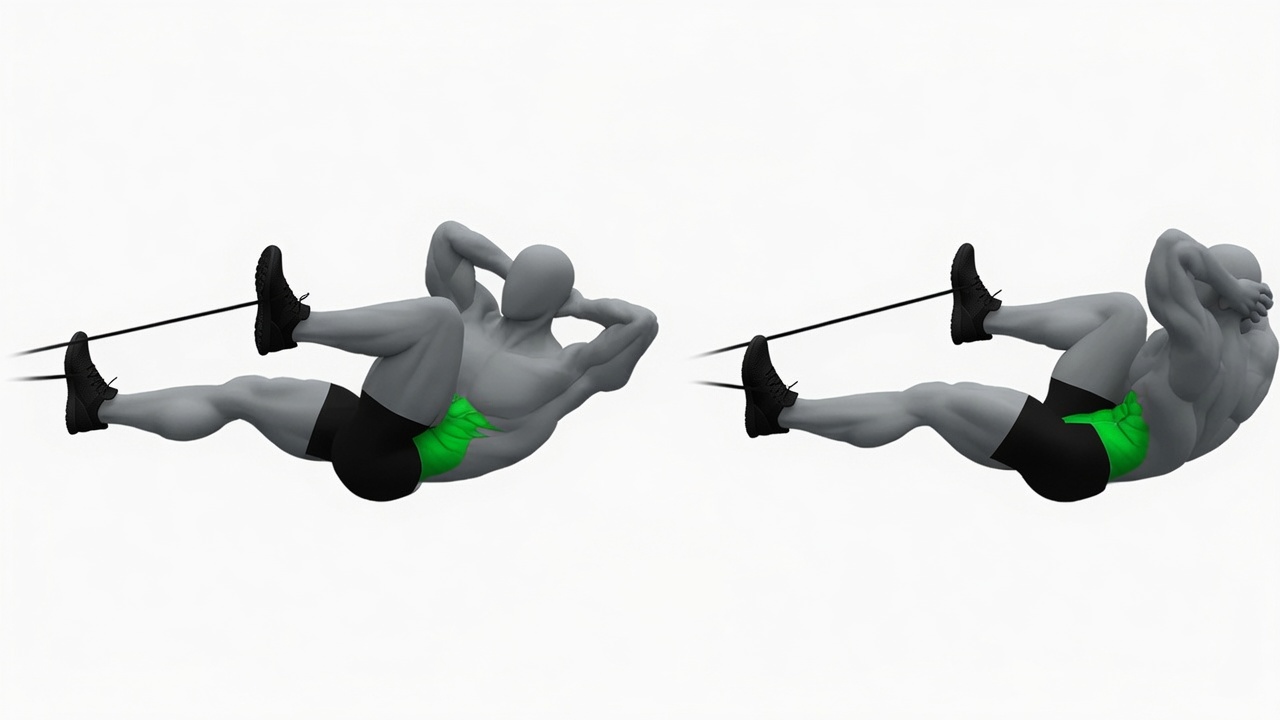
Bicycle Crunch (Band)
2
8–20 total alternating reps
30–60 sec
Deadlift (Band)
Goblet Squat (Band)
Banded Push-Up
Seated Row (Band)
Overhead Press (Band)
Bicycle Crunch (Band)
Hold the goblet-squat handles together at your chest. For push-ups, the band passes across your upper back and is secured under your hands, not around your neck. If a banded push-up is too difficult, use the approved chest-press substitution below. For seated rows, use only a secure, manufacturer-approved foot setup. Count each elbow-to-opposite-knee movement as one bicycle-crunch rep; this total-rep convention is for this guide and tracker.
Workout C: Band Upper Focus
Exercise
Sets
Target
Rest between sets
Incline Press (Band)
2
8–12 reps
60–90 sec
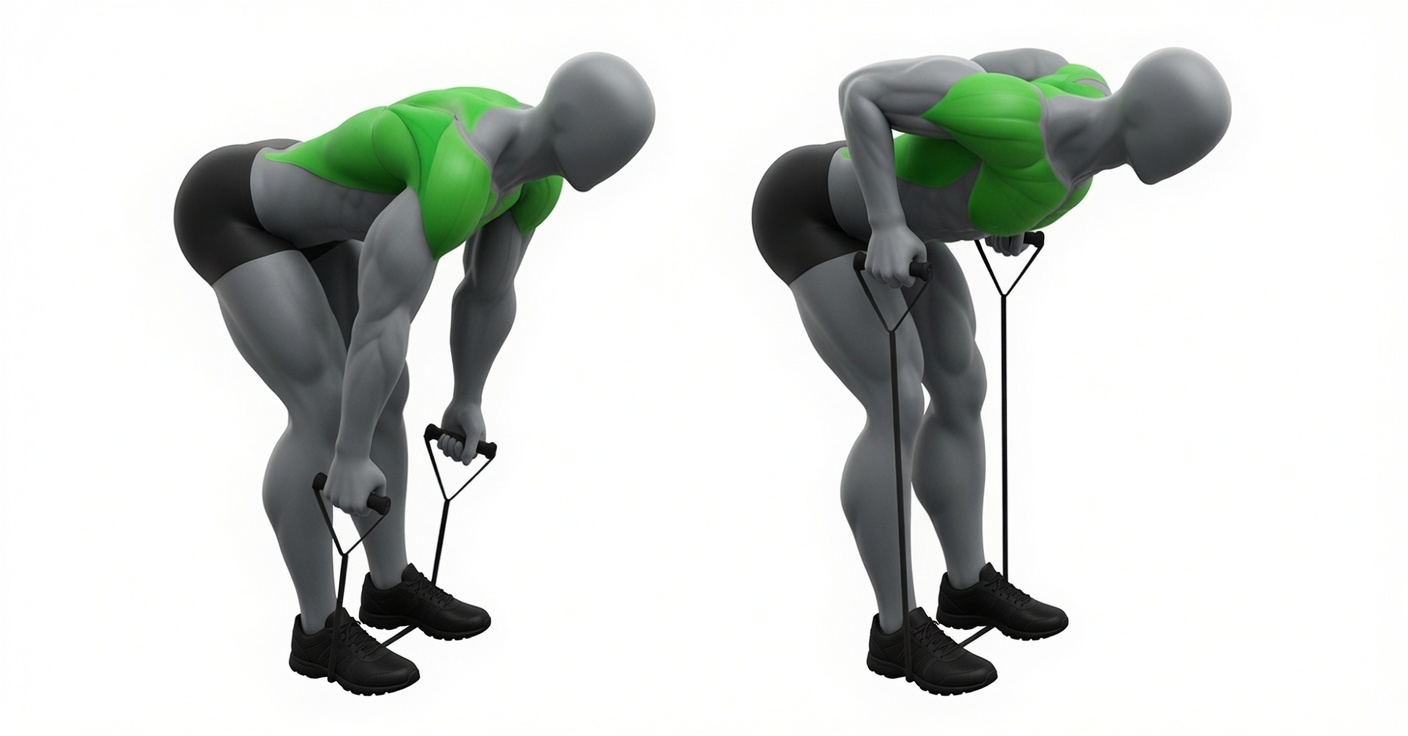
Bent-Over Row (Band)
2
8–12 reps
60–90 sec
Lat Pulldown (Band)
2
8–12 reps
60–90 sec
Front Squat (Band)
2
8–12 reps
60–120 sec
Good Morning (Band)
2
8–12 reps
60–90 sec
Pallof Press Hold (Band)
2 rounds
15–30 sec per side*
60–90 sec
Bent-Over Row (Band)
Lat Pulldown (Band)
Front Squat (Band)
Good Morning (Band)
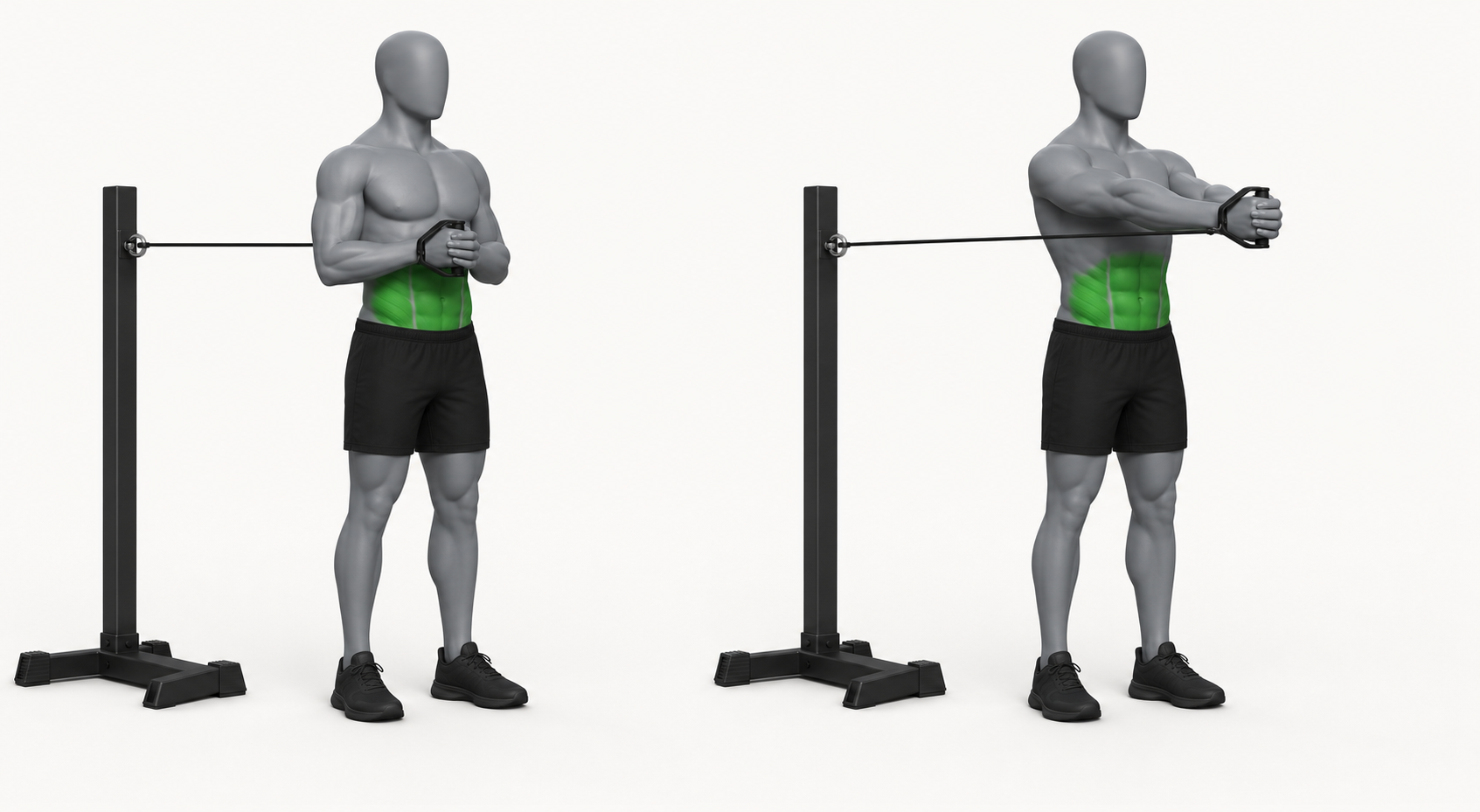
Pallof Press (Band)
The incline press is performed standing: anchor low behind you and press upward and forward. For the good morning, support the band at your shoulders, not your neck. On the Pallof hold, stand side-on to a chest-height anchor, press your hands forward, and resist twisting. Complete both sides for each round.
The catalog tracks the Pallof press by duration but does not specify a hold target. 15–30 seconds per side is an editorial starting range, not an app-generated prescription. Its two sets and 60–90-second rest use the app's catalog fallback rules. In the tracker, enter the shorter side's hold time and note any side difference. Other main-exercise targets come from the catalog's general-fitness prescriptions for beginners.
How to progress for eight weeks
Band resistance changes with stretch. To compare sessions fairly, record the brand/band ID, anchor height, foot position, grip, and range of motion. Color alone is not enough, and the printed resistance is not a constant dumbbell-equivalent weight.
Keep the same setup and gradually add reps within the target range.
When both sets reach the top with controlled technique and about two good reps left, try the next manageable resistance.
Return toward the bottom of the range. If you cannot reach it cleanly, the jump was too large.
For example, a chest press might progress from 10/9 to 11/10 to 12/12 across sessions using the same band and stance. Then try a slightly stronger band. Do not simultaneously change the band, move farther from the anchor, and shorten your grip: you will lose a useful comparison.
For Pallof holds, build both sides toward 30 controlled seconds before increasing tension and returning toward 15 seconds. Do not keep holding while your torso twists.
Weeks
Main task
1–2
Learn the movements and write down repeatable setups. Start conservatively.
3–4
Add reps where control and recovery allow. Keep the same exercise order.
5–6
Increase resistance only on exercises that meet the progression rule.
7–8
Continue successful progress; reduce resistance and effort if recovery or technique deteriorates.
This outline is coaching guidance, not an automatic week-by-week app change. If you miss Monday, do Workout A on your next available training day and continue in order, leaving a recovery day between sessions. Do not cram missed workouts together.
FREE SPREADSHEET
Get the Free Resistance Band Workout Spreadsheet
Get all three workouts and 24 sessions to log band setup, reps, hold times, effort, and next steps in an editable spreadsheet.
By submitting, you’ll receive the resistance band workout spreadsheet and occasional Bazu emails. Unsubscribe anytime.
These substitutions are listed in the program catalog. Targets can change when the exercise changes, so do not carry over the original prescription blindly.
Original
Catalog-approved alternative
Beginner target
Squat or front squat
Goblet Squat (Band)
2 × 8–12; rest 60–120 sec
Banded Push-Up
Chest Press (Band), with secure chest-height anchor
2 × 8–12; rest 60–90 sec
Seated Row (Band)
Bent-Over Row (Band)
2 × 8–12; rest 60–90 sec
Deadlift (Band)
Good Morning (Band)
2 × 8–12; rest 60–90 sec
Standing Crunch (Band)
Kneeling Crunch (Band), with high anchor
2 × 8–20; rest 30–60 sec
No overhead anchor? The catalog's straight-arm pulldown alternative still needs a high anchor. There is no honest anchor-free swap that preserves this exact program. Choose a different plan, such as our dumbbell-only home workout, if your room cannot support the required setup.
Your band is too light? Add reps up to the target, then use a stronger compatible band. Do not exceed the manufacturer's stretch limit to manufacture more resistance. If you outgrow your bands, moving to more loadable equipment is reasonable.
Your band is too heavy? Use a lighter band or less initial stretch within a secure setup. Keep the full controlled movement rather than turning every exercise into short, jerky reps. Rest longer when needed; rest-time guidance explains the trade-off.
Start the Resistance Band Program in Bazu Premium
Bazu is a workout-tracking app available on iPhone and Android. This three-day Resistance Band Program is ready in Bazu Premium.Open the program, review the workouts, add it to My Routines, and start your first session.
Log reps or hold times, and use notes to preserve your band setup. Do not interpret changes in band labels as precise weight increases. Prefer a spreadsheet? The free download includes all three workouts and 24 sessions of logging space, with next-step guidance based on your entries.
Frequently asked questions
Can beginners build muscle with resistance bands?
Yes. Resistance bands can support strength and muscle growth when exercises are challenging and progressed over time. Results depend on effort, consistency, recovery, and available resistance. This plan emphasizes general strength and muscular endurance rather than maximum muscle growth.
How many days a week should I use resistance bands?
This plan uses three nonconsecutive days, such as Monday, Wednesday, and Friday. Leave a recovery day between sessions. If you miss a workout, continue with the next session in order rather than doubling up.
Can I do this resistance band workout without a door anchor?
Not exactly as written. Pulldowns, standing crunches, incline presses, and Pallof presses need secure anchors at different heights. A suitable fixed anchor can replace a compatible door anchor, but furniture and door handles are not substitutes for rated equipment.
What resistance band weight should a beginner choose?
Choose resistance that lets you reach the bottom of the exercise's rep range with controlled technique and about two or three good reps left. Band colors and printed weight ratings are not standardized across brands. Record the band and setup instead of guessing a dumbbell-equivalent weight.
How do I track this program in Bazu?
Open the Resistance Band Program in Bazu Premium, review the three workouts, and add it to My Routines. Log reps or hold times and use notes for band identity, anchor height, and stance. The free spreadsheet is an alternative if you prefer an editable log.
ACSM: 2026 resistance-training guidelines — evidence summary for strength, muscle growth, bands, and training frequency. It supports the general principles, not an endorsement of this specific routine.
Program and exercise prescriptions: Bazu Routine Library 2.24.0, Resistance Band Program v4, and exercise catalog 1.13, checked October 24, 2026. View the program.
Waleed S.
Founder of Bazu · 10+ years strength training
I'm the builder and user of Bazu. I've been lifting for over 10 years across strength and hypertrophy work, and I built Bazu to make progress simpler for serious lifters — every feature is designed around how real training actually works.
Put this guide into practice
Continue with a relevant calculator, exercise guide, or Bazu feature.
This three-day program is ready in Bazu Premium. Review the workouts, add it to My Routines, and log your first session with notes for your band setup.