Training
2-Day Full-Body Workout for Beginners (8-Week Gym Plan)
Build a twice-weekly gym habit with this 2-day full-body workout: exercises, sets, reps, rest, progression, and a free editable 8-week workout tracker.
Waleed S.Oct 24, 202611 min read

Build a twice-weekly gym habit with this 2-day full-body workout: exercises, sets, reps, rest, progression, and a free editable 8-week workout tracker.
A good 2-day full-body workout trains your legs, hips, pushing muscles, pulling muscles, and core in both sessions. If two gym visits are what you can reliably manage, start there. You do not need to commit to a five-day split first.
This guide follows the Full Body (2-Day) program: one squat-focused session and one hinge-focused session. It is a beginner program for a full gym, with barbell technique to learn—not a no-equipment or dumbbell-only plan.
This is general training guidance, not medical advice. Stop sharp or worsening pain. If an injury or health condition affects exercise, ask a qualified clinician about appropriate modifications. Get help learning unfamiliar barbell lifts.
Yes, twice-weekly strength training is a worthwhile starting point. The 2026 ACSM guidance emphasizes regular training of all major muscle groups at least twice weekly and tailoring the plan to your goals and ability.
Two days can also support hypertrophy (muscle growth), but this low-volume beginner plan is not designed to maximize every muscle's growth. If you later need more weekly work, increase it deliberately rather than adding exercises before you have established the habit.
For general health, strength training is one part of the picture. Federal activity guidance summarized by the CDC also recommends 150 minutes of moderate aerobic activity, 75 minutes of vigorous activity, or an equivalent combination each week. Build toward that alongside your lifting.
| Day | Plan |
|---|---|
| Monday | Workout A: 2-Day Squat Focus |
| Tuesday–Wednesday | Recovery from lifting; walking or other manageable activity |
| Thursday | Workout B: 2-Day Hinge Focus |
| Friday–Sunday | Recovery and other activity that fits your capacity |
Tuesday/Friday works too. Repeat A then B every week. These are not alternating week-long programs.
You need a barbell and plates, a rack with appropriate safeties, a flat/incline bench, dumbbells, a cable station with pulldown and rope/handle attachments, and floor space. A hip-thrust pad is useful. The listed session estimate is 25–35 minutes, but warm-ups, equipment queues, and learning new lifts can make your visit longer.
The exercises and order below match Full Body (2-Day) in Bazu Free. Two working sets are the beginner prescription. Rep and rest ranges use the program's general-fitness goal, the face-pull muscle override, and the plank's available fallback rest range. The plank hold is a practical starting suggestion because the catalog does not prescribe a duration.
Complete both sets of an exercise before moving on. Rest between sets; take more time if you are not ready to repeat the movement with control.
| Exercise | Sets | Reps or hold | Rest |
|---|---|---|---|
| Barbell back squat | 2 | 6–12 | 60–120 sec |
| Barbell hip thrust | 2 | 6–12 | 60–90 sec |
| Barbell bench press | 2 | 6–12 | 60–90 sec |
| Bent-over barbell row | 2 | 6–12 | 60–90 sec |
| Barbell overhead press | 2 | 6–12 | 60–90 sec |
| Plank | 2 | 20–40 sec, as controlled | 60–90 sec |
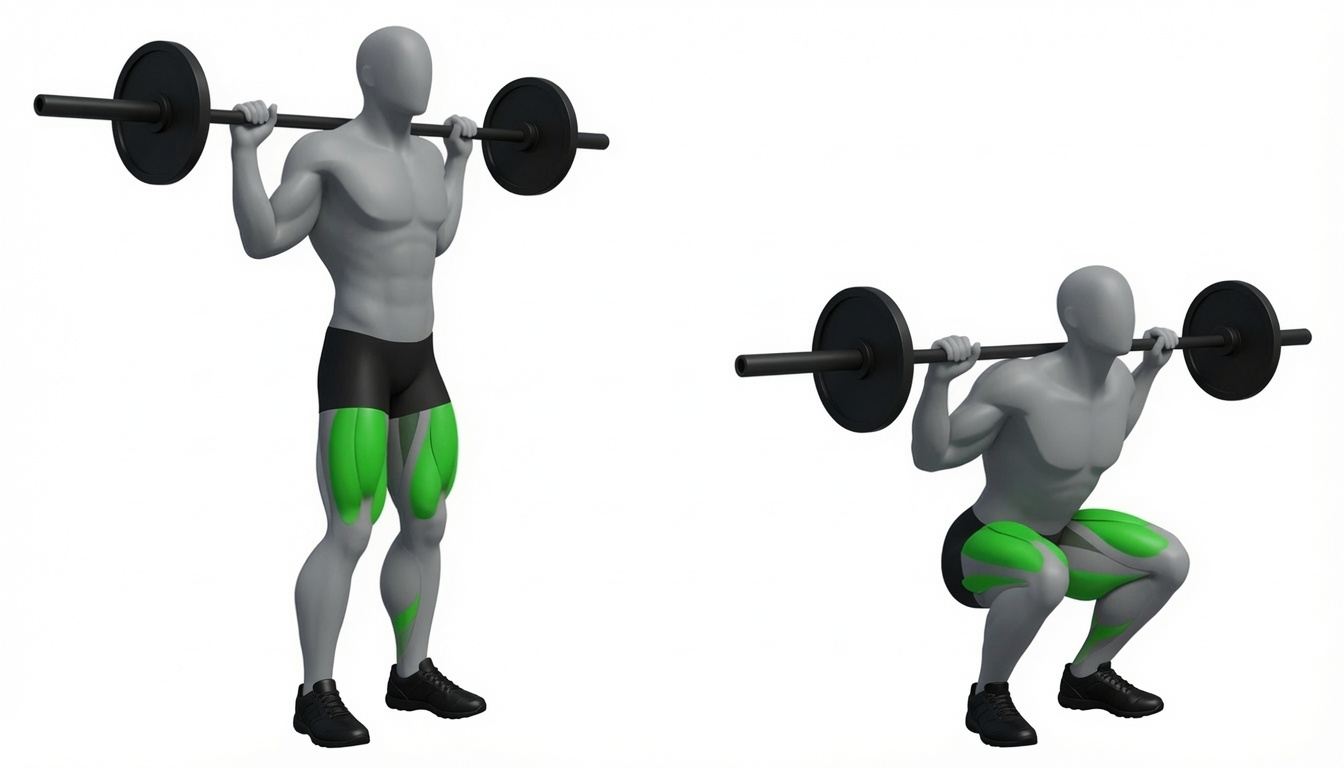
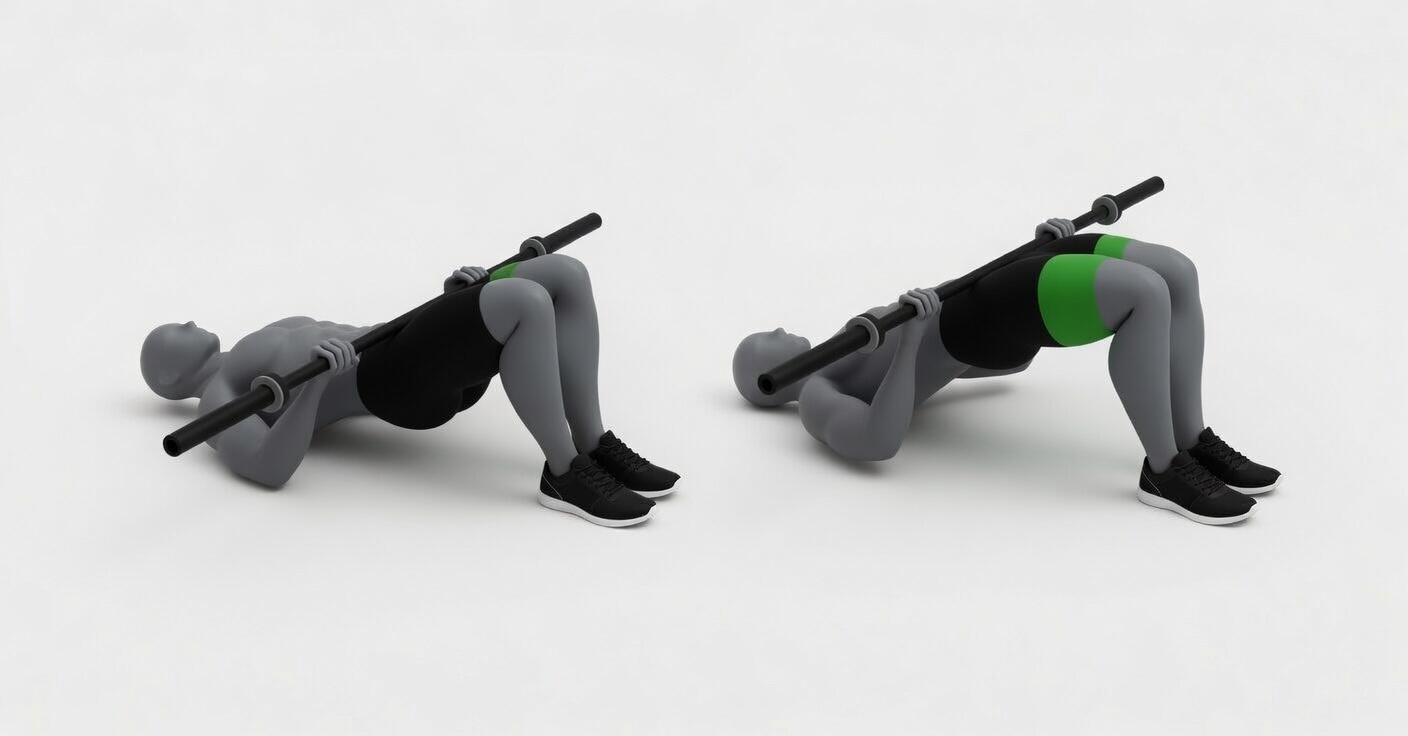
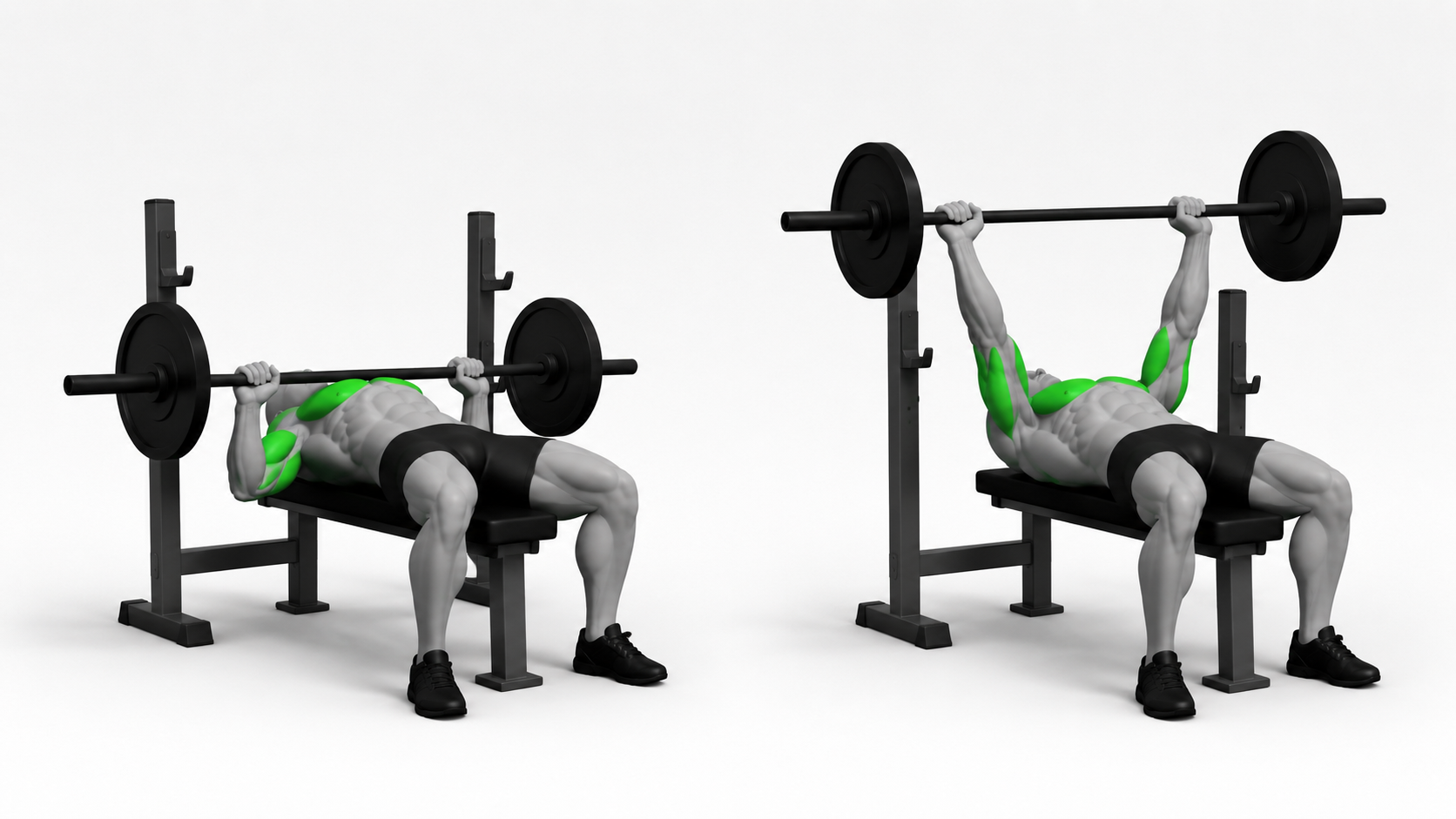


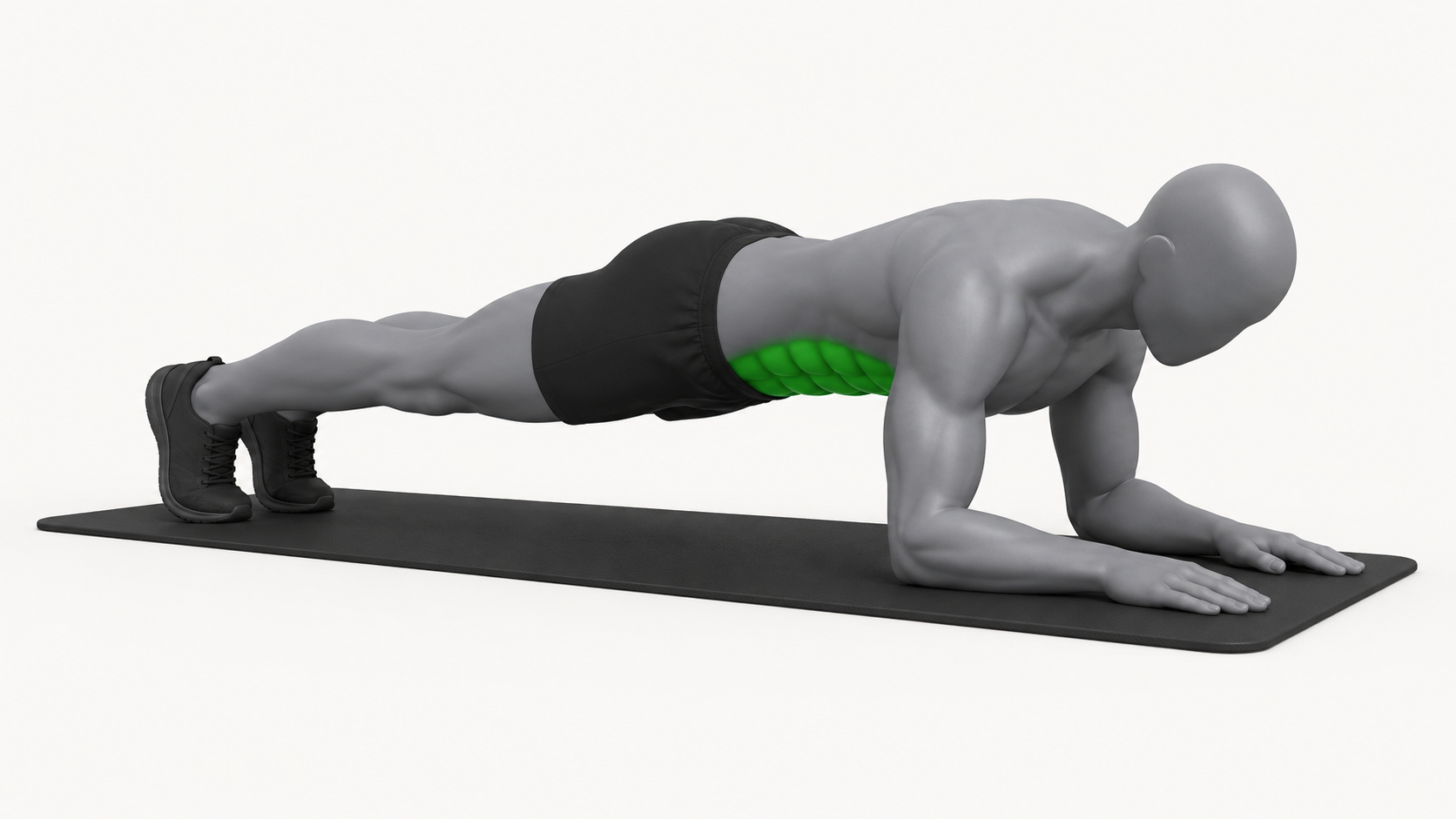
Technique priorities: squat to a depth you can control, keep the hip thrust from becoming a lower-back arch, and keep your torso steady during rows. Set rack safeties for squats and presses; use a competent spotter where needed. The illustrations show the movements, not a substitute for hands-on instruction.
A hinge means bending mainly at your hips while keeping the load controlled. In the Romanian deadlift, move your hips backward and stop before reaching farther would round your back; the plates do not need to touch the floor.
| Exercise | Sets | Reps | Rest |
|---|---|---|---|
| Barbell Romanian deadlift | 2 | 6–12 | 60–120 sec |
| Dumbbell goblet squat | 2 | 8–12 | 60–120 sec |
| Incline dumbbell bench press | 2 | 8–12 | 60–90 sec |
| Cable lat pulldown | 2 | 8–12 | 60–90 sec |
| Cable face pull | 2 | 10–15 | 45–90 sec |
| Cable woodchop | 2 | 8–20 per side | 30–60 sec |
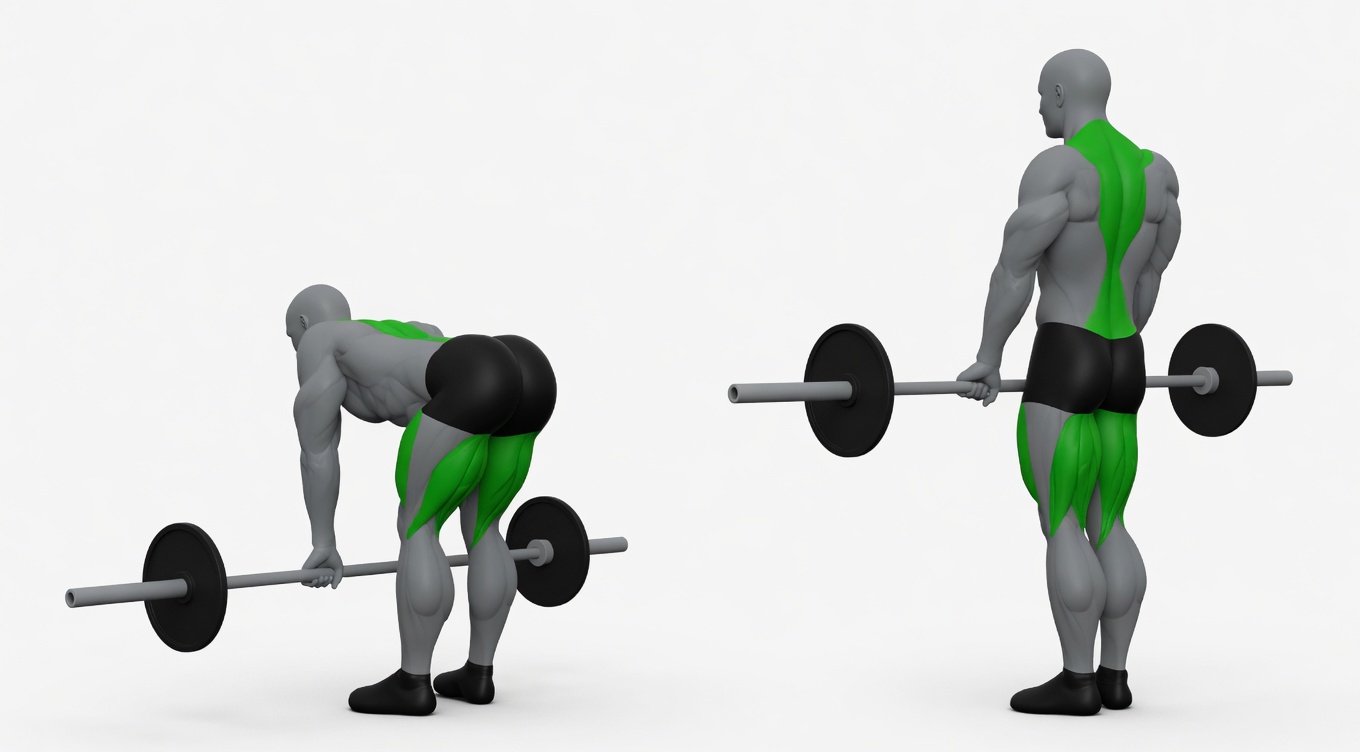
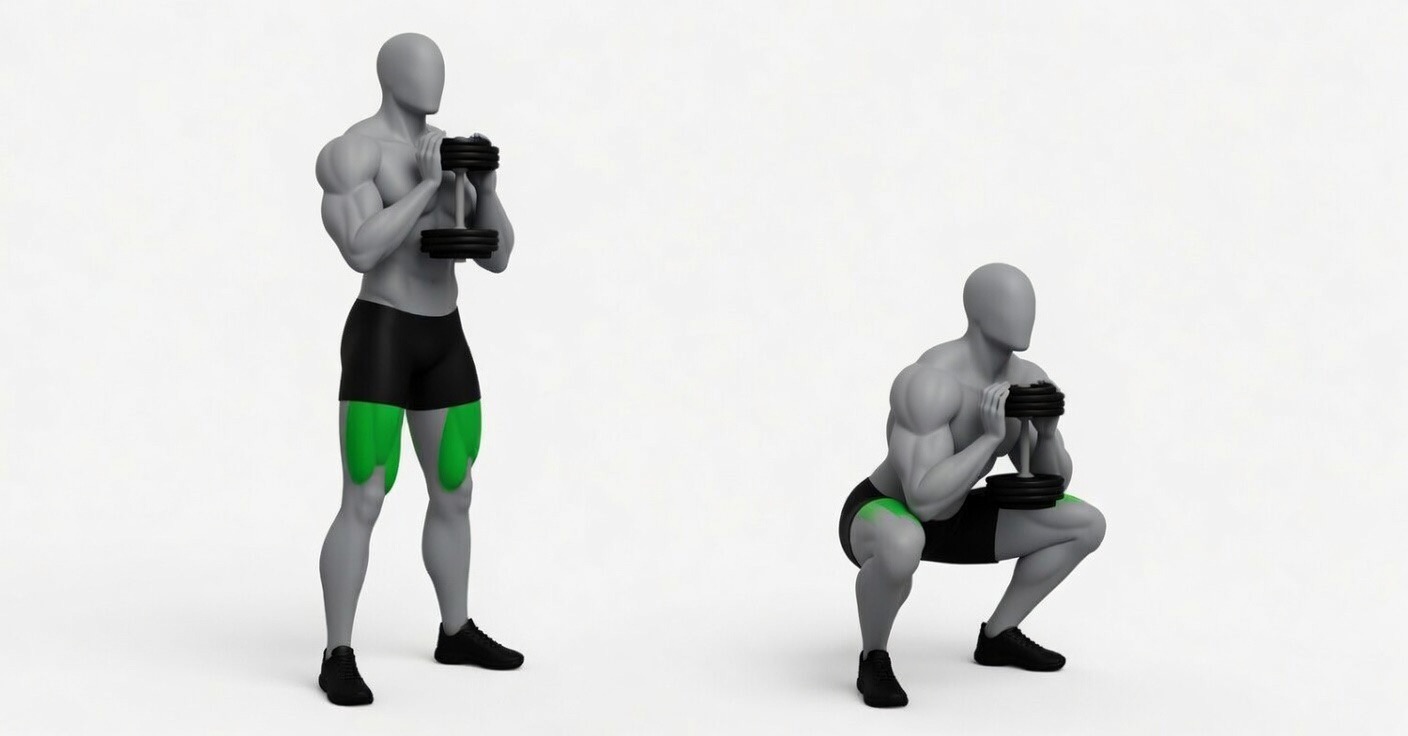
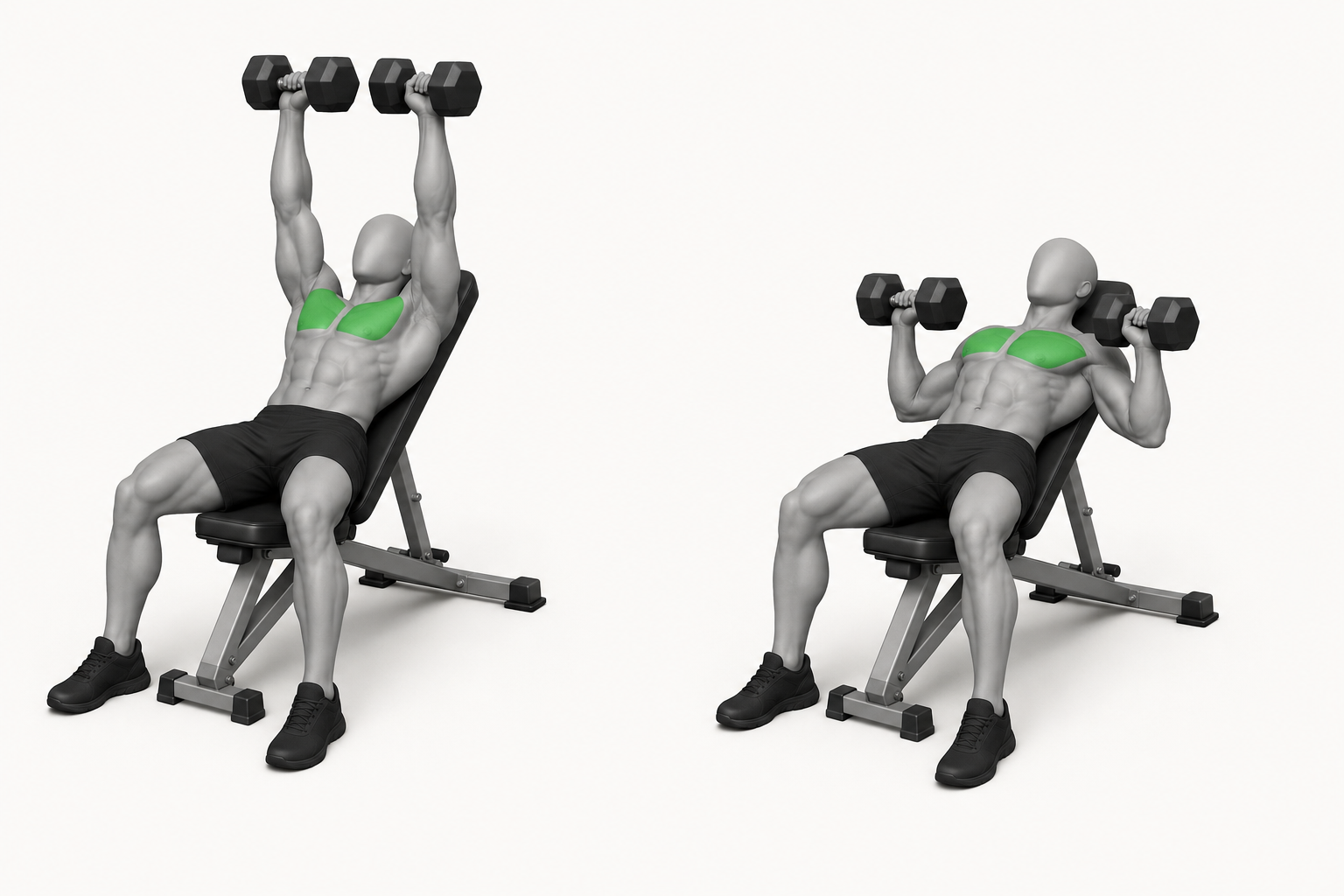

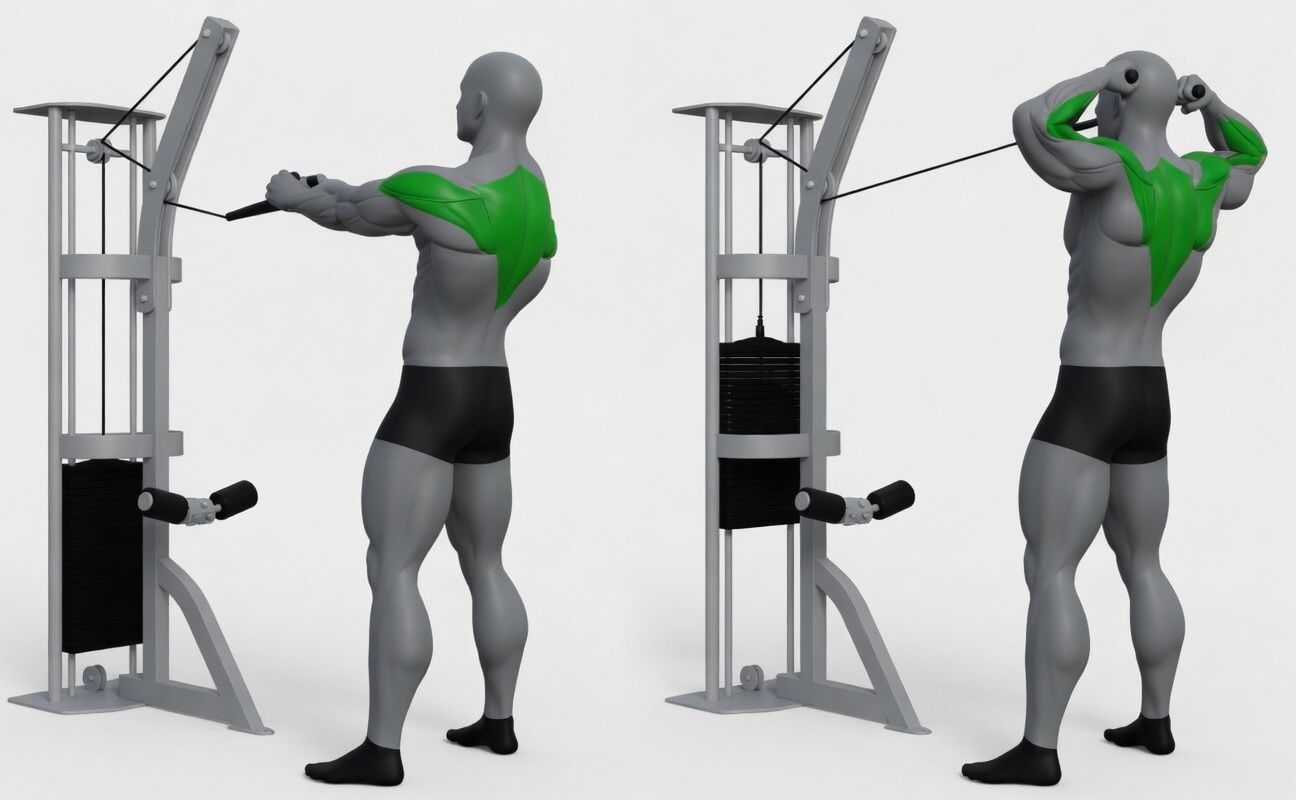
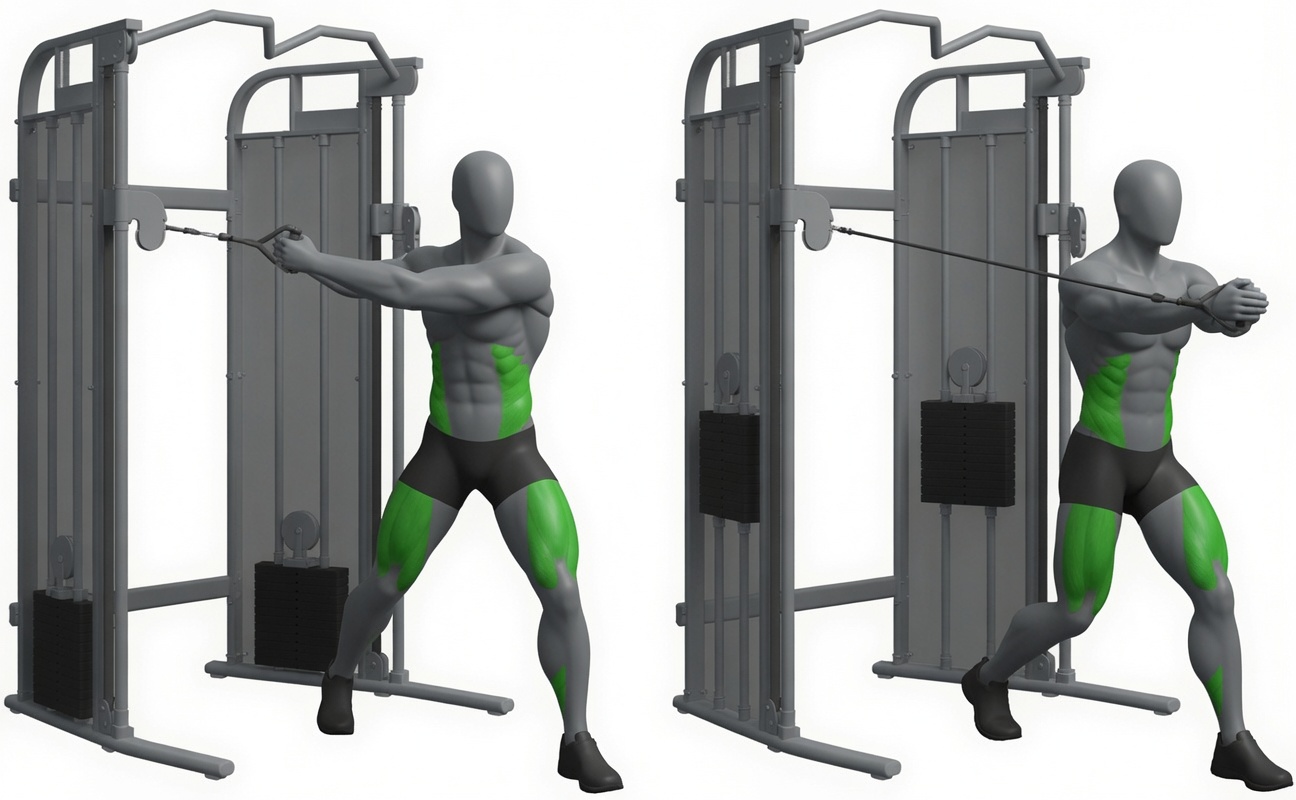
For woodchops: use a light load, rotate under control, and complete both sides. The catalog gives an 8–20-rep range; applying it to each side is the coaching convention used here. In the tracker, record the lower rep count of the two sides and note any difference. One completed set means both sides are finished.
Start with a few minutes of easy movement. Practice the first lift unloaded or with a light training bar, then take a few progressively heavier warm-up sets until your working load feels familiar. Add lighter practice sets before later exercises when you need them.
Choose a load that lets you reach the bottom of the rep range while leaving about 2–3 reps in reserve (RIR): two or three more controlled repetitions you could have done. If the empty bar is too heavy, use a lighter training bar or get help choosing a suitable alternative. Do not test your maximum to find a starting weight.
Use this simple double-progression rule:
For example, a 6–12-rep lift might progress from 8/8 to 9/8 to 10/10 to 12/12 across several sessions. Only the last result makes a small load increase worth considering—and only if technique and effort still meet the rule. It need not happen every week.
For planks, add a few controlled seconds toward 40 rather than loading the exercise automatically. End the hold when your position changes or you cannot breathe normally. For woodchops, both sides must meet the target before increasing the load.
| Weeks | Main task |
|---|---|
| 1–2 | Learn setup, choose conservative loads, and complete both weekly sessions. |
| 3–4 | Add a rep when possible without changing technique or shortening range. |
| 5–6 | Increase weight only where both sets meet the progression rule. |
| 7–8 | Continue if recovering well; use a lighter week if fatigue is accumulating. Review the log afterward. |
This outline is coaching guidance, not an automatic week-by-week change in the app. The program repeats the same two workouts. After six to eight weeks—or sooner if recovery is poor—a lighter week may help you resume consistent training. Persistent pain calls for assessment, not simply a lighter spreadsheet target.
For more examples, see progressive overload for beginners.
Get both workouts, progression rules, and 16 sessions of editable logging space for weights, reps, hold times, effort, and notes.
By submitting, you’ll receive the two-day workout spreadsheet and occasional Bazu emails. Unsubscribe anytime.
This site is protected by reCAPTCHA and the Google Privacy Policy and Terms of Service apply. See our Privacy Policy for details on how Bazu handles submissions.
These alternatives are explicitly listed for this program. They are options, not necessarily easier exercises. Learn the new setup, choose a fresh starting weight, and use the replacement's own targets rather than copying the previous lift's load.
| Scheduled exercise | Listed alternative |
|---|---|
| Barbell back squat | Barbell box squat |
| Barbell bench press | Barbell floor press |
| Bent-over barbell row | Pendlay row |
| Barbell overhead press | Seated barbell overhead press |
| Barbell Romanian deadlift | Stiff-leg deadlift |
| Cable lat pulldown | Close-grip cable lat pulldown |
The other six exercises have no program-specific alternative listed. If your gym regularly lacks the required equipment, choose a better-fitting routine instead of rebuilding this one every visit. A dumbbell-only home workout is a different option for limited equipment. If a weight jump is too large, repeat the current load or use smaller increments where available; do not force the increase.
Missed a session? Do the next workout in the A/B sequence when you return. Avoid doubling up to catch up. Sixteen sessions can take more than eight calendar weeks.
Only have consecutive days? Separate them when you can. If that is impossible, keep the second session conservative and adjust for fatigue; the schedule is not a reason to push through poor recovery.
Ready for a third day? First ask whether you can sustain it. The three-day beginner full-body plan is a separate program, not an extra session to stack onto this one. Our full-body versus split guide explains the broader choice.
The spreadsheet gives you the plan and 16 sessions of logging space without recreating the tables. Record both sets, the load, effort, and any setup changes. Its next-target column is a simple rule-based prompt—not an assessment of your technique or health.
Prefer tracking on your phone? Bazu is a workout tracker available on iPhone and Android. Full Body (2-Day) is ready in Bazu Free. Open the program, review the two workouts, and add them to My Routines. You need two available slots within Free's four-routine limit.
Log your first session, use the free rest timer, and compare your workout history. Bazu Premium adds progressive-overload recommendations; it is not required to start this program. Keep weight conventions consistent—especially per-dumbbell versus total barbell load—using the weight and rep logging guide.
Two well-planned sessions per week can build strength and support muscle growth, especially when you are starting out. Train all major muscle groups, keep your technique consistent, and gradually add reps or weight. This is a starting plan, not a guarantee of optimal results for every goal.
Monday and Thursday or Tuesday and Friday are practical options. Leave at least one day between sessions when possible. Repeat Workout A and Workout B each week rather than doing only one workout twice.
The program lists an estimated 25–35 minutes per session. Allow extra time for warm-up sets, learning barbell technique, changing equipment, and longer rests. Do not rush a difficult set to meet the time estimate.
Not exactly as written. This program uses a barbell, rack, bench, dumbbells, and cable equipment. For a dumbbell-only setup, use a dedicated dumbbell routine instead of treating equipment changes as the same program.
Do the missed workout at your next available session, then continue A, B, A, B. Keep recovery time between sessions where possible. Do not double the sets to catch up, and let the eight-week tracker take longer than eight calendar weeks if needed.
Open Full Body (2-Day) in Bazu Free, review both workouts, and add them to My Routines. You need two available routine slots. Log each set and use workout history and the rest timer for free; Bazu Premium adds progressive-overload recommendations.
Program details checked October 24, 2026 against Bazu's Full Body (2-Day) version 2 and current exercise catalog. Hold times, the example weekly calendar, and the eight-week coaching outline are guidance for using the program, not extra automated app features.

Founder of Bazu · 10+ years strength training
I'm the builder and user of Bazu. I've been lifting for over 10 years across strength and hypertrophy work, and I built Bazu to make progress simpler for serious lifters — every feature is designed around how real training actually works.
Continue with a relevant calculator, exercise guide, or Bazu feature.
Turn your best recent set into a practical next-session target.
ExploreExerciseBrowse proper form, muscles worked, mistakes, and progression advice.
ExploreProduct updateSee how Bazu keeps every personal record tied to your training history.
ExploreProductSee how logging, permanent PRs, charts, and workout history fit together.
ExploreBoth workouts are ready in the Routine Library. Review the program, add it to My Routines, and log your first session. No Premium subscription is required.
Open this free program

Join for practical strength tips, cleaner logging workflows, and Bazu updates that help you know what to do next workout.
This site is protected by reCAPTCHA and the Google Privacy Policy and Terms of Service apply. See our Privacy Policy for details on how Bazu handles submissions.

Follow a 3-day resistance band workout plan with full-body workouts, sets, reps, safe anchor setups, progression rules, and a free editable 8-week tracker.
Find the best bench press alternatives for chest growth and strength. Compare dumbbells, push-ups, machines, floor presses, cables, and more.
Compare full-body and split workouts by muscle growth, strength, schedule, recovery, and missed sessions—then choose the routine you can progress.
Follow a complete three-day push pull legs routine with exercises, sets, reps, rest times, substitutions, and a simple progression plan for muscle growth.
Learn proper squat depth for strength and muscle, how anatomy and mobility affect range, and when to stop above, at, or below parallel.

Follow a four-day, 30-minute gym workout for busy professionals, with exact exercises, supersets, rest times, substitutions, and progression.